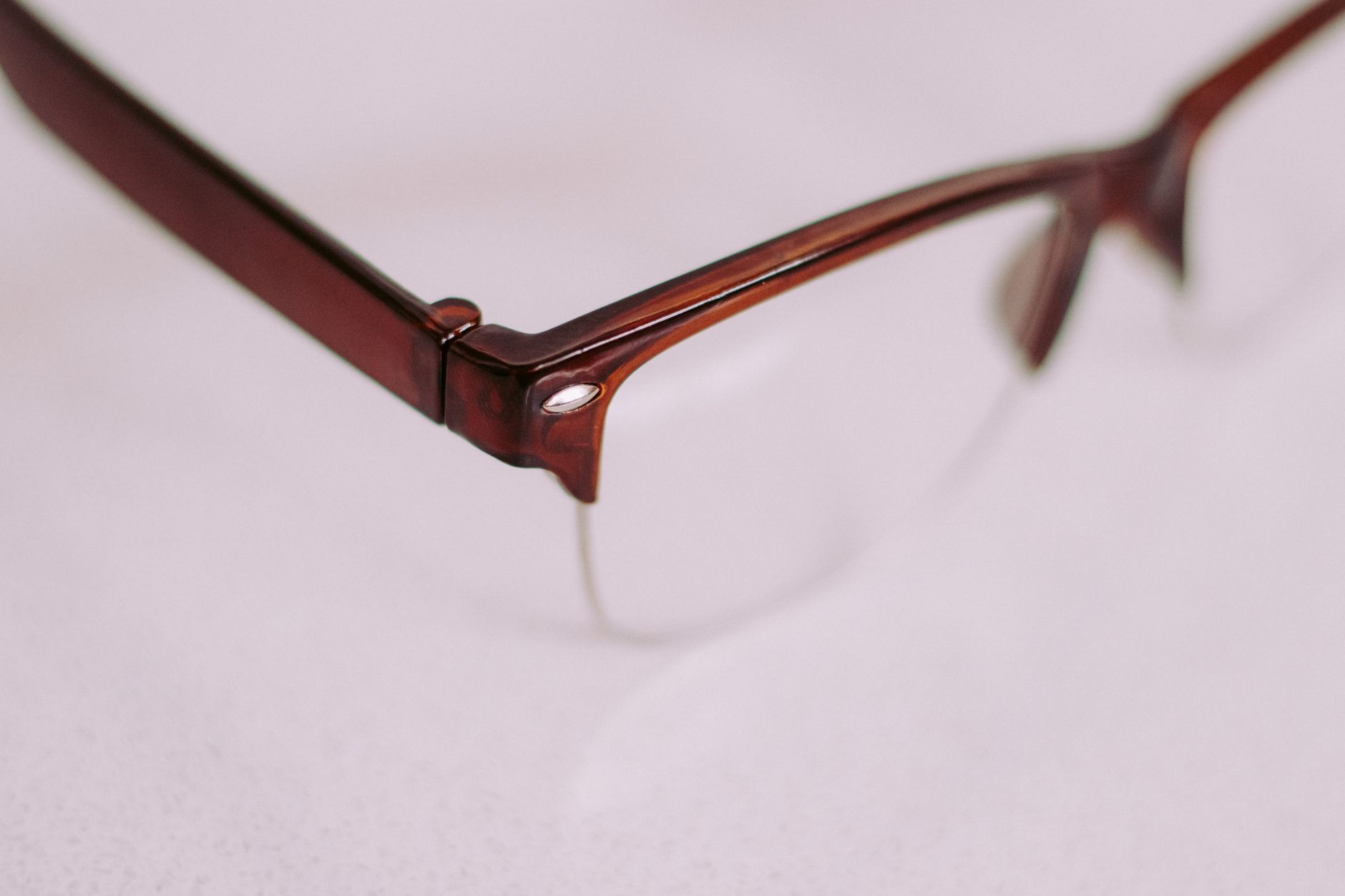
Look at the material first, not the name. Vintage and second-hand frames are worth buying when the acetate or metal has aged well, the hinges are tight, and the shape still sits true — not simply because a pair is old or carries a recognisable badge on the temple. Condition decides whether it’s a find or a false economy.
Is the frame actually the right size for your face?
A frame bought decades ago was sized for faces and prescriptions of its era, and vintage stock skews smaller through the bridge and temple than a lot of what’s made now. Fit doesn’t stretch to meet you. If a frame sits too narrow across the temples or the bridge pinches, no amount of character makes up for that. Try it on properly, ideally in person, and check how the width compares to your face before anything else.
What condition should the hinges and screws be in?
Hinges are usually the first thing to fail on a frame that’s had a long life, and they’re expensive to ignore. Open and close the temples slowly and feel for grinding, looseness, or a hinge that flops rather than holds tension. Barrel hinges wear at the joint; screwless and rivet constructions age differently again — worth understanding what a good hinge should feel like before you judge a worn one. A loose hinge is often fixable; a stripped one, less so.
How can you tell if the material has aged badly?
Acetate can go brittle or take on a yellowish cast with age and UV exposure, especially older formulations that weren’t stabilised the way modern sheet acetate is. A slight colour shift on a pale frame is common and not always a problem; a frame that feels dry, chalky, or that’s developed hairline stress cracks near the hinge is a different matter. It’s worth reading why old frames yellow or go brittle so you’re not mistaking patina for decay. Metal frames raise their own question — check where plating wears through at the pads and temple tips, since bare base metal there is common on anything with real age.
Does the frame still hold its shape?
Sit it on a flat surface and look at it from the front and side. Rims that have gone slightly oval, temples that splay unevenly, or a frame that rocks rather than sits flat all point to a shape that’s shifted over the years — sometimes from heat, sometimes from being sat on, sometimes just from being worn unevenly by someone else’s face for a long time. Understanding what causes a frame to lose its shape helps you separate a cosmetic quirk from a structural one. Some distortion adjusts back with gentle, professional heat; some doesn’t.
What should happen to the lenses?
Original lenses in a vintage frame are very unlikely to match a current prescription, and even if the frame is being bought purely for looks, old lenses can be scratched, hazed, or coated with something that’s degraded. Reglazing — fitting new lenses into an old frame — is standard practice with a trustworthy dispenser, and it’s the point at which any prescription questions belong with them, not with a seller’s description. This is also where the right questions for a dispensing optician earn their keep: ask whether the frame can safely take new lenses without stressing the rim.
Are vintage sunglasses safe to wear as sunglasses?
Not automatically, and this matters more than it looks like it should. A dark vintage lens with no stated UV rating is not doing the job of sun protection — darkness alone tells you nothing about the filter, and a very dark lens with no UV coating is worse than wearing no sunglasses at all, because the tint opens the pupil while UV still gets through. If a vintage pair is going to be worn outdoors rather than displayed, the lenses need reglazing to a lens with a confirmed UV400 or 100% UVA/UVB rating. There’s more on what actually makes sunglasses protective if that’s the plan.
Is a famous name worth paying for?
A recognisable name on a vintage frame can mean genuine build quality from an era when a lot of manufacturing was done in-house — or it can mean very little, if the badge outlived the workshop that earned it. It’s worth knowing how a licensed brand differs from the maker behind it, because that distinction existed decades ago too. Judge the object: the acetate, the hinge action, the finishing at the temple tip — not the name stamped on it. The same comparison applies whether the frame is being bought new or second-hand, and the same questions in what to compare between two frames at a similar price hold up here.
What’s reasonable to ask before buying?
A seller who knows the frame should be able to say roughly when and where it was made, whether the hinges have been repaired, and whether the lenses are original. Ask to see the inside of the temples, where a lot of wear and any repair marks show up first. If buying online rather than in person, the limits are real — what online buying can’t tell you applies doubly to something with no return-to-new guarantee behind it.
- Check the width and bridge fit against your own face, not the seller’s photos.
- Test hinge tension by opening and closing each temple slowly.
- Look closely at rim and temple-tip finish for hairline cracks or bare metal.
- Assume lenses will need reglazing, and budget for that separately from the frame.
- Ask specifically whether any part has already been repaired.
None of this makes vintage buying a gamble — a well-chosen older frame, reglazed properly, often has a build quality and proportion that’s genuinely hard to find in current production. The work is simply in looking past the story and at the object, the same way you’d judge any frame you’re weighing up.
Related reading
frames, lenses, fit and how eyewear actually works, Is It Worth Buying a Second Pair of Glasses?, What Does a Frame Warranty Usually Cover?, What’s Really Included in a Two for One Glasses Offer?
The Designer Glasses publishes general information and style opinion, not professional advice. We are writers and enthusiasts, not opticians, optometrists or dispensing opticians. Nothing here interprets a prescription, recommends a lens power, or tells you whether you need correction — only an eye examination can do that. If your vision changes suddenly, or you have eye pain, flashes, new floaters or halos around lights, treat it as urgent and contact an eye care professional the same day. Sunglasses should carry a stated UV rating: a dark lens without UV filtering is worse than none at all.