A “forever” frame is a shorthand, not a guarantee — no pair of glasses survives decades of wear untouched. What the phrase really points to is a frame built from materials and construction that age gracefully, in a shape restrained enough to outlast trends, so it can be repaired and re-worn rather than replaced.
What do people actually mean by a “forever” frame?
It usually means two different things bundled into one phrase: physical durability and stylistic durability. A frame that survives being sat on is not the same as a frame that still looks right in fifteen years. Both matter, but they come from different places.
Physical durability comes from material choice, hinge construction, and how the frame was made. Stylistic durability comes from proportion and restraint — a shape that was never trying too hard to begin with. A frame can score highly on one and poorly on the other. A heavily branded, oversized statement piece in a robust titanium can be built like a tank and still look dated within a few years.
Is any frame actually permanent?
No. Every material used in eyewear degrades under some combination of UV exposure, oils, heat and repeated flexing. The honest answer is that “forever” really means “for a very long time, and repairable when it isn’t.” Even the most expensive frame in the world needs its hinges retightened, its nose pads replaced, its screws checked.
What separates a frame that lasts from one that doesn’t is less about a single dramatic failure and more about how gracefully small parts wear. Plating thins at contact points. Acetate can dry out if stored badly. Spring hinges eventually lose their give. None of this is failure exactly — it’s the normal life of an object worn on the face every day, and most of it is addressed by knowing when a frame is worth repairing rather than replacing.
Which materials actually hold up longest?
Some materials are simply more forgiving over time than others, though “longest-lasting” and “best for you” are not the same question — weight, fit and how a material sits on your specific face all matter too.
- Titanium and its alloys resist corrosion well and take stress without deforming, which is why they turn up in frames intended to survive years of daily handling.
- Acetate, a plant-based plastic, doesn’t rely on plating that can wear through — the colour runs through the material itself, so scuffs and light wear don’t expose a different colour underneath.
- Monel and stainless steel are common in mid-weight metal frames and behave differently again, with their own patterns of wear at the hinges and temple tips.
None of these is a universal “best” — it’s a genuinely useful thing to compare across materials rather than assume the priciest option wins. A well-made titanium frame earns its reputation for longevity through corrosion resistance and flex memory, not because the metal is inherently superior to acetate — the two solve different problems.
Does the shape have to be timeless too?
Not strictly, but it helps enormously. A frame built to survive decades is wasted if its silhouette reads as belonging to one specific year. This is a styling opinion, not a rule of physics — plenty of people happily wear a distinctly-of-its-moment shape and simply retire it when the moment passes, which is a perfectly reasonable way to own glasses.
But if durability is the actual goal, shape restraint tends to matter as much as material. Extreme proportions, very specific colourways, and heavy branding all tend to date faster than a shape kept close to classic geometry. It’s worth understanding why some frame shapes date faster than others before assuming any expensive material will carry a trend-driven shape indefinitely.
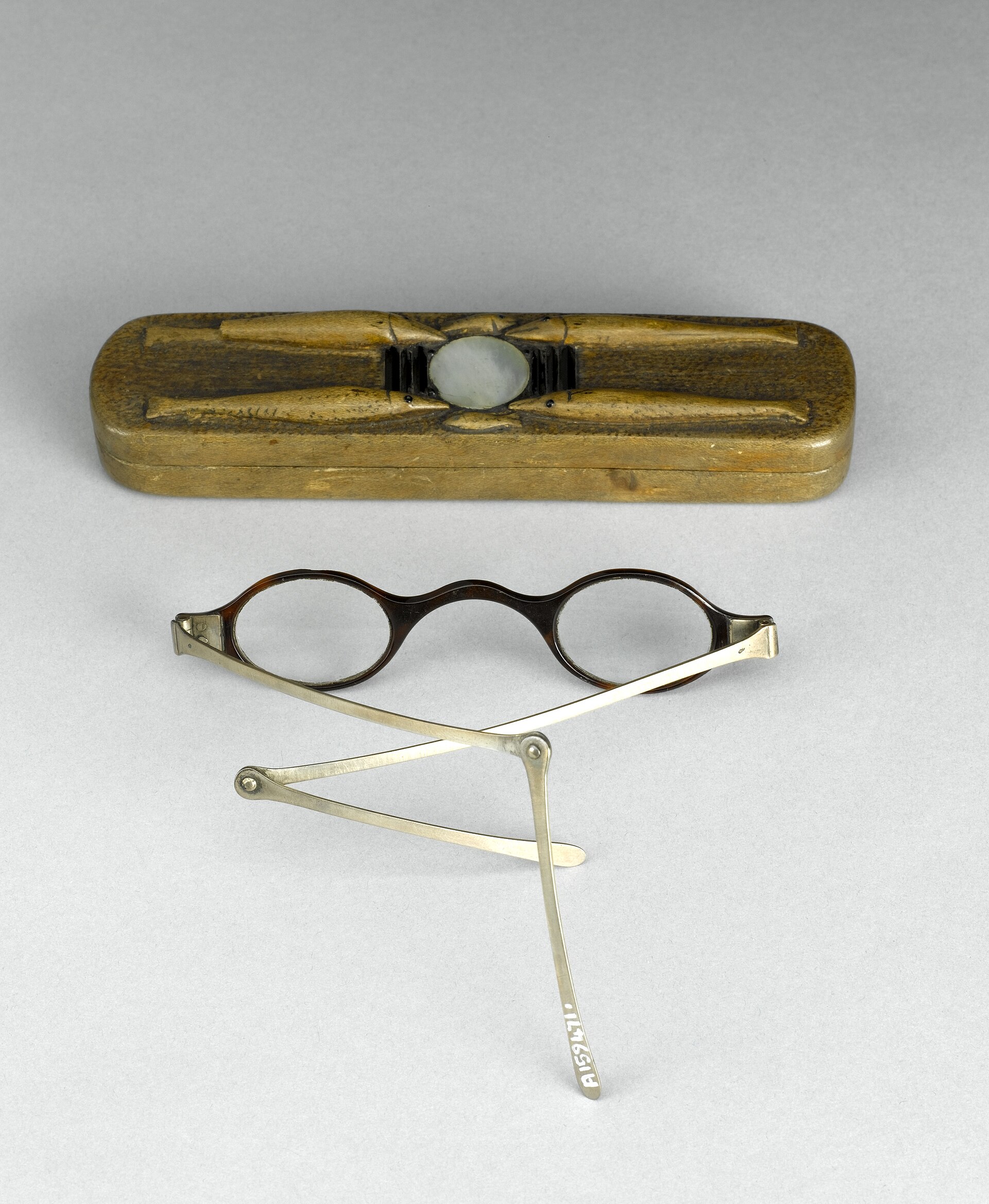

What actually breaks first on an old pair of glasses?
It’s rarely the frame front that fails first. The parts under the most repeated mechanical stress go first, and they’re usually fixable rather than fatal.
- Hinges — screws loosen, and on spring hinges the tension itself can fade with age.
- Nose pads — they discolour, harden, or simply need replacing after enough contact with skin oils and sunscreen.
- Plating at the temple tips and hinge area, where hands and hair make the most contact.
- Temple tips generally, which take the most flexing of any part of the frame.
Almost none of this signals that the frame is at the end of its life. It signals that it’s had a normal amount of use, and that a professional adjustment or a small parts replacement will extend it considerably. Frames genuinely earn “forever” status through this kind of ongoing small maintenance, not through never needing any at all.
Is it worth paying more for a frame meant to last?
Sometimes, but the correlation between price and longevity is far weaker than eyewear marketing suggests. What actually extends a frame’s life is construction quality — how the hinge is set, how evenly a plating layer was applied, whether an acetate frame was properly cured before shaping — and none of that is reliably visible from a price tag alone.
The more useful exercise is comparing construction details directly in front of you: hinge action, weight distribution, how cleanly the temple meets the front. That’s the basis of choosing a frame properly in the first place, regardless of budget. A frame bought with the intention of keeping it for a decade deserves the same scrutiny as one bought as a considered investment piece, because the mechanics that make it last are the same either way.
So does a “forever” frame really exist?
Not as a single perfect object that needs nothing from you. But as a category of frame — built from a material that ages honestly, cut into a shape restrained enough to still look considered in ten years, and maintained rather than ignored — it exists in the same way a well-kept leather bag or a good watch exists. The realistic version of “how long do glasses actually last” is: as long as the owner is willing to have small things fixed rather than treating any wear as a reason to start over.
That reframes the whole question. A forever frame isn’t a product you find once and never think about again. It’s a frame worth the ongoing, minor attention that keeps any well-made object functioning — which, for most people, turns out to be the more honest and more attainable version of “forever” than anything sold as unbreakable.
The Designer Glasses publishes general information and style opinion, not professional advice. We are writers and enthusiasts, not opticians, optometrists or dispensing opticians. Nothing here interprets a prescription, recommends a lens power, or tells you whether you need correction — only an eye examination can do that. If your vision changes suddenly, or you have eye pain, flashes, new floaters or halos around lights, treat it as urgent and contact an eye care professional the same day. Sunglasses should carry a stated UV rating: a dark lens without UV filtering is worse than none at all.
Featured image: Photo by Unknown, source, CC BY 4.0