A round frame is one where the lens shape is a true or near-true circle, with no flat edges and no dominant horizontal or vertical stretch. It flatters faces with strong angles — square jaws, pronounced cheekbones, a defined brow — by softening them, which is why it tends to sit best on angular rather than already-rounded faces.
What actually makes a frame “round”?
The test is simple: does the lens outline have a single, consistent curve, or does it flatten anywhere? A genuinely round frame has no straight sections. The bridge, the lens shape and the temple line all follow that same circular logic, which is part of why round frames read as more considered — or more retro — than other shapes. Anything with even a slight taper at the bottom, or a squared-off top edge, moves into oval or “keyhole” territory instead.
This is a styling distinction, not an optical one. A round lens outline doesn’t change how a lens corrects vision — that’s determined by the prescription and lens itself, which is a matter for an optician, not for how the frame is cut. What round shape does change is the geometry of the face around it, and that’s where the opinion starts.
How is round different from oval?
Oval frames borrow round’s softness but stretch it — usually wider than tall, with the corners eased rather than sharply circular. Round frames keep the circle honest: roughly equal height and width, and a bridge that sits centrally rather than pulling the shape sideways.
Oval is often the “safer” recommendation because it echoes the natural proportions of most faces without exaggerating them. Round is a more deliberate choice. It says something — a nod to mid-century opticals, to a particular decade of tortoiseshell acetate, to a slightly bookish or artistic register — where oval tends to disappear into the background. Neither is better; they do different jobs.
Who does a round frame flatter?
As a styling convention rather than a rule, round frames tend to flatter faces with more angular structure — square or rectangular faces with a strong jawline, and faces with pronounced, high cheekbones. The circle contrasts with the straight lines already present and softens the overall impression without erasing the structure that made the face interesting in the first place.
Faces that are already round or soft in outline can find that a round frame doubles down on that softness rather than balancing it. That’s not a hard rule — plenty of people with round faces wear round glasses and look precisely right, because skin tone, hair, frame size and colour all do as much work as the outline. But it’s the most common friction point, and worth trying in person rather than assuming.
What about angular faces — is round always the answer?
Round is one answer, not the only one. A heart-shaped or triangular face — wider at the brow, narrower at the chin — often reads well in round frames too, because the curve draws attention away from a pointed jaw. A long, narrow face is the more contested case: round frames can shorten the apparent length of the face, but an oversized round frame on a narrow face risks looking like the frame is wearing the person rather than the other way around.
Scale matters as much as shape. A round frame sized to sit just within the width of the face, with the brow line clearing the eyebrows rather than sitting on top of them, tends to look intentional. Too large, and the circularity becomes the only thing anyone notices.

Does material change how round frames read?
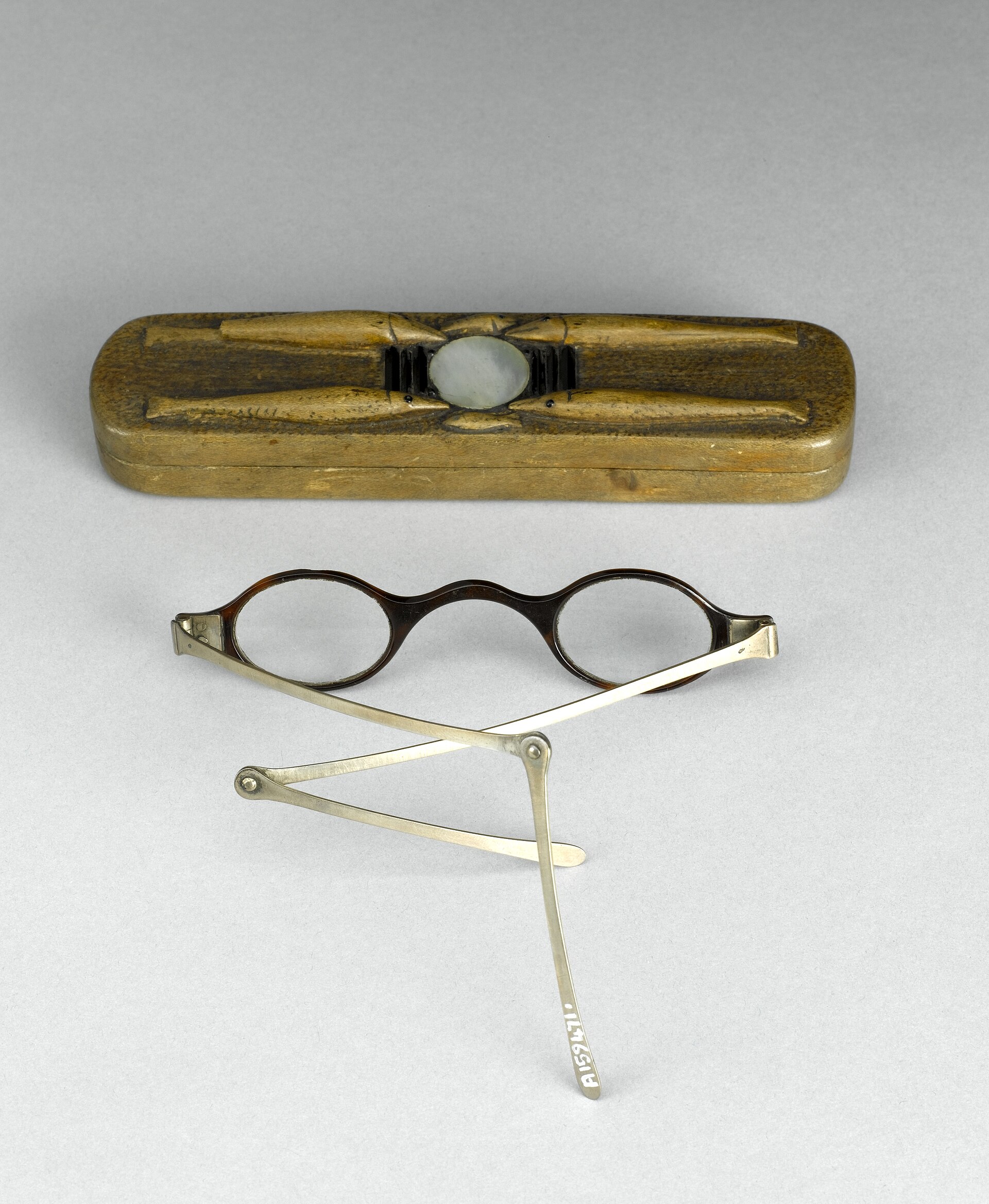
Considerably. A round shape in thick acetate — especially in tortoiseshell, amber or solid black — leans vintage and a little literary. The same shape in thin wire or fine titanium reads closer to minimalist or utilitarian, closer to the round metal frames associated with certain 20th-century design movements than to any particular decade of fashion eyewear.
Colour does similar work. A round frame in a muted, skin-adjacent tone recedes and lets the face lead. A round frame in a strong colour — deep green acetate, a bold red, high-shine metal — becomes the focal point of the face, which is a legitimate choice but a different one. Worth deciding on purpose rather than by accident.
Construction detail is worth comparing too, particularly the rim itself. A full-rim round frame holds its circle firmly and looks more graphic; a rimless or half-rim round frame softens the outline further, since the lens edge itself becomes part of the shape rather than a rim drawn around it. The differences in how these are built — and how they wear day to day — are covered in more detail in this guide to full rim, half rim and rimless construction.
Does rim style change who round frames flatter?
Yes — a rimless round frame is a gentler version of the shape, since there’s no dark line reinforcing the circle, while a bold full-rim round frame commits fully to it. Someone unsure about round as a shape might find a half-rim version an easier way to test the idea without the strongest possible statement.
This is one of the more useful ways to hedge a decision that otherwise feels binary. The shape can be tried in a softer form before committing to the graphic version, and the two will sit differently on the same face even though the outline is technically the same circle.
Do the numbers inside the frame tell you anything about the shape?
The numbers stamped inside a temple — usually something like 48-20-140 — describe lens width, bridge width and temple length, not the shape itself. But they matter enormously for whether a round frame fits the face it’s meant to flatter, since a circle that’s too wide for the face changes the whole effect regardless of how well the shape suits the face shape in theory. A full explanation of what each number means and how to read it is set out in this breakdown of the numbers inside a glasses frame.
In practice, this means two round frames with an identical outline can sit completely differently on the same face if the bridge width or lens size differs. It’s worth checking those numbers before assuming “round” as a category will automatically work.
What about round sunglasses — is the shape different in the sun?
The lens outline works the same way in sunglasses as in optical frames — the styling logic doesn’t change. What does need attention is the lens itself, and this matters more than the shape. A dark lens with no stated UV rating is not doing its job, and can be worse than wearing no sunglasses at all, because the tint makes the pupil open wider and lets more UV reach the eye than it would in daylight without any lens.
Protection comes from the filter, not the tint. Look for a UV400 label or a stated 100% UVA/UVB protection, regardless of how dark or light the lens looks, and regardless of what the frame costs. A round sunglass frame in a pale lens with the correct rating protects better than a near-black lens with no stated filter at all.
Is a round frame a passing trend?
Round frames have moved in and out of fashion for decades rather than arriving and disappearing once, which suggests the shape itself isn’t a trend so much as a recurring style that different eras reinterpret in different materials and proportions. What changes with the cycles is scale — oversized rounds one decade, small and precise the next — and material, from heavy acetate to fine wire and back again.
Because of that, round is a reasonably safe long-term choice for anyone who suits it, even as the specific proportions in shop windows shift. Anyone weighing it up against other silhouettes can browse a wider range of current shapes and construction styles in the frames and styles section, which is the more useful comparison than chasing whatever shape happens to be dominant this season.
How should someone actually decide?
Try the shape on, in more than one material and more than one rim construction, before deciding whether round works or doesn’t. The styling conventions above are opinions built on decades of observation, not rules with any scientific basis — plenty of people look better ignoring them entirely.
What’s worth taking seriously, regardless of shape, is anything medical: sudden changes in vision, eye pain, flashes of light, new floaters or vision loss in one eye are same-day matters for an eye care professional, not something to work around with frame choice. For everything else — fit, proportion, material, colour — the decision is a matter of taste, tried on in front of a mirror, not settled by a chart.
The Designer Glasses publishes general information and style opinion, not professional advice. We are writers and enthusiasts, not opticians, optometrists or dispensing opticians. Nothing here interprets a prescription, recommends a lens power, or tells you whether you need correction — only an eye examination can do that. If your vision changes suddenly, or you have eye pain, flashes, new floaters or halos around lights, treat it as urgent and contact an eye care professional the same day. Sunglasses should carry a stated UV rating: a dark lens without UV filtering is worse than none at all.
Featured image: Photo by Unknown, source, CC BY 4.0
Related reading
Choosing Glasses, How Eyewear Works, What Is a “Forever” Frame, and Does It Exist?.