The difference comes down to how much of the lens edge is covered by frame material. A full rim frame encloses the entire lens in plastic or metal. A half rim (or semi-rimless) frame holds the lens along the top only, with the bottom edge exposed or held by a thin wire or nylon cord. A rimless frame has no frame around the lens at all — the arms and bridge attach directly to the lens itself.
That single construction choice affects far more than how a pair looks on a shelf. It changes how heavy the glasses feel, how much visual weight the face carries, how the frame ages, and what happens if a lens ever needs replacing. None of the three is objectively “better” — they suit different faces, different lens shapes, and different ideas of what glasses are supposed to say.
What exactly is a full rim frame?
A full rim frame is the traditional construction: a continuous ring of acetate, metal or combination material runs around the entire lens, front and sides. It is the most common style found across frames and styles today, and it is usually the sturdiest option.
Because the whole lens edge sits inside a groove or is bonded into the frame front, full rim glasses distribute stress evenly. There’s no exposed lens edge to chip, and the frame itself takes most of the wear from handling, cleaning and being dropped face-down onto a desk. This is also the construction that gives designers the most room to play — thick acetate fronts, contrast colours on the inside of the temple, chunky brow lines, or fine wire ovals all fall under “full rim,” and the visual character of the piece is set almost entirely by the frame’s colour, thickness and shape rather than the lens.
The trade-off is presence. A full rim frame is, by definition, the most visible of the three on the face. That can be exactly the point — a bold acetate frame is a styling decision as much as a functional one — or it can feel heavier than a wearer wants, particularly with strong lens colours or larger lens shapes.
What is a half rim frame, and why does it exist?
A half rim frame frames the lens along the top edge only, usually in metal, while the lower portion of the lens is held by a thin nylon monofilament line or a slim metal wire that runs through a groove cut into the lens itself. It sits visually between full rim and rimless.
The appeal is largely proportional. Removing the lower rim reduces the amount of frame material sitting on the lower half of the face, which tends to read as lighter and less bulky than an equivalent full rim shape, without losing the structure that a browline gives the upper face. It’s a construction that was genuinely popular through the 1990s and has cycled back into circulation as a deliberate retro reference, particularly in aviator-adjacent and rectangular shapes.
Half rim frames do have one practical quirk worth knowing before buying: the lens needs a groove cut around its lower edge to seat the nylon cord, which means the lens shape is somewhat fixed by the frame and cannot be freely reshaped or re-edged the way a full rim lens sometimes can. If the cord or wire ever needs replacing, that’s a job for wherever the glasses were fitted — not something to attempt at home.
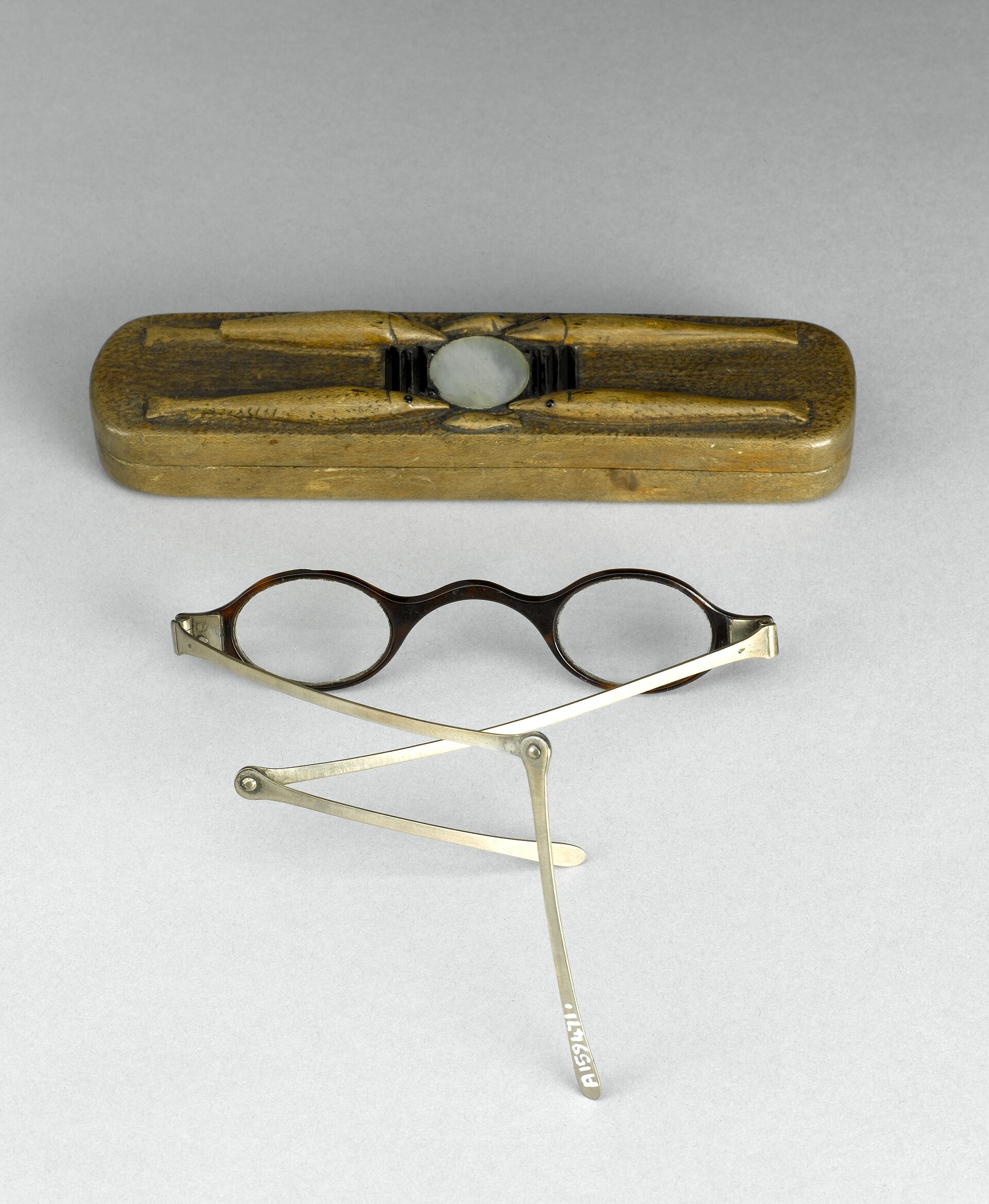

What is a rimless frame and how does it stay together?
A rimless frame has no rim at all. The bridge and the temples (arms) attach directly to the lens, usually through small drilled holes or with a compact mounting bracket bonded to the lens surface. Nothing encircles the lens edge.
This is the lightest and least visually obtrusive of the three constructions, which is precisely why people choose it — the aim is for the lens to sit on the face with almost nothing announcing itself as “frame.” For a minimal, understated look, or for anyone who has never liked the feeling of frame material at the edge of their peripheral vision, rimless can feel like the correct answer.
The physics of it are worth understanding, though. Because the lens itself is doing the structural work — holding the drilled mounting points, bridge and hinges under everyday flexing and torque — rimless construction asks more of the lens material than full rim or half rim does. That has two practical consequences. First, rimless glasses generally suit lens materials with more flex and impact resistance, which is a conversation to have with whoever fits them, not something to select from a chart online. Second, a rimless lens edge is exposed with nothing protecting it, so it’s more vulnerable to chipping around the drill holes than a lens sitting inside a rim. None of this makes rimless fragile — a lot of very well-made rimless glasses hold up for years — but it does mean the construction rewards careful handling more than the other two.
Which one is more durable?
As a general rule, full rim is the most forgiving of daily knocks, half rim sits in the middle, and rimless demands the most care because the lens itself is load-bearing. This is a generalisation about construction, not a verdict on quality — a well-made rimless frame can easily outlast a poorly made full rim one.
Durability in all three cases comes down to the same handful of factors: the metal or acetate used, the quality of the hinge, and — for half rim and rimless specifically — how well the mounting points and drill holes were finished. A cheaply drilled rimless lens with rough edges is a genuine weak point; a well-finished one is not. This is exactly the kind of thing worth inspecting in person before buying, rather than taking on faith from a product photo.
Does the frame type change how a face looks?
It does, and this is a styling opinion rather than anything measurable, so it’s worth treating as a starting point rather than a rule. Full rim frames add visible structure and tend to suit anyone who wants the glasses to read as a deliberate feature rather than a quiet accessory — bold brow shapes, colour, contrast. Half rim frames soften that structure while keeping some definition along the brow, which is often flattering on rounder or softer face shapes looking for a bit more angularity up top. Rimless frames recede the most and tend to let other things — cheekbones, brows, hair — do the visual work instead of the eyewear.
None of that is fixed. Plenty of people with round faces wear bold full rim frames and look sharper for it; plenty of people with strong, angular features choose rimless glasses precisely because they don’t want more angularity added. Face-shape advice is a useful opening move in a fitting, not a verdict.
Does the frame type affect lens options or the numbers on the frame?
Frame construction doesn’t change what a prescription means, but it can affect what’s practical. Rimless and half rim constructions rely on the lens holding a drilled hole or a routed groove, so very high or very complex prescriptions — where a lens might already be quite thick or curved — are sometimes better suited to full rim, purely because the rim conceals the lens edge and gives more room to work with. This is a fitting decision, and it belongs with an optician who can see the actual lenses being ordered, not something to decide from a style preference alone.
The frame’s size markings, printed on the inside of the temple, stay the same regardless of rim type — they describe lens width, bridge width and temple length rather than construction. Anyone comparing frames across brands or trying to work out why one pair fits differently from another can find a plain-language walkthrough in What Do the Numbers Inside a Glasses Frame Mean?
Does rim type matter for sunglasses?
Rim construction is a styling and durability question; it has no bearing on sun protection. That comes entirely from the lens, specifically whether it carries a UV400 rating or an equivalent stated 100% UVA/UVB filter — full rim, half rim and rimless sunglasses can all be built with exactly the same lens.
It’s worth repeating plainly because rim style has nothing to do with it: a dark lens with no stated UV rating is worse than wearing no sunglasses at all, because the tint makes the pupil open wider while doing nothing to block ultraviolet light, so more of it reaches the eye. Darkness is a cosmetic property of the lens. Protection is a stated, verifiable rating — look for it on the lens or the documentation, regardless of how the frame around it is built.
Which one should be chosen?
There isn’t a single correct choice, and the honest starting point is trying all three shapes in a comparable size before deciding. A few practical questions are more useful than a rule:
- How much frame presence is wanted on the face — a statement or something closer to invisible?
- How roughly are the glasses likely to be handled day to day?
- Is the prescription one that a fitter has flagged as needing a particular lens shape or thickness?
- Does the lens carry a genuine UV400 rating, if the glasses are for outdoor use?
Comparing frame construction this way — proportion, weight, how the lens is actually held in — gives a far better read on a pair of glasses than judging by name alone. Browsing a wider range side by side, across the full spread of shapes covered in frames and styles, makes the differences between full rim, half rim and rimless far easier to see than any description can.
The Designer Glasses publishes general information and style opinion, not professional advice. We are writers and enthusiasts, not opticians, optometrists or dispensing opticians. Nothing here interprets a prescription, recommends a lens power, or tells you whether you need correction — only an eye examination can do that. If your vision changes suddenly, or you have eye pain, flashes, new floaters or halos around lights, treat it as urgent and contact an eye care professional the same day. Sunglasses should carry a stated UV rating: a dark lens without UV filtering is worse than none at all.
Featured image: Photo by Unknown, source, CC BY 4.0
Related reading
Choosing Glasses, How Eyewear Works, Why Do Some Frame Shapes Date Faster Than Others?, Men’s vs Women’s Glasses Frames: What’s Really Different?.