Abbe value is a number that describes how much a lens material bends different colours of light by different amounts. A low Abbe value means more colour separation and softer, fringier vision at the edges of a lens. It matters for thick prescriptions because the materials used to make strong lenses thinner tend to have lower Abbe values than ordinary glass or standard plastic.
What does Abbe value actually measure?
It measures chromatic dispersion — how much a material splits white light into its component colours as it passes through, the same effect a prism produces in a much more exaggerated way. Every transparent material does this to some degree.
A lens material with a high Abbe value keeps that colour-splitting minimal, so light of different wavelengths focuses in nearly the same place. A material with a low Abbe value spreads those wavelengths out more, and the eye has to work slightly harder to resolve a single sharp point.
This sits alongside lens index, which describes how efficiently a material bends light overall — the property that lets a stronger prescription sit in a thinner, flatter lens. Index and Abbe value are related but not the same thing, and that relationship is exactly where thick prescriptions come into the picture.
Why does a higher lens index often mean a lower Abbe value?
Because of how these materials are engineered. Raising the refractive index of a plastic or glass generally means packing the material more densely at a molecular level, and that same density tends to increase how much it disperses colour. It isn’t a fixed law of physics that one must fall as the other rises, but across the materials actually used in spectacle lenses, it’s a very consistent pattern.
This is why a higher-index lens chosen to flatten and slim down a strong prescription can, in some cases, introduce a bit more chromatic dispersion than the thicker, more old-fashioned material it replaced. The lens looks better on the face. It may perform very slightly differently at the edges.
None of this is a reason to distrust higher-index lenses — they exist precisely to solve the aesthetic and weight problems of strong prescriptions, covered in more detail in the wider guide to lenses and coatings. It’s simply the trade-off worth understanding before assuming “thinner” is a straightforwardly better spec on every axis.
What does chromatic aberration look like in real glasses?
The technical name for the visible effect is chromatic aberration, and in everyday wear it shows up as faint colour fringing — often a thin edge of blue, purple or yellow-green — around high-contrast objects when looking away from the exact centre of the lens.
It’s most noticeable:
- Toward the outer edges of the lens, away from the optical centre
- Around bright point sources at night, such as headlights or streetlights
- On high-contrast edges, like dark text on a pale background, or bare tree branches against sky
It is not the same thing as blur, and it is not a sign anything is wrong with the lens. It’s a genuine optical characteristic of the material, present to some degree in every pair of glasses ever made, and simply more or less pronounced depending on the material’s Abbe value and how strong the prescription is.
Does Abbe value matter more for strong prescriptions?
Yes, because dispersion scales with how much bending the lens is doing. A mild prescription in a lower-Abbe material may show the effect so faintly it’s never consciously noticed. A stronger prescription in the same material bends light more aggressively across the lens surface, which amplifies any colour-splitting that material produces.
This is the actual reason Abbe value comes up specifically in conversations about thick prescriptions rather than as a general lens topic. Someone with a very mild correction is unlikely to ever think about it. Someone choosing a high-index lens to manage a strong prescription is precisely the person for whom the trade-off between thinness and dispersion becomes a real, felt difference — and it’s a genuinely useful thing to ask an optician about when discussing material options, rather than something to guess at from a spec sheet.
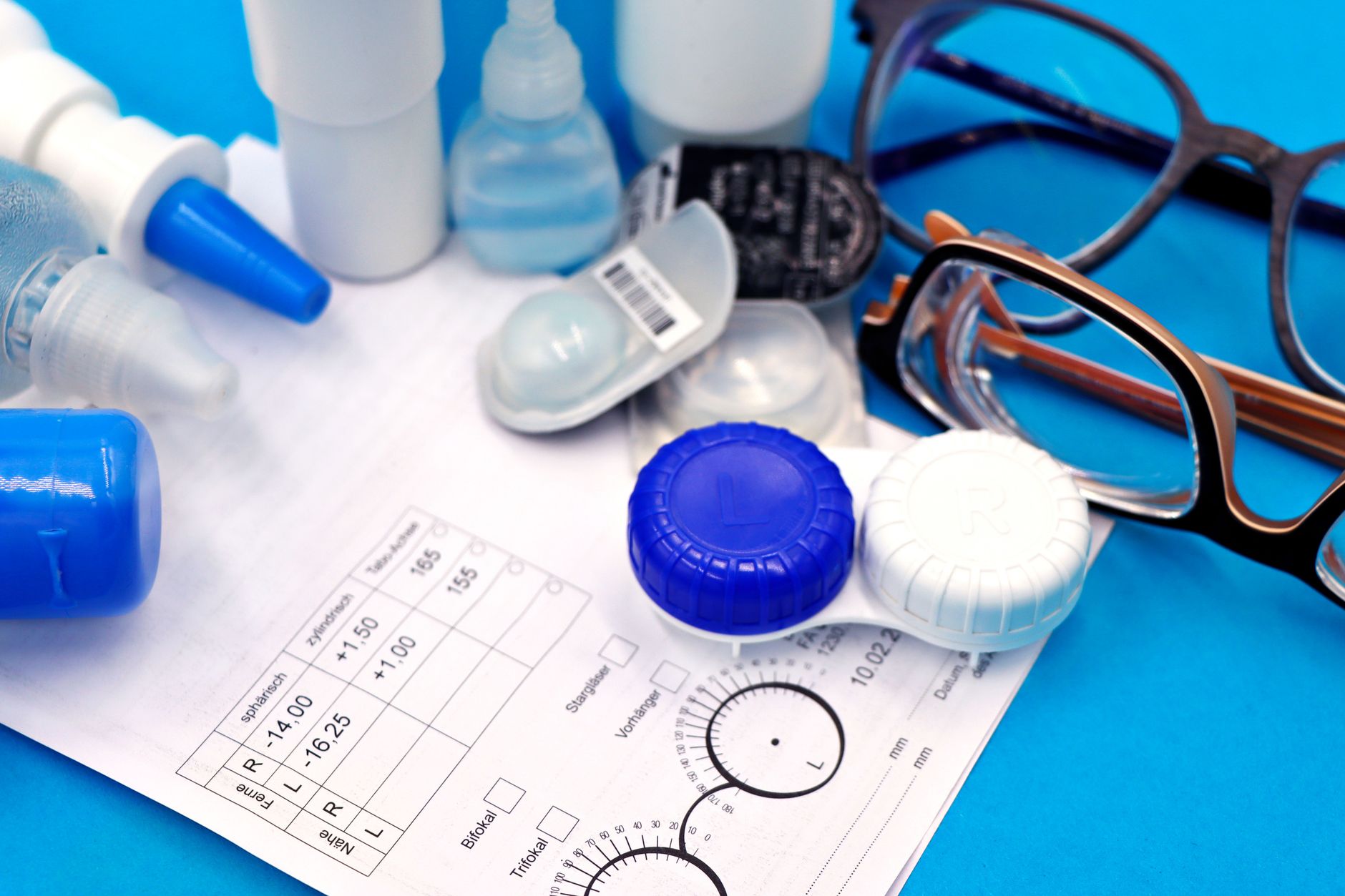
Can frame choice make a low Abbe value more or less noticeable?
Frame and fit affect how much of the dispersion a wearer actually notices, even though they don’t change the material’s optical properties. Chromatic aberration is worst toward the lens periphery, so anything that keeps the eye looking through a more central zone of the lens tends to make it less obtrusive.
A well-fitted frame, correctly centred to the wearer’s pupillary distance, keeps the line of sight closer to the lens’s optical sweet spot during normal use. A frame that’s too wide, sits too far from the face, or wasn’t properly measured pushes the eye toward the edges more often, which is where colour fringing is most visible regardless of material.
Very large or heavily oversized frames can compound this, simply because there’s more peripheral lens area for the eye to pass through during everyday head and eye movement. This is a fit and construction question as much as a materials one — worth reading alongside how full rim, half rim or rimless construction changes how a lens is held and edged, since edging and bevel choices also interact with how a strong prescription behaves in the frame.
Is a high Abbe value always the better choice?
Not necessarily, and this is a genuine trade-off rather than a simple hierarchy. Materials with the highest Abbe values tend to sit at lower refractive indices, which means thicker, heavier lenses for a given prescription strength. Materials engineered for the highest index — the thinnest, flattest option for a strong prescription — often sit lower on the Abbe scale.
In practice this means:
- Prioritising Abbe value alone can mean accepting a thicker, heavier lens
- Prioritising index alone can mean accepting slightly more colour fringing at the edges
- Coatings and lens design can influence how much either trade-off is felt in daily wear, which is part of what an anti-reflective coating is doing beyond simply cutting glare
There is no single correct answer here, because it depends on the strength of the prescription, how sensitive an individual’s own vision is to dispersion, and how much the wearer values a slimmer profile against the frame. This is squarely a conversation for an optician working from the actual prescription in question, not a spec to choose in isolation.
What should you actually ask your optician about Abbe value?
It’s reasonable to ask what Abbe value a proposed lens material sits at relative to the alternatives being offered, and whether that trade-off is likely to be noticeable given the specific prescription. It’s also worth asking how coatings and lens design might offset it.
What isn’t useful is trying to select a lens index or material independently and asking an optician to simply supply it — this is genuinely a clinical judgement that depends on the prescription itself, not a styling decision. The frame around it, on the other hand, is very much a styling decision, and understanding what actually makes a frame look expensive — proportion, hinge quality, finishing — is a separate and equally worthwhile question once the lens conversation is settled. For anyone puzzling over the markings etched inside a chosen frame, there’s also a plain guide to what those numbers actually mean.
Abbe value is a real, measurable property of the material in front of the eye, not marketing language. Treated as one factor among several — alongside index, coating and fit — it’s a useful thing to understand before a strong prescription goes into its next pair of glasses, and a genuinely useful question to bring to the appointment rather than to answer alone.
The Designer Glasses publishes general information and style opinion, not professional advice. We are writers and enthusiasts, not opticians, optometrists or dispensing opticians. Nothing here interprets a prescription, recommends a lens power, or tells you whether you need correction — only an eye examination can do that. If your vision changes suddenly, or you have eye pain, flashes, new floaters or halos around lights, treat it as urgent and contact an eye care professional the same day. Sunglasses should carry a stated UV rating: a dark lens without UV filtering is worse than none at all.