A keyhole bridge is the double-arched shape cut into the top centre of a frame, where the two lenses meet — named because, seen from the front, the gap looks like an old-fashioned keyhole. Some faces need that extra width and lift at the bridge for a frame to actually sit level; the shape gives it to them without adding bulk.
What exactly is a keyhole bridge?
On most acetate or plastic frames, the bridge is a simple saddle: a smooth curve of material connecting the two lenses, resting on the flat part of the nose below the bridge bone. A keyhole bridge is cut differently. Instead of one continuous curve, it has two small arches, one over each nostril, meeting at a shallow point in the middle — leaving a visible gap or notch above the nose rather than solid material.
That gap is the whole point. It gives the frame more room to clear a prominent nasal bridge, and it lets the frame sit slightly higher and more securely without needing separate nose pads.
Where did the keyhole bridge come from?
It answers a direct question with a direct answer: the keyhole bridge developed as a practical fix for frames without adjustable pads, and it stuck around because it also looks distinctive.
Before nose pads were common on plastic frames, the bridge itself had to do all the work of holding the glasses in place and clearing the nose. Cutting an arch on either side, rather than relying on a single flat saddle, gave the frame more contact points and more clearance for a wider range of nose shapes — without adding weight or requiring metal hardware. The shape shows up repeatedly through the twentieth century on browline and panto styles, where a keyhole cut was a straightforward way to make a thick acetate front sit properly on faces it wasn’t custom-fitted to.
It’s a design solution to a fit problem that happened to also read as a bit of visual signature — which is why it’s survived long after adjustable pads made it technically unnecessary.
What does a keyhole bridge actually do for fit?
A keyhole bridge tends to sit a little higher on the nose and distribute weight across two smaller points rather than one broad saddle, which can suit noses with a more defined bridge or narrower nostril spacing.
Because the two arches sit either side of the bridge bone rather than across it, the frame has somewhere to go on faces where a solid saddle bridge would perch too low or press uncomfortably on the bone itself. This matters most on full acetate frames, where there’s no separate metal nose pad to adjust — the bridge shape is doing all the fitting work.
It’s still a general mechanism, not a guarantee. Fit depends on the specific curve and width of the arches on a given frame as much as on the category “keyhole bridge” itself, which is why trying a frame on, rather than reading the spec, remains the only reliable test.
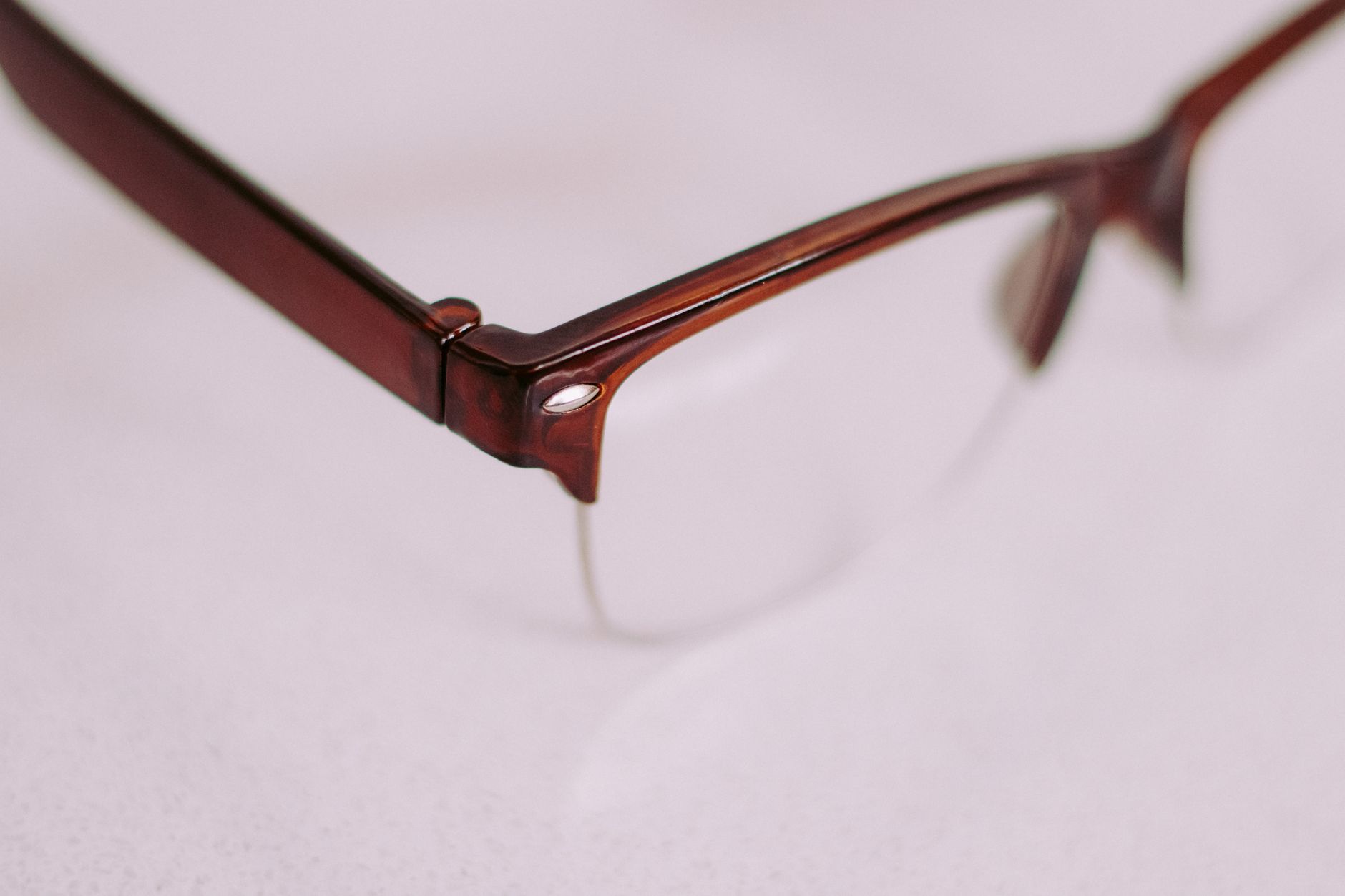
Does a keyhole bridge suit every face?
This is a styling opinion, not a rule: a keyhole bridge tends to look most at home on frames with some visual weight already — thicker acetate, bolder shapes — where the cutout reads as a deliberate detail rather than an accident. On very fine, minimal frames it can look slightly fussy.
The keyhole shape adds a small amount of visual interest right in the centre of the face, at the point where the eye naturally lands first. On a plain round or panto shape, that detail can lift an otherwise simple frame without changing its overall silhouette. On something already busy — heavy patterning, a strong colour, an unusual lens shape — it can be one detail too many.
None of this is fixed. Plenty of people wear a fine keyhole bridge on a delicate frame and it looks perfectly intentional. Treat any styling convention as a starting point worth testing in the mirror, not a rule to follow blindly.
What frame styles usually have a keyhole bridge?
It shows up most often on frames with a strong vintage or heritage reference, where the double-arch detail is part of the period look rather than an afterthought.
- Panto frames, where the rounded lens shape and keyhole bridge together are a classic combination — see what a panto frame actually is for the fuller shape story.
- Browline frames, where the bridge often echoes the era the style comes from — covered in why the browline frame keeps coming back.
- Round frames, where a keyhole bridge adds a small angular contrast to an otherwise soft, circular shape — see what defines a round frame.
- Some wayfarer-adjacent designs, where the bridge is part of the mid-century reference point rather than a strict feature of the original — background in why the wayfarer frame has lasted decades.
It’s rarer on sharply geometric or heavily oversized frames, where a flat or barely-there bridge tends to suit the cleaner lines better. For a sense of how bridge and shape interact more broadly, the Frames & Styles archive is a useful place to compare examples side by side.
How does a keyhole bridge affect material and construction?
A keyhole bridge is almost always cut from a single block of acetate along with the rest of the front, rather than built up from separate pieces, which is why it appears most on plastic frames rather than metal ones.
Metal frames generally solve the same fit problem differently, using adjustable nose pads on arms that swing independently of the front. That flexibility makes a keyhole cut largely unnecessary — metal bridges are more often a simple flat or saddle shape, sometimes with a decorative bar or double bridge for a different reason: reinforcement, or a nod to aviator-style construction, rather than fit.
On a full-rim acetate frame, the bridge is structural: it’s holding both lens fronts in one continuous piece, so the keyhole cutout has to be engineered carefully so the connecting material stays strong enough not to flex or crack over time. On full rim, half rim and rimless frames, the bridge takes on a different role depending on how much of the lens edge is covered, which is worth understanding before judging any bridge shape on its own.
What should you check when trying a keyhole bridge frame?
Check where the frame actually rests, not just how it looks in the mirror straight on. A keyhole bridge that fits well sits without pressing on the sides of the nose or leaving red marks after a few minutes.
- Look at the frame from the side: it should sit level, not tipped forward or sliding down.
- Press gently at the temples — a keyhole bridge with a poor fit will show gaps or rock slightly rather than sitting flush.
- Wear the frame for longer than a glance in the mirror; light pressure points on a solid bridge can become noticeable after ten or fifteen minutes.
- If lenses are being fitted to a prescription, an optician will check pantoscopic tilt and vertex distance as part of the same process — that’s a dispensing question, and worth raising with them directly rather than guessing from how the frame looks empty.
Frames sometimes carry small numbers stamped on the inside of the temple relating to bridge width among other measurements — worth knowing how to read if comparing sizes across brands, and explained in full in what the numbers inside a glasses frame mean.
Is a keyhole bridge just a style choice now?
Largely, yes — modern nose pads and adjustable metal bridges have made the keyhole cut a design decision more than a fitting necessity, though it can still genuinely help on certain nose shapes.
That’s not a criticism. Plenty of details in eyewear have moved from function to signature over decades — the keyhole bridge, the browline’s heavy brow, the panto’s rounded lower curve. What matters when choosing a frame isn’t whether a detail started as a solution to a problem nobody has anymore, but whether it still does something useful for the specific face wearing it, and whether it looks like it belongs on that particular frame. A keyhole bridge earns its place either way: as a small piece of history sitting quietly at the centre of the face, or as a genuinely better fit for a nose that needs it.
The Designer Glasses publishes general information and style opinion, not professional advice. We are writers and enthusiasts, not opticians, optometrists or dispensing opticians. Nothing here interprets a prescription, recommends a lens power, or tells you whether you need correction — only an eye examination can do that. If your vision changes suddenly, or you have eye pain, flashes, new floaters or halos around lights, treat it as urgent and contact an eye care professional the same day. Sunglasses should carry a stated UV rating: a dark lens without UV filtering is worse than none at all.