Nose pads are the small contact points — usually two, sometimes built into the frame itself — that carry most of the weight of a pair of glasses and set how they sit on your face. Adjustable ones matter when a standard fit gets the width, height or angle wrong for your particular nose bridge, which is more common than most people assume.
What do nose pads actually do?
A pair of glasses is held up by three points of contact: two ears and a nose. The temples do some work, but the nose pads do the heavy lifting — literally. They set the height of the frame relative to your eyes, the angle at which the lenses tilt, and how much of the weight presses onto the bridge of your nose versus resting on your ears.
Move the pads even a millimetre and the whole geometry of the fit changes. Frames sit higher or lower on the face, lenses tilt closer to or further from vertical, and the whole thing either disappears into comfort or announces itself with every blink. This is also why two people can buy the identical frame and have completely different experiences wearing it — noses vary in width, height and slope far more than frame manufacturers can account for with one universal shape.
Why do some frames have pads and others don’t?
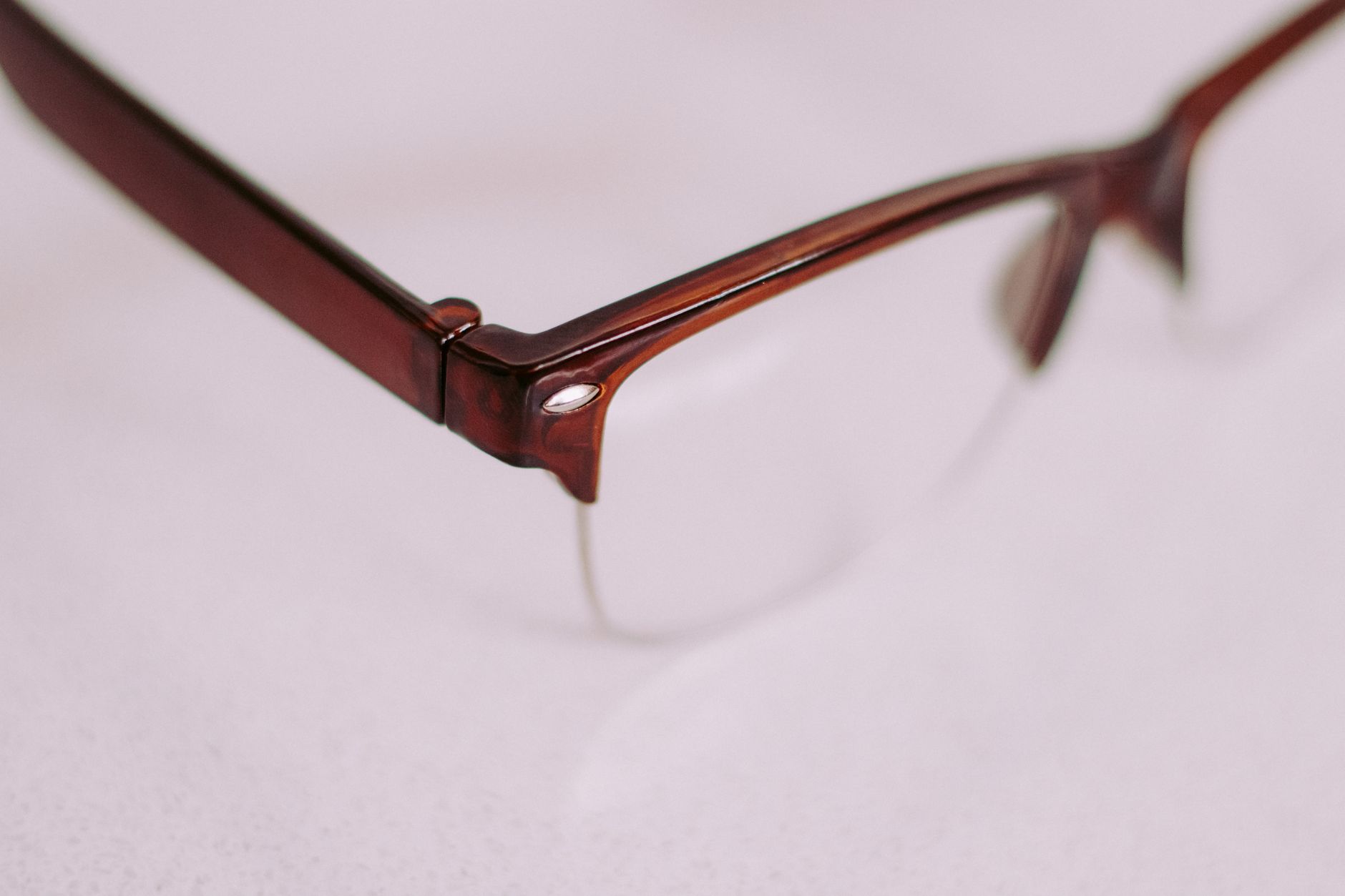
Not every frame has separate nose pads. Plastic and acetate frames typically don’t — the bridge itself is shaped to rest directly on the nose, often with a slightly built-up or “saddle” profile that spreads contact over a wider area. Metal and mixed-material frames, on the other hand, usually have small silicone or plastic pads attached by a metal arm, because a bare metal bridge would be uncomfortable and imprecise without one.
This is largely a construction decision, not a hierarchy of quality. A well-shaped acetate bridge without pads can sit just as securely as a metal frame with adjustable ones — it simply can’t be altered afterwards in the same way. The trade-off is fixed comfort in exchange for a cleaner, uninterrupted line across the bridge, which is part of why certain frame shapes lean one way or the other. It’s worth understanding what a saddle bridge actually does if you’re choosing between the two approaches, and how full-rim, half-rim and rimless construction changes what’s structurally possible at the bridge.
What’s the difference between fixed and adjustable nose pads?
Fixed pads are moulded into the bridge as part of the frame’s shape and can’t be repositioned — what you try on is what you get, for better or worse. Adjustable pads are separate pieces on movable arms that an optician (or, carefully, you) can bend closer together, further apart, or at a different angle.
The practical difference shows up in three places:
- Width — how far apart the pads sit, which determines how much of the bridge of your nose they grip.
- Height — how far the pads sit below the top of the frame, which shifts the whole frame up or down relative to your eyes.
- Angle — how flush the pad surface sits against the side of your nose, which affects both comfort and whether the frame tilts forward or back.
None of this is cosmetic tinkering. Getting these three things right is most of what separates glasses that feel like they’ve disappeared from glasses you’re constantly nudging back into place.
When do you actually need adjustable nose pads?
Adjustable pads earn their keep when a nose bridge doesn’t match the frame’s default assumptions. A few situations come up often:
- A low or flat nose bridge, where a fixed-pad frame tends to sit too low and the lashes brush the lens.
- A narrow bridge, where fixed pads that are too wide apart leave the frame loose and prone to sliding.
- Asymmetry between the left and right side of the face, which fixed pads can’t correct for at all.
- A prescription with meaningful weight or thickness, where precise height and angle affect both comfort and how the lens sits in front of the eye.
- Frames that constantly slide down the nose despite otherwise fitting — a sign the contact points, not the temples, are the problem.
If glasses are chronically sliding, it’s worth reading what it actually means when glasses slide down constantly before assuming a tighter frame is the fix — often it’s the pads, not the width, doing the wrong job.
Can adjustable pads fix a frame that’s the wrong size?
They can compensate for a lot, but not everything. Pad adjustment changes height, tilt and grip on the bridge — it doesn’t change the overall width of the frame front or how far the temples reach to the ears. If a frame is genuinely too wide or too narrow for your face, no amount of pad bending will make it sit correctly for long.
This is why fit is really a combination of several separate measurements, not one. Nose pads solve the bridge problem specifically. Temple length solves a different one — how temple length affects the way glasses stay on is worth understanding alongside pad adjustment, because a frame that slides can have either issue, or both. The full picture of correct fit — bridge, temples and pads together — is covered in how glasses should sit on your nose and ears.
What are nose pads made of, and does it matter?
Most adjustable nose pads are silicone or a soft acrylic, chosen because they grip skin better than bare metal and don’t slip as skin warms and perspires slightly through the day. Some higher-construction frames use a slightly firmer, more durable pad material that holds its shape and colour for longer, while cheaper ones can discolour or harden with age and sun exposure.
The material matters more for comfort and longevity than for how the frame looks — pads sit close to the face and are rarely a visible design feature. Where material choice does show up visually and structurally is in the rest of the frame: the arm holding an adjustable pad is almost always metal, which is one more reason metal and mixed-material frames dominate this category. Broader questions about frame materials — what holds shape, what ages well, what feels different in the hand — are covered in the materials and craft archive.
Can you adjust nose pads yourself?
Small adjustments are possible at home if the arms are metal and you’re gentle, but this is genuinely easy to get wrong. Bend a pad arm too far and it can snap, sit unevenly, or dig into the side of the nose in a way that’s worse than the original problem. Any adjustment also interacts with how the frame tilts and how the temples sit on the ears, so a change at the nose can shift things you didn’t intend to touch.
An optician can do this properly in minutes, usually without charge, using tools designed for the job rather than fingers and guesswork. It’s a small, unglamorous piece of aftercare that makes a genuine difference to how a frame wears — far more than most people expect from something so easy to overlook when buying.
Does frame shape affect how much the nose pads matter?
Yes, noticeably. Frames with a lot of lens area and weight — larger acetates, some oversized shapes — put more pressure through the bridge, which makes precise pad fit more important, not less. Lighter, smaller frames are more forgiving because there’s simply less weight to distribute.
This is one more reason the conversation about frame shape and proportion isn’t purely aesthetic. Choices covered across frame styles and shapes and face shape and fit aren’t just about how a frame looks against your features — they affect how much work the nose pads are being asked to do, and how noticeable it is if that job isn’t done well.
The short version
Nose pads are a structural detail doing quiet, constant work — carrying weight, setting height, controlling tilt. Fixed pads suit noses that match a frame’s default shape closely enough; adjustable pads exist for everyone else, and for anyone whose face isn’t quite symmetrical, which is most people. Getting them adjusted properly costs nothing and changes how a frame feels far more than most buying decisions do.
Related reading
What Is Temple Length, and Why Does It Matter More Than You Think?, What Does It Mean When Glasses Slide Down Constantly?, Choosing Glasses, How Eyewear Works, How to Stop Glasses Slipping in Hot Weather
The Designer Glasses publishes general information and style opinion, not professional advice. We are writers and enthusiasts, not opticians, optometrists or dispensing opticians. Nothing here interprets a prescription, recommends a lens power, or tells you whether you need correction — only an eye examination can do that. If your vision changes suddenly, or you have eye pain, flashes, new floaters or halos around lights, treat it as urgent and contact an eye care professional the same day. Sunglasses should carry a stated UV rating: a dark lens without UV filtering is worse than none at all.