No — not reliably. Face-shape rules (“round faces need angular frames”, “square faces need round ones”) are styling conventions built on rough averages, not a science of individual faces. They work often enough to be a decent starting point, and fail often enough that plenty of people look best in exactly the frame the rule says to avoid.
That contradiction is the whole story. The rules aren’t nonsense — they describe a real visual effect, contrast between frame line and face line, that genuinely changes how a face reads. What they get wrong is treating faces as six clean categories, when almost nobody’s face sits neatly in one.
Where do face-shape rules actually come from?
They come from basic contrast theory: a shape next to its opposite draws the eye, a shape next to its twin disappears. Rounded frames on angular features create contrast; angular frames on soft, round features do the same in reverse. It’s the same logic as pairing a straight-cut jacket with a curved collar.
The categories themselves — round, oval, square, heart, diamond, long — were never measured scientifically. They’re a hairdressing and portraiture convention adapted for eyewear, useful as vocabulary but not as a diagnosis.
What do the rules actually say, and are they true?
Broadly: round faces are told to wear angular frames like square or rectangular shapes, square faces are pointed toward rounder or oval frames, and long faces are told to avoid tall frames and look for wider ones with a strong horizontal line, often via a double bridge or heavier brow.
The contrast principle behind each of these is real. Where it breaks down is scale. A face isn’t a shape, it’s a set of proportions — the distance between brow and cheekbone, the width of the jaw relative to the temples, how much forehead sits above the eyes. Two people filed under “round” can have completely different proportions, and the rule gives them identical advice.
Why do the rules fail so often in practice?
Because most faces aren’t a single shape, and the “rule” frame doesn’t account for scale, colouring, or how the frame actually sits on the specific bones underneath it. A frame chosen purely by face-shape category can be the right silhouette and the wrong size entirely.
Three things routinely override the shape rule:
- Size relative to the face. An oversized frame reads differently on a small face than a proportionally identical one does on a larger face — see how oversized frames interact with face proportion before assuming shape alone decides it.
- Bridge width and placement. A frame with the “right” outline can still sit too high, too low, or too wide if the bridge doesn’t match the nose — something no shape chart accounts for.
- Colouring and material. A tortoiseshell acetate and a thin titanium frame in the same silhouette can produce opposite effects on the same face; see materials and craft for how finish changes a frame’s weight on the face.
Does an oval face really suit anything?
Mostly, yes — “oval suits everything” is one of the more reliable parts of the convention, because an oval face has fairly even proportions with no strong feature for a frame to fight against. It’s a genuinely useful baseline, just not proof that shape rules work universally elsewhere.
The same forgiving logic explains why panto frames, with their soft, rounded bottom and slightly flattened top, turn up so often as a “safe” recommendation — they split the difference between round and angular rather than committing to either.
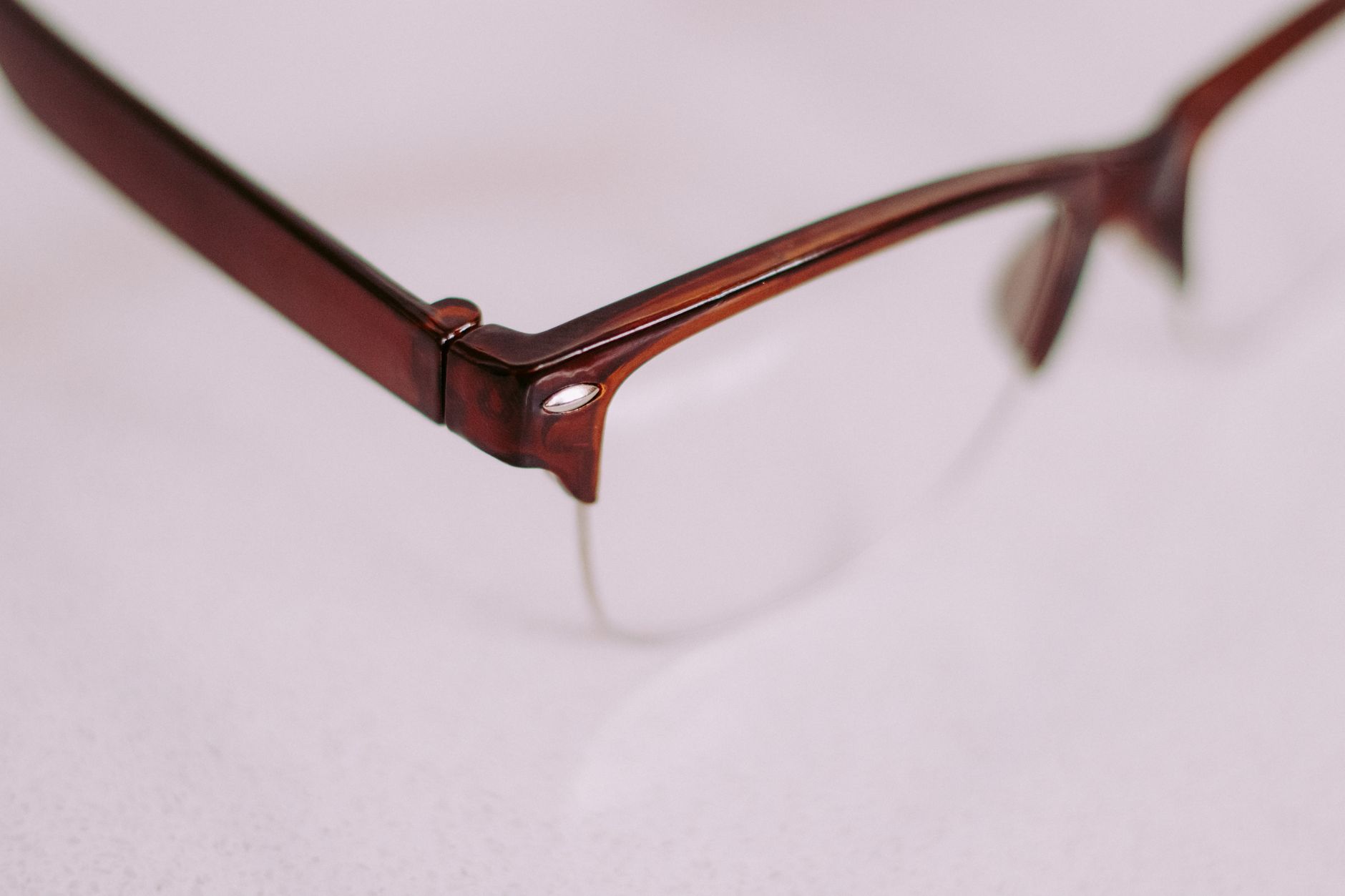
Are round frames really wrong for round faces?
Not always. The rule assumes contrast is always flattering, but a round frame on a round face can look deliberate and softening rather than repetitive — it depends on the size of the frame, the colour, and how the rest of the face is styled. This is a case where the convention is worth ignoring on purpose.
The same goes for round frames generally: they’re often filed as “for square faces only,” but a slightly oversized round frame on a rounder face can read as a style choice rather than a mismatch, especially with strong colouring or a fine metal frame that keeps things from looking heavy.
Do the rules apply the same way to everyone?
No — the rule set was largely built around a narrow idea of “flattering,” and it doesn’t hold equal weight across gender presentation, age, or personal style. What reads as bold on one face reads as costume on another, independent of shape.
This is part of why the old split between men’s and women’s frame conventions has loosened so much — bridge width and hinge construction still vary by fit, but silhouette choice increasingly doesn’t follow gender lines the way face-shape charts still assume.
What should actually decide the frame, if not shape?
Proportion, weight, and where the eyeline sits inside the frame matter more than the outline traced on a face-shape chart. Those three things are also things you can check on your own face in a mirror, without needing to identify a “type” first.
- Where the top of the frame sits relative to the eyebrows — too high and the eyes look small; too low and the brow disappears.
- Whether the frame width matches temple width — a frame wider than the face pushes the eyes toward the centre; a narrow one crowds them.
- How much lens area is visible around the eye — this interacts with prescription strength too; see why strong prescriptions can make eyes look bigger or smaller inside a frame, which shape rules never factor in at all.
Can a bold frame ever be the wrong idea, regardless of shape?
Yes — a bold frame stops working less because of face shape and more because of scale, colour saturation against skin tone, and how much else is going on in an outfit or a face. Shape is one input among several, not the deciding one.
There’s a fuller breakdown of when a heavier or more graphic frame tips from confident into distracting in when a bold frame stops working — worth reading before ruling a shape in or out on a chart alone.
Do frame colour and material change the “rule” outcome?
Often more than the outline does. A dark, high-contrast frame draws attention to its shape; a pale or translucent one softens it considerably, which means the same silhouette can pass or fail the same “rule” depending purely on colour and finish.
This is well covered in why clear and translucent frames look different on everyone and in how frame colour changes how glasses read — both get closer to what actually shifts a frame’s effect than the shape chart does. For a general sense of construction quality that also affects how a frame reads on a face, what makes a frame look expensive is a useful companion piece.
Is there a shape that genuinely benefits from the rules more than others?
Faces with one clearly dominant angular or rounded feature — a strong jaw, a very wide brow — tend to benefit most from the contrast principle, simply because there’s a clear line for the frame to work against. Faces without a dominant feature have more freedom and less to gain from following the chart strictly.
Geometric frames are a good test case: they’re often marketed narrowly, but who actually suits geometric frames comes down more to confidence and proportion than to a specific face-shape label. The same logic applies to strongly retro shapes like cat-eye frames, which the chart assigns almost exclusively to heart-shaped faces but which work on a much wider range of jawlines in practice.
So how should someone actually use the rules?
As a starting point for trying frames on, not as a filter for ruling them out before trying them. Read the shape chart, then ignore it the moment a frame in the “wrong” category looks better in the mirror than the “right” one does.
For a broader sense of frame vocabulary before testing any of this — bridge styles, rim construction, classic shapes — the frames and styles archive and the face shape and fit archive are better places to build a working vocabulary than any single chart. And once shape and fit feel settled, the practical side — lens material, coatings, and what a prescription does to the look of a frame — lives in lenses and coatings.
None of this is medical advice, and none of it should be. Face-shape guidance is styling opinion, offered with the understanding that plenty of people will, quite rightly, ignore it.
Related reading
What Causes Lens Distortion at the Edges of Glasses?, Choosing Glasses, How Eyewear Works, Why New Glasses Feel Wrong for the First Few Days, How to Stop Glasses Slipping in Hot Weather
The Designer Glasses publishes general information and style opinion, not professional advice. We are writers and enthusiasts, not opticians, optometrists or dispensing opticians. Nothing here interprets a prescription, recommends a lens power, or tells you whether you need correction — only an eye examination can do that. If your vision changes suddenly, or you have eye pain, flashes, new floaters or halos around lights, treat it as urgent and contact an eye care professional the same day. Sunglasses should carry a stated UV rating: a dark lens without UV filtering is worse than none at all.