Glasses should sit level and stay put without help. The bridge rests on the nose without pinching or leaving red marks, the frame sits low enough that eyelashes don’t brush the lens, and the temples curve gently behind the ears with just enough grip to stay in place through a normal day — no pushing up, no sliding down.
Getting there is less about a single measurement and more about how several parts of the frame work together. A frame can look perfect on the shelf and still fit badly on a particular face, because fit is really about three points of contact: the nose, the ears, and the way the frame’s own weight is distributed between them.
How should the bridge sit on your nose?
The bridge should sit centred on the nose with the frame level, close enough to the face that the lenses sit near the eyes without touching the lashes, and light enough at the point of contact that it leaves no pinch mark or red line after a few hours.
Two bridge styles do most of the work here. Frames with adjustable nose pads — usually metal or mixed-material — can be widened or narrowed to suit the shape of the nose, and a good optician will bend these to fit rather than leave them at factory setting. Frames with a moulded plastic bridge, sometimes called a keyhole or saddle bridge, rely on the shape being right from the start, because there’s nothing to adjust afterwards. If a plastic frame presses at the sides of the nose or leaves gaps at the top, the bridge shape is simply wrong for that face, and no amount of wearing it in will fix that.
Weight matters as much as shape. A heavier frame concentrates more of its load on a small area of nose, which is why chunky acetate frames sometimes feel heavier than their actual weight suggests. The materials and craft behind a frame — the density of the acetate, whether the metal parts are solid or hollow — change how that weight is carried well before it ever touches the topic of prescription or lens thickness.
How should the temples fit over the ears?
The temples should follow the curve behind the ear without digging in, run roughly parallel to the side of the head, and end just past the top of the ear so the tip curves down naturally rather than pressing outward. There should be contact, not clamping.
Too tight, and the pressure shows up as a dull ache at the temples by the afternoon, along with a visible dent when the glasses come off. Too loose, and the glasses ride down the nose every time the head tips forward, which sends the wearer into a loop of pushing them back up — a habit that’s more about temple tension than about the bridge at all, even though it’s usually the bridge that gets blamed.
Temple style plays a part too. Straight temples, common on many metal frames, sit flatter against the head and suit smaller or closer-set ears. Curved or “cable” temples wrap further round and hold better through movement, which is one reason they turn up more often on frames built for sport. Comparing temple length and curve across a few pairs in the mirror is a better test than reading a spec sheet, because the same stated length behaves differently depending on head width.
What happens when glasses are too tight or too loose?
Too tight causes headaches, pressure marks, and a pinched look around the temples and nose. Too loose causes constant slipping, a frame that sits low on the face, and lenses that drift away from being centred in front of the eyes — which can affect how clearly and comfortably someone sees through them.
That second point is worth taking seriously. Glasses that sit at the wrong distance or angle from the eyes change the effective position of the optical centre of the lens, which is a separate issue from the prescription itself. It’s closely related to lens decentration and to pupillary distance — both worth understanding if lenses have ever felt slightly “off” despite the prescription being correct. Anything that feels like new distortion, doubling, or a sudden change in how clear things look is worth mentioning to an optician rather than blaming on the frame alone.
A frame that constantly needs adjusting is not something to just live with. It’s a fit problem, and fit problems are fixable.
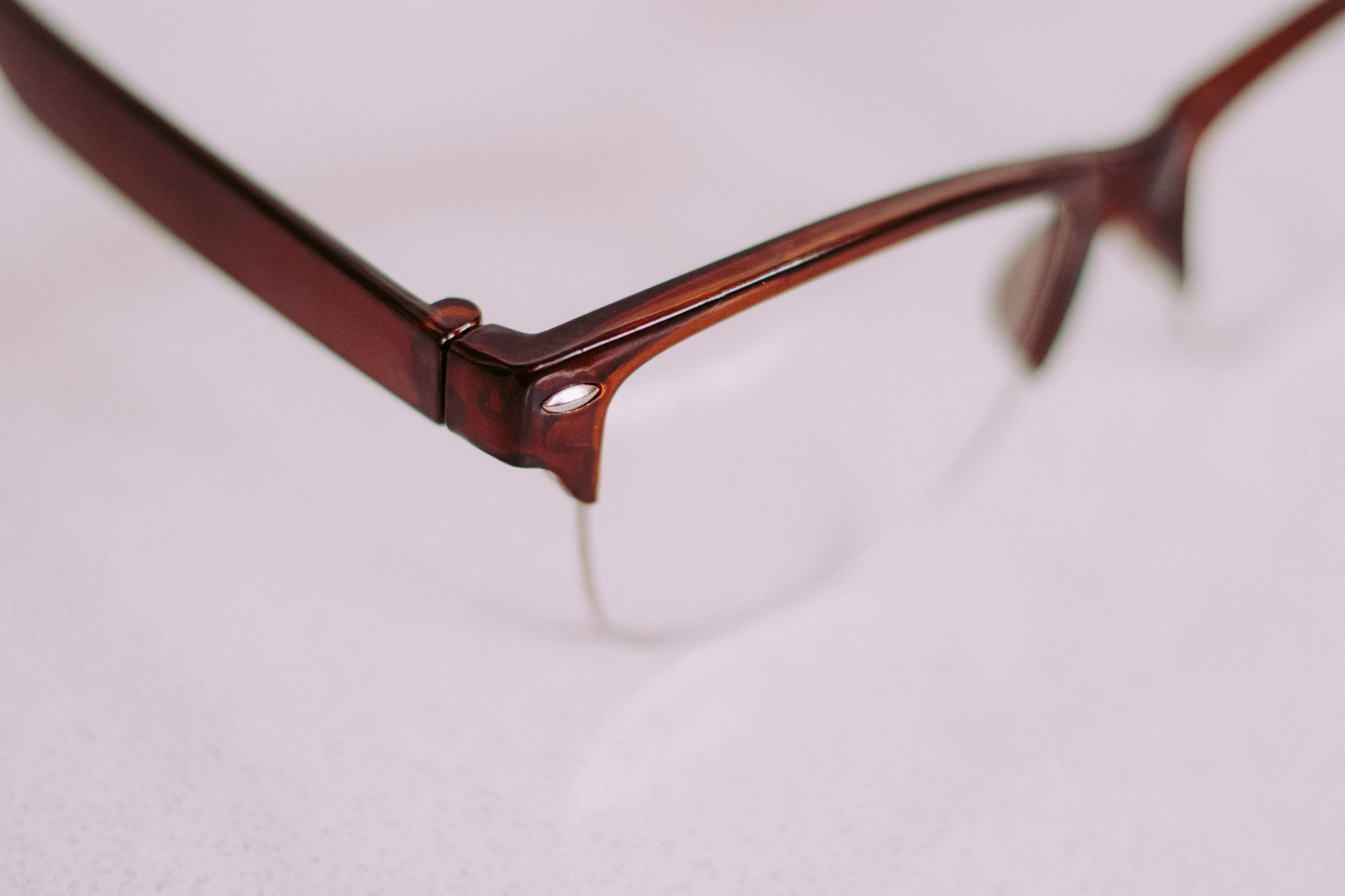
Why do glasses slide down your nose?
Glasses slide because the temples have lost their grip, the nose pads are set too wide, or the frame is simply heavier than the contact points can hold in place — often a combination of all three, made worse by heat, sweat, or oily skin softening the temple’s hold.
Metal frames with adjustable pads can usually be tightened in minutes. Acetate frames rely on the temple hinge and the curve behind the ear, so slipping there is more likely to mean the frame is the wrong size for the head rather than something a quick tweak will solve. This is one of the reasons trying on a genuinely wide range of shapes matters more than following a size label — the same nominal width sits completely differently depending on how the temples are cut. It’s also where the more decorative side of fit and the more practical side meet, which is worth reading about in the context of face shape and fit more broadly, alongside a candid look at whether face-shape rules for glasses actually hold up once fit enters the picture.
Does frame material change how glasses fit?
Yes. Metal frames flex and can be bent back into shape by an optician; acetate frames hold their moulded shape but can’t be adjusted the same way; and lighter materials reduce the pressure at the nose and ears simply by weighing less, which matters more for all-day wear than most people expect.
This is part of why two frames that look nearly identical can feel completely different once worn for a full day. A titanium frame and a thick acetate frame in a similar shape carry their weight very differently, and that difference shows up first at the nose. Browsing materials and craft before choosing a shape is a reasonable way to narrow things down, especially for anyone who has struggled with heavier frames in the past.
Can an optician adjust the fit after you buy?
Yes, and it’s routine. Nose pads can be repositioned, temples can be gently reshaped or reheated to change their curve, and hinges can be tightened if a frame has loosened with wear. Most opticians will do this as part of a standard fitting, and it’s worth going back for if a frame that fitted well at first starts to slip.
This is also the point at which it’s worth asking about the small etchings on the inside of the temple — the numbers that describe lens width, bridge width, and temple length. Understanding what the numbers inside a glasses frame mean makes it much easier to compare sizing across brands rather than relying on how a frame happens to look on the display stand.
Does sunglasses fit work the same way?
Broadly yes, with one addition: sunglasses often sit closer to the face or curve further round, so the same principles of level bridge and secure-but-gentle temple grip apply, plus a check that the frame doesn’t press the lashes or brow at that closer distance.
A pair that fits well on the nose and ears but still gives discomfort in bright conditions is usually a lens issue rather than a frame issue — worth reading alongside why some sunglasses give you a headache, since fit and lens choice are often confused for each other. And whatever the fit, it’s worth repeating a point that has nothing to do with comfort: a dark lens on its own is not sun protection. Protection comes from a stated UV filter — look for UV400 or 100% UVA/UVB on the label — not from how dark the tint looks or what the frame cost. A very dark, unrated lens can let more UV reach the eye than no sunglasses at all, because the tint encourages the pupil to open.
How do you know a frame actually fits, in the shop?
Nod the head firmly a few times without touching the frame — it should stay put. Push gently at the bridge to check for pinching. Run a finger behind the ear to check the temple isn’t digging in. Look in a mirror from the side to see whether the frame sits level rather than tilted.
- The frame is level across both eyes, not higher on one side.
- There’s no red mark on the nose after wearing it for several minutes.
- The temples don’t need constant pushing back up.
- The lashes don’t brush the back of the lens when blinking.
None of this replaces a proper fitting, but it’s a fair first filter — and it applies whatever the shape, from a soft panto frame to something bolder from the wider frames and styles archive. Style is a matter of taste; fit isn’t optional.
The Designer Glasses publishes general information and style opinion, not professional advice. We are writers and enthusiasts, not opticians, optometrists or dispensing opticians. Nothing here interprets a prescription, recommends a lens power, or tells you whether you need correction — only an eye examination can do that. If your vision changes suddenly, or you have eye pain, flashes, new floaters or halos around lights, treat it as urgent and contact an eye care professional the same day. Sunglasses should carry a stated UV rating: a dark lens without UV filtering is worse than none at all.