New glasses often feel wrong at first because the eyes, not the frame, are doing most of the adjusting. A different lens shape, a slightly different tilt or position on the face, or a genuine change in prescription all ask the brain to recalibrate — and that recalibration usually settles within a few days to two weeks.
Is it normal for new glasses to feel strange at first?
Yes, within limits. Mild blur at the edges, a sense that the floor is slightly tilted, or eye strain by the end of the first few days is common and typically temporary. It’s the brain adapting to new visual information, not a fault with the glasses.
What isn’t normal is anything sudden or severe: a sharp change in vision, eye pain, flashes of light, new floaters, halos around lights, or vision loss in one eye. None of that is a “give it a week” situation — it’s a same-day matter for an optometrist or ophthalmologist, regardless of how new the glasses are.
What is actually changing when a prescription changes?
Even a modest change in lens power shifts how the eye focuses at every distance, and the brain has to re-learn that mapping. Two other things move at the same time: the tilt of the lens relative to the eye, known as pantoscopic tilt, and how precisely the optical centre of the lens lines up with the pupil, which is a question of lens decentration and an accurate pupillary distance measurement.
None of this is something to interpret from the prescription itself — that’s an optician’s job, not a style writer’s. But it explains why identical lens power in a differently shaped or differently fitted frame can feel different on the face.
Why do progressive lenses take longer to settle than others?
Progressive and varifocal lenses pack more than one prescription into a single lens, with the correction changing gradually down the lens. That means head position and eye movement both matter more than they do with a single-power lens, and the brain needs longer to learn where to look for what.
A wider, swimmy distortion at the lens edges in the first days is common with this design and usually fades as the wearer learns to move their head rather than just their eyes. The full mechanics of this are covered in what a progressive lens adaptation period actually involves, which is worth reading before assuming the lenses are wrong.
Could the frame be the problem rather than the lenses?
Often, yes — and this is the part that’s easiest to check without any medical judgement at all. A frame that sits slightly too low, too high, or unevenly on the nose changes the effective tilt and position of the lens in front of the eye, which changes how it feels to look through, independent of the prescription.
- Glasses that pinch behind the ears or leave marks on the nose are a fit issue, not something to tolerate — see what causes glasses to pinch behind the ears and why glasses leave marks on the nose.
- Frames that slide down the nose during the day change the angle of the lens constantly, which makes visual adaptation harder — more on that in what it means when glasses slide down constantly.
The basics of how a frame should sit are laid out in how glasses should sit on the nose and ears, and it’s a useful reference before deciding whether a strange feeling is visual or purely mechanical.
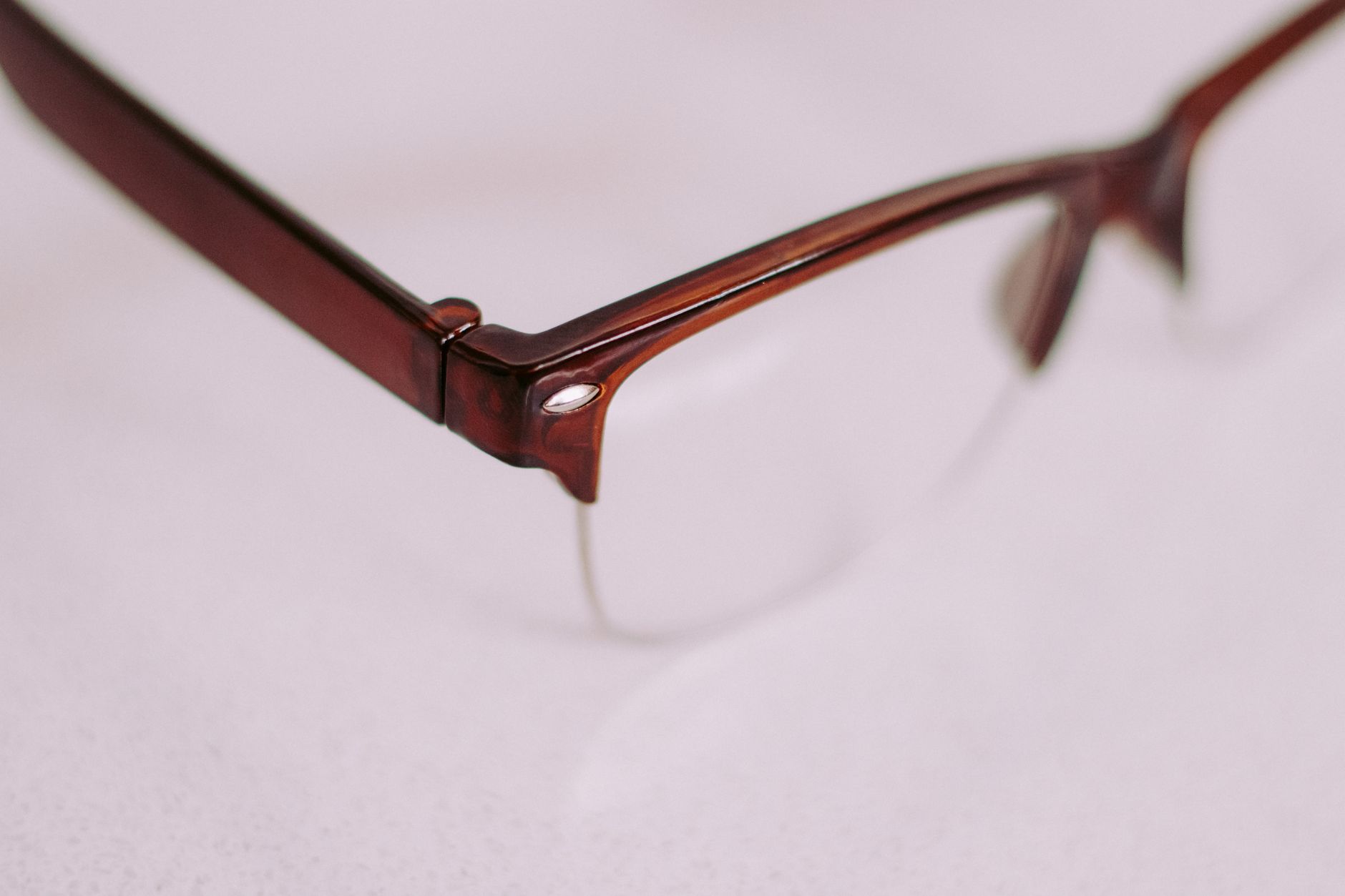
How long should the adjustment period actually last?
Most people settle into a new prescription or a new frame within a few days; more complex lens designs, like progressives, can reasonably take a couple of weeks. Genuine discomfort that persists well beyond that — not just a lingering awareness of the glasses, but actual strain, blur, or a frame that never feels settled — is worth raising with the dispensing optician who fitted them.
This is different from a symptom that appears suddenly out of nowhere. A slow, expected adaptation curve is normal. A sudden change partway through wearing the glasses, or vision that gets worse rather than better, is not something to wait out.
Does the frame material or coating affect how quickly glasses feel right?
Weight and balance matter more than most people expect. A frame that feels heavy at the temples or slips forward under its own weight is fighting the wearer all day, which makes any visual adjustment feel worse than it is — see why heavy frames feel worse by the end of the day.
Coatings can play a smaller role too. A fresh anti-reflective coating changes how light bounces off the lens surface, which some wearers notice as a subtle difference in contrast or glare for the first few days — explained further in the lenses and coatings archive. This settles as a visual habit, not because the coating itself changes.
When is it discomfort, and when is it a sign to see a professional?
The distinction matters. Mild, gradually improving strain or a sense of “not quite right” edges is the ordinary cost of adapting to new optics or a new fit. Sudden vision changes, eye pain, flashes, new floaters, halos around lights, or any loss of vision in one eye are not part of that curve — they warrant same-day professional attention, full stop, however new or old the glasses are.
If discomfort is purely mechanical — pressure points, slipping, an uneven sit — that’s a fit conversation, not a medical one, and it’s usually solved quickly. Frames do shift over time as well as at first fit; what causes frames to lose their shape over time is a useful read if the issue reappears months later rather than in the first week.
What can actually be fixed if glasses still feel wrong after two weeks?
A surprising amount is adjustable after the fact: temple angle, nose pad position, and the overall tilt of the frame on the face can all be tuned by hand at a proper fitting, as described in what can be adjusted on glasses, and what can’t. A frame that felt slightly wrong on day one is often a five-minute fix, not a reason to start again with a new pair.
Regular adjustment is also just part of owning glasses well, not a sign anything went wrong initially — see how often glasses should be professionally adjusted. What can’t be adjusted away is a genuine prescription mismatch, which is a conversation for the optician who wrote it, not a matter of tightening a hinge.
Does frame shape or fit style change how fast glasses feel normal?
It can. A frame shape and width that suits the wearer’s face reduces the number of small mechanical annoyances competing for attention while the eyes are already busy adapting to the lenses — a starting point covered in how wide a frame should be relative to face width and the broader face shape and fit archive.
None of this is about symmetry rules or which shape is supposedly “correct” for a given face — those are styling conventions, useful as a starting point, not settled science. But a frame that fits properly, at the right width and temple length, simply gives the eyes one less thing to fight while they do the actual work of adjusting.
What’s the sensible way to handle the first week with new glasses?
Wear them consistently rather than switching back and forth with an old pair, since inconsistent use slows the brain’s recalibration rather than speeding it up. Note whether discomfort is improving day by day — that’s the sign of normal adaptation — or staying flat or worsening, which is the cue to go back to the optician who fitted them.
Keep the fit itself in good order in the meantime: clean lenses, a frame that isn’t sliding, and pads that aren’t digging in remove the variables that have nothing to do with the prescription. The care and comfort archive is a reasonable place to start if the glasses feel more uncomfortable than they should, independent of vision.
Related reading
How Often Should Glasses Be Professionally Adjusted?, What Causes Frames to Lose Their Shape Over Time?, Choosing Glasses, How Eyewear Works, How to Stop Glasses Slipping in Hot Weather
The Designer Glasses publishes general information and style opinion, not professional advice. We are writers and enthusiasts, not opticians, optometrists or dispensing opticians. Nothing here interprets a prescription, recommends a lens power, or tells you whether you need correction — only an eye examination can do that. If your vision changes suddenly, or you have eye pain, flashes, new floaters or halos around lights, treat it as urgent and contact an eye care professional the same day. Sunglasses should carry a stated UV rating: a dark lens without UV filtering is worse than none at all.