Frames lose their shape through a combination of heat, pressure and repeated small stresses — being sat on, left on a warm dashboard, folded the wrong way night after night, or simply worn past the point where the material can spring back. Acetate softens and drifts; metal fatigues and bends; hinges loosen and let the whole front sag. None of it happens in one dramatic moment.
What is actually happening inside the material?
Every frame material has a working temperature and a stress limit, and shape loss is what happens when either gets exceeded, even slightly, over and over. Acetate softens with warmth and humidity; metal deforms permanently once bent past its elastic range. The damage is cumulative, not sudden.
Acetate is a plasticised material — it is workable when warm precisely because that plasticity lets a maker heat and shape a sheet in the first place, as covered in how a frame is actually made, from sheet to finished pair. The same property that makes it easy to fit also makes it vulnerable to drifting out of true when it’s warmed unintentionally, by a hot car or a radiator, rather than deliberately by someone who knows what they’re doing.
Metal behaves differently. It doesn’t soften with warmth the way acetate does, but it has a limited amount of “give” before a bend becomes permanent. Push a temple past that point — sitting on glasses is the classic culprit — and the metal doesn’t spring back on its own. It stays bent until someone corrects it.
Does heat cause frames to lose their shape?
Yes — heat is one of the most reliable ways to distort a frame, particularly acetate. A hot car, a windowsill in direct sun, or a bag left near a radiator can soften the material enough that its own weight, or the pressure of a case, pulls it out of shape.
This is why glove compartments and parcel shelves are worse storage spots than they look. The temperature swings are large and repeated, and acetate has a long memory for exactly the wrong things. A single hot afternoon rarely ruins a frame outright, but a summer of them will visibly change how the front sits, especially around the bridge and the temple joints where the material is thinner.
Metal frames are more heat-tolerant in daily conditions, but extreme heat still matters for soldered joints and for any plating, which is a separate issue covered in what plating on glasses is, and why it wears through.
Why do metal frames bend out of alignment?
Metal frames lose shape mainly through repeated mechanical stress — sitting on them, one-handed removal that twists the front, or a knock that bends a temple slightly. Each event may be too small to notice, but metal doesn’t fully recover from bending, so small distortions accumulate.
The alloy matters here. Pure titanium resists fatigue well and tends to return closer to its original line after minor stress, which is part of what titanium actually buys a frame beyond its light weight. Monel, still common in mid-range metal frames, is easier to adjust precisely because it’s softer — which is convenient for an optician but also means it takes a set more readily from everyday handling, a trade-off explained in what Monel is, and why it’s so common in glasses.
Weight plays a role too. A heavier front puts more leverage on the temples every time the glasses are removed, which is one reason heavy frames feel worse by the end of the day and also tend to drift out of alignment faster.
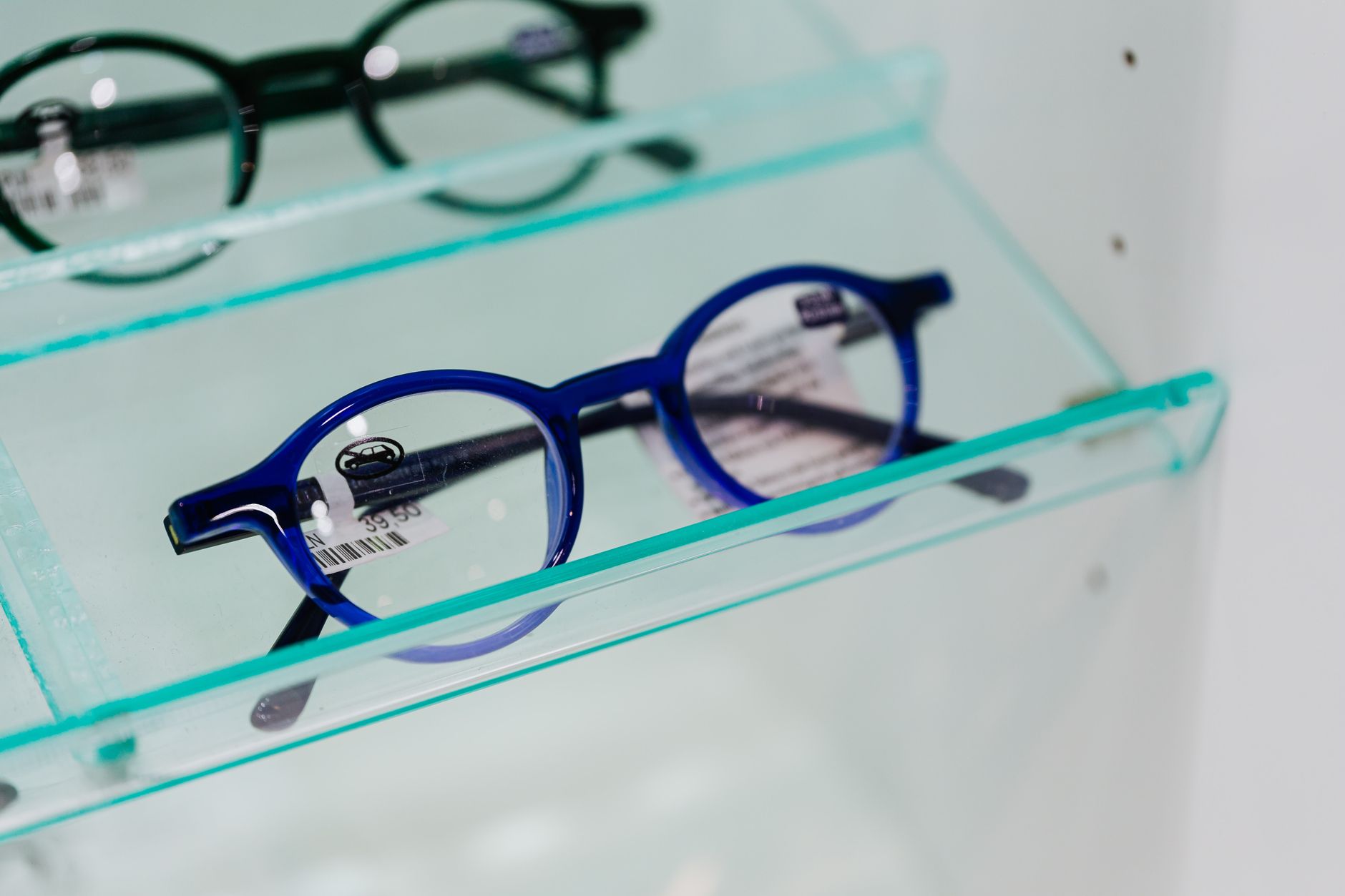
Can acetate frames warp on their own, without an obvious cause?
Acetate can shift shape slowly even without a single obvious incident, because it continues to release the plasticisers used to make it workable, long after manufacturing. This is a slow, natural ageing process rather than damage, and it’s connected to why acetate eventually loses flexibility.
Over years, that same slow chemical change is part of why some older frames become brittle rather than pliant — a related but distinct problem covered in why some glasses frames yellow or go brittle with age. A frame that’s losing its shape and one that’s turning brittle are often further along the same timeline, just showing different symptoms of it.
Good acetate — thicker sheet, properly cured, well hand-finished — resists this for longer. The difference between a frame that holds its line for a decade and one that softens within a couple of years often comes down to the acetate itself, which is worth understanding via what acetate is, and why good frames use it, and how it compares with cheaper alternatives in acetate versus injection-moulded plastic.
Do hinges contribute to a frame losing its shape?
Yes — a loose or worn hinge lets the temples splay outward or drop out of alignment with the front, which changes the frame’s overall geometry even if the acetate or metal itself is undamaged. A frame can feel misshapen simply because the hinge no longer holds its angle.
Spring hinges, prized for their give, wear in a specific and fairly predictable way, detailed in what a spring hinge is, and how it fails. Rigid hinges without spring loading don’t fail the same way, but they do loosen at the screw over time, changing how the temple sits against the head. Either way, hinge quality is a large part of what separates a frame that keeps its shape from one that gradually goes soft at the sides — the subject of what makes a hinge feel good on a pair of glasses.
Does storage affect how well a frame holds its shape?
Storage is one of the most controllable factors. Frames left face-down, tossed in a bag without a case, or balanced open on a nightstand take on stress in exactly the spots — bridge, temple tips, hinge barrels — that show shape loss first.
A hard case, closed and stored flat, removes almost all of that risk. The full reasoning, including why a soft pouch isn’t quite the same thing, is in how glasses should be stored. It’s a small habit that does a disproportionate amount to keep a frame’s original line intact.
- Leaving glasses lens-down scratches coatings but leaves-open on a flat surface stresses the temples and hinge.
- A warm pocket or bag does the same slow damage as a hot car, just more slowly.
- Folding temples the “wrong” way — over rather than under, or vice versa — puts sideways load on a hinge it wasn’t built for.
Can a frame that’s lost its shape be fixed?
Sometimes, but not always. Metal frames can usually be gently re-bent back into alignment, provided the metal hasn’t fatigued to the point of cracking. Acetate can often be reheated and reshaped by someone who knows how, within limits. What can’t be reversed is material that’s become genuinely brittle, or plastic that’s crazed and lost its structural integrity.
The honest boundary between what a good optician or repairer can correct and what’s permanent is laid out in can glasses be adjusted, and what can’t be fixed. As a general rule: alignment problems are fixable, material degradation is not.
Does the choice of frame material change how long the shape lasts?
Material is the single biggest factor in how long a frame holds its original line, more than how carefully any one person treats it. Some materials are inherently more dimensionally stable than others, and that stability is part of what separates budget frames from ones built to be re-fitted and worn for years.
Stainless steel and titanium hold alignment well and resist fatigue, as detailed in what stainless steel is like as a frame material. Beta-titanium goes further, offering flex that returns to true rather than staying bent, discussed in what beta-titanium is, and where it’s used. Wood and horn frames behave differently again, reacting to humidity rather than heat, covered in what a wooden frame is like to actually own and what horn and buffalo horn frames are. None of this is about one material being universally “better” — it’s about knowing what a given material is prone to, so shape loss reads as expected wear rather than a fault.
For a broader sense of how construction quality affects longevity generally, the Materials & Craft archive covers frame-building in more depth, and Care & Comfort covers the daily habits that slow all of this down.
The Designer Glasses publishes general information and style opinion, not professional advice. We are writers and enthusiasts, not opticians, optometrists or dispensing opticians. Nothing here interprets a prescription, recommends a lens power, or tells you whether you need correction — only an eye examination can do that. If your vision changes suddenly, or you have eye pain, flashes, new floaters or halos around lights, treat it as urgent and contact an eye care professional the same day. Sunglasses should carry a stated UV rating: a dark lens without UV filtering is worse than none at all.