Monel is a nickel-copper alloy, and it turns up in eyewear because it solders easily, holds a spring temper well, and resists corrosion better than plain steel — all at a manufacturing cost far below titanium. That combination is why so many metal frames, from budget to mid-range designer, use it somewhere, usually in the hinge or the temple core.
What exactly is monel made of?
Monel is roughly two-thirds nickel and one-third copper, with small amounts of iron and manganese depending on the specific grade. It was originally developed for marine and industrial hardware, valued for shrugging off saltwater and chemical exposure without much fuss. Eyewear manufacturers borrowed it decades ago for the same reason boat fittings use it: it doesn’t need to be exotic to be reliable.
In frame terms, it behaves like a well-mannered mid-weight metal. It’s easy to cut, stamp, and shape into small, precise components, and it takes plating and lacquer coatings cleanly, which is part of why so many metal frames arrive in a wide range of finishes.
Why do frame makers use it so much?
Because it does the unglamorous structural work of a frame — hinges, cores, screws, sometimes the whole front — reliably and cheaply. Monel solders well, which matters enormously in hinge assembly, where dozens of tiny joints need to hold under constant flexing. It also has a genuine spring quality, so temples snap back into shape rather than staying bent, which is a large part of what makes a metal frame feel durable day to day.
Cost is the other half of the story. Monel is far less expensive to source and machine than titanium or its beta-titanium variants, which is why it dominates the mid-market and appears even inside frames marketed as premium, often under a plating layer of gold, silver, or gunmetal. For a broader look at how metal choice shapes what a frame costs and how it wears, the Materials & Craft archive is a useful starting point.
Does monel cause allergic reactions?
Monel contains nickel, and nickel is one of the most common contact allergens there is — for some wearers, prolonged skin contact with a nickel-containing alloy can cause irritation, typically where the frame rests on the nose or behind the ears. This is a skin sensitivity issue, not an eye health one, and it varies enormously between people. If a frame is irritating the skin, that’s worth raising with whoever fitted the glasses, who can advise on plating, coatings, or alternative materials suited to the individual.
Reputable manufacturers now often coat monel components in a barrier layer specifically to reduce direct nickel contact, which is part of why reactions are less common than the raw material alone would suggest.
How does monel compare with titanium and stainless steel?
Stainless steel sits close to monel in the market — both are workhorse alloys chosen for cost and durability rather than for being remarkable. Steel is generally a little stiffer and less prone to fatigue over very long use, while monel’s advantage is how readily it solders and takes fine detail in small parts like hinges.
Titanium is the step up from both. It’s lighter for the same strength, more resistant to corrosion, and largely hypoallergenic, which is why it costs more and why frames built from it are marketed on that fact. The trade-offs are covered in more detail in What Is Titanium, and What Does It Buy You in a Frame?, and the more flexible titanium alloy used in springier hinges is explained in What Is Beta-Titanium, and Where Is It Used?. Monel isn’t trying to compete with either — it’s doing a different job at a different price point, and doing it competently.
Where does monel actually show up on a frame?
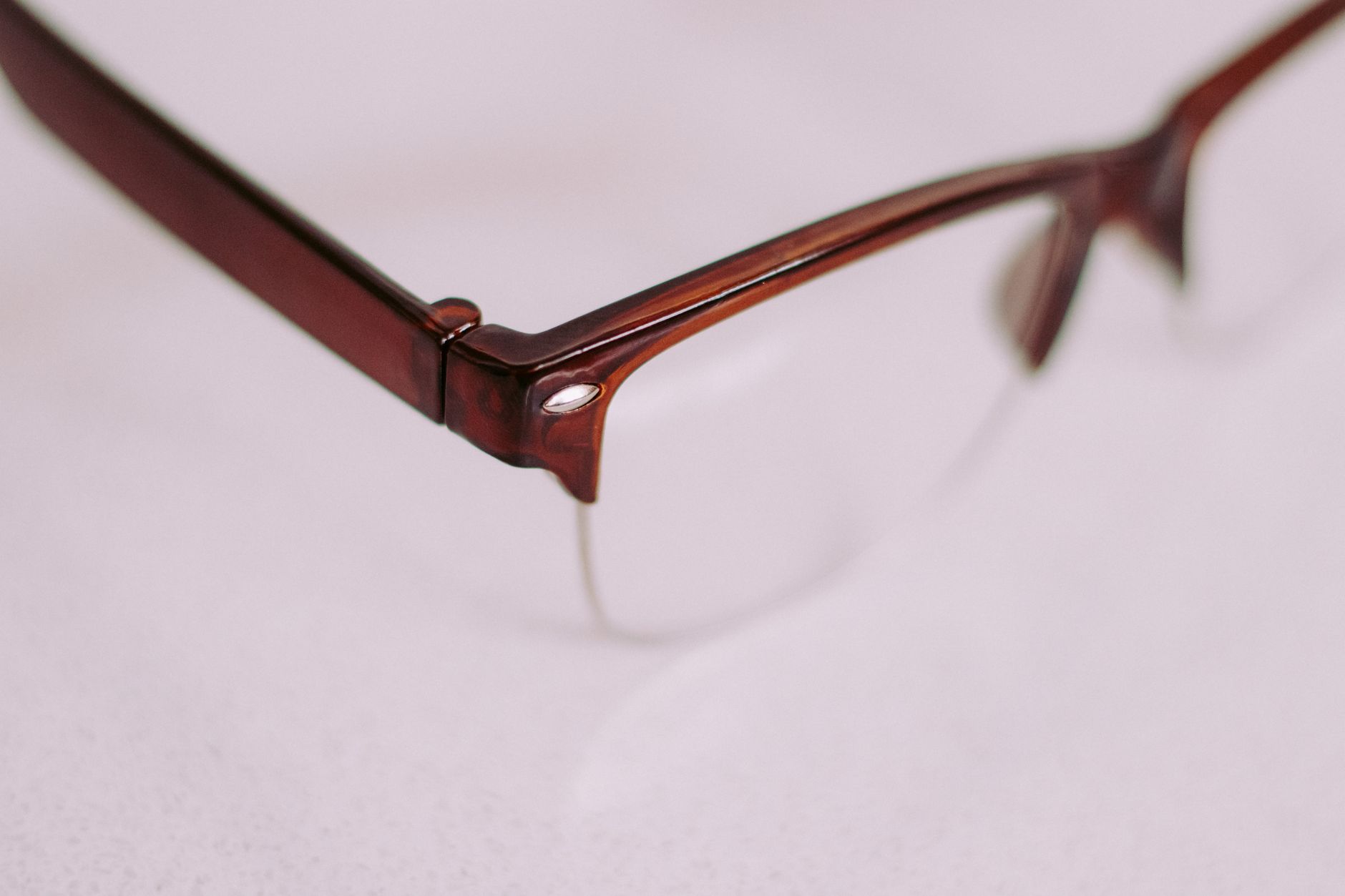
Most commonly in the hinge barrels and the temple core, even in frames where the visible front is acetate. A metal skeleton inside an acetate temple is often monel, chosen precisely because it won’t be seen but needs to flex reliably for years. It also appears in rimless and semi-rimless construction, where the metal has to do real structural work holding the lens in place.
- Hinges and hinge screws, where solderability and spring matter most
- Temple cores hidden inside acetate or laminated temples
- Full metal fronts on mid-priced frames, often plated
- Nose pad arms on adjustable-pad frames
The tiny numbers stamped inside a temple arm sometimes reference the metal content directly, alongside size markings — a full explanation of what those figures mean is in What Do the Numbers Inside a Glasses Frame Mean?.
Does monel affect how a frame looks?
Not on its own — monel is almost always plated or lacquered, so the visible finish is whatever coating sits on top of it, not the base alloy. What it does affect is proportion and weight. Because monel can be worked into very fine, delicate hinge components, it supports the thin, slightly severe wire-frame look that heavier metals can’t achieve as cleanly. Frames built around delicate metal detailing owe a lot of their silhouette to alloys like this one; the broader question of how metal choice shapes shape and line is explored in the Frames & Styles archive.
It’s also part of why hinge quality varies so much between otherwise similar-looking frames. A well-soldered monel hinge that’s been properly finished will move smoothly and stay tight for years; a poorly finished one will loosen and rattle regardless of how good the frame looks on the shelf. That’s a construction question worth asking about directly when comparing frames, alongside what can and can’t be adjusted once a hinge starts to wear.
Is monel a sign of a cheap frame?
No — it’s a sign of a sensibly specified frame, not necessarily a cheap one. Monel is used across a huge range of price points, including many well-regarded designer names, because it does the job hinges need it to do without adding unnecessary cost. What separates a good monel-hinged frame from a mediocre one isn’t the alloy itself but the quality of the soldering, the plating, and the overall fit and finish.
The more useful questions when comparing two metal frames are about construction and fit rather than the base alloy: how the hinge feels when opened and closed, whether the temple length suits the wearer’s head, and whether the frame is likely to pinch behind the ears over a full day. Monel is simply the quiet, reliable material doing the structural work behind most of those answers — rarely the headline, but very often the reason a hinge still works properly five years in.
The Designer Glasses publishes general information and style opinion, not professional advice. We are writers and enthusiasts, not opticians, optometrists or dispensing opticians. Nothing here interprets a prescription, recommends a lens power, or tells you whether you need correction — only an eye examination can do that. If your vision changes suddenly, or you have eye pain, flashes, new floaters or halos around lights, treat it as urgent and contact an eye care professional the same day. Sunglasses should carry a stated UV rating: a dark lens without UV filtering is worse than none at all.