Pinching behind the ears almost always comes down to temple length or the position of the bend — not the frame’s width, and not “sensitive skin.” If the arm bends too far forward or too far back of where your ear actually sits, the curved tip has to grip harder to stay put, and that grip is what you feel as pressure by the end of the day.
Is it the temple length or the frame width?
It’s temple length far more often than width. A frame can be the right width across the face and still pinch, because the arms simply run out of frame before they reach the natural curve behind the ear, forcing the tip to hook in at the wrong angle.
Temple length is measured from the hinge to the tip and is usually printed as a number inside the arm, alongside the lens width and bridge size. It’s worth knowing what those numbers actually mean before assuming a frame is faulty — the numbers inside a glasses frame tell you more about fit than most people realise. For a deeper look at why this measurement matters more than shape or brand, see what temple length is and why it matters more than you think.
Why do new glasses pinch when older ones didn’t?
New frames pinch when their proportions differ from what your face and ears have adjusted to over time, even if the size looks similar on paper. Head width, ear position, and how far the temples need to travel before curving all vary between models — and between brands using the same stated size.
This is also why a frame that felt perfect off someone else’s face can feel entirely wrong on yours. Overall frame width relative to your face plays a role too; if a frame is genuinely too wide, the arms splay outward under tension and the tips dig in as they try to correct course. How wide a frame should be relative to your face covers how to judge that before pinching becomes the story.
Does head shape matter as much as frame shape?
Head shape matters more than most buyers expect. A narrower head with ears set close to the skull needs a shorter, tighter curve than a broader head, and standard frame sizing is built around averages, not your specific measurements.
This is part of why some ranges are built to different proportions altogether rather than just different widths. If you’ve ever tried on two frames labelled the same size that fit completely differently, standard vs Asian-fit frames and the real difference between them explains one of the clearest examples of how base proportions, not just size, change what pinches and what doesn’t.
Can nose pads or bridge fit cause ear pinching too?
Yes — if the front of the frame isn’t sitting correctly, the whole pair shifts, and the temples end up gripping the ears harder to compensate. A frame that slides forward on the nose often gets “held on” by pressure at the ears instead, which is a fix in the wrong place.
The nose and the ears work as a pair, not two separate problems. How glasses should sit on your nose and ears is worth reading alongside this, and if the nose pads themselves are contributing, what nose pads are for, and when adjustable ones help explains when that’s the actual fix rather than the temples.
What material makes temples pinch more or less?
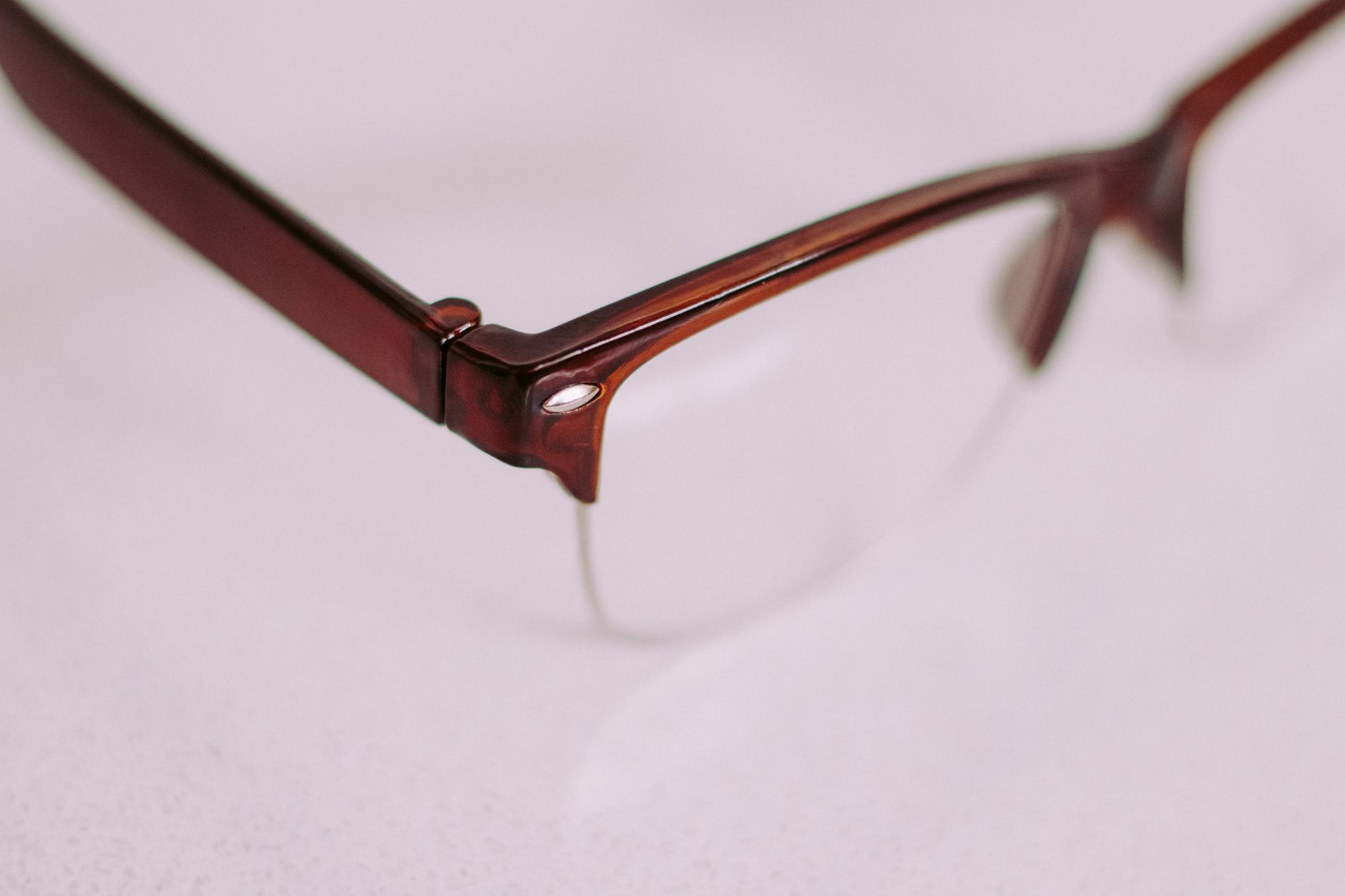
Rigid materials hold their shape but don’t forgive an imperfect fit, while more flexible or memory materials can flex slightly around the ear without needing to grip as tightly. Neither is automatically better — it depends on whether the base shape was right to begin with.
Acetate temples are typically stiffer and rely on precise bending to sit well; some metals and modern flexible alloys allow a bit more give at the point behind the ear. This is a genuine construction difference worth comparing when you’re trying on frames, not just a marketing line — the materials and craft category goes into how different frame materials behave once they’re actually on a face rather than on a display.
How do you fix pinching without ruining the fit?
Most pinching from an otherwise decent frame can be adjusted rather than replaced. A proper adjustment resets the angle of the bend so the arm follows the shape behind the ear instead of fighting it, and it usually takes minutes.
- Ask for the bend point to be checked — it should sit just behind the top of the ear, not partway down.
- Check that both temples bend by the same amount; an uneven adjustment pinches on one side only.
- If the frame constantly slides forward first, fix that before touching the ear tips, since one problem is often masking the other.
If sliding is the real root cause, what it means when glasses slide down constantly is the more useful starting point than adjusting the ear pieces on their own.
When is pinching a sign the frame is simply wrong?
Pinching that returns immediately after every adjustment usually means the frame’s base proportions don’t suit your head, not that it needs another tweak. Repeated bending also fatigues metal and stresses hinges, so a frame that needs constant correction is telling you something.
At that point it’s worth stepping back and looking at the frame’s overall proportions rather than chasing the symptom. Face-shape conventions are a reasonable starting point for narrowing down options, but they’re styling opinion, not rules — whether face-shape rules for glasses actually hold up is a fair read before assuming a shape is wrong for you rather than just poorly fitted. And if the marks left behind are as much a concern as the pinching itself, why glasses leave marks on your nose, and the fix covers the companion problem that tends to show up alongside it.
Broader shape and style choices sit in the frames and styles archive, which is worth browsing once fit is sorted, rather than before — a frame that pinches will never look as good as it’s supposed to, no matter how flattering the shape is on paper.
The Designer Glasses publishes general information and style opinion, not professional advice. We are writers and enthusiasts, not opticians, optometrists or dispensing opticians. Nothing here interprets a prescription, recommends a lens power, or tells you whether you need correction — only an eye examination can do that. If your vision changes suddenly, or you have eye pain, flashes, new floaters or halos around lights, treat it as urgent and contact an eye care professional the same day. Sunglasses should carry a stated UV rating: a dark lens without UV filtering is worse than none at all.