Acetate is a semi-synthetic material cut and shaped from solid sheet, block by block, frame by frame — which is why it can carry depth, layered colour and a warm, slightly matte hand-feel. Injection-moulded plastic is poured molten into a mould and set, which makes it faster and cheaper to produce but flatter in colour and less forgiving in fit.
What is acetate, exactly?
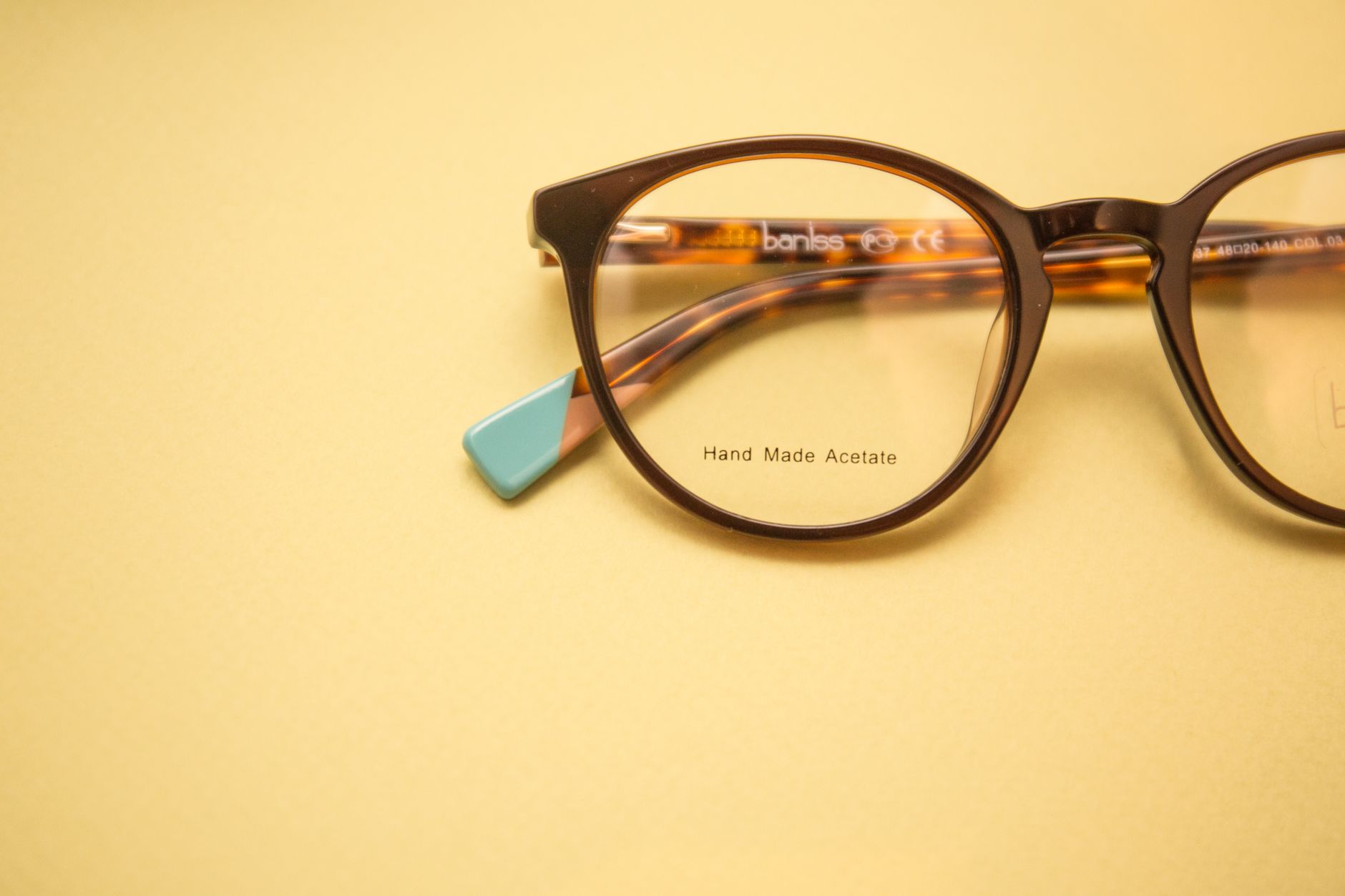
Acetate is a plant-derived plastic — typically cellulose acetate — that arrives at the factory as flat sheet, sometimes solid colour, sometimes with several colours laminated together like a geological cross-section. A frame is cut from that sheet, then shaped, sanded, polished and hinged by hand or semi-hand process.
Because the colour runs through the material rather than sitting on top of it, acetate can show marbling, translucency and gradient in a way that reads as genuinely dimensional rather than printed. Chip an acetate frame and the colour underneath usually matches, or shifts gradually, rather than exposing a different substrate. For a longer look at how this material is made and why so many well-regarded frames still use it, see what acetate is and why good frames use it.
What is injection-moulded plastic?
Injection moulding starts with a different question: how do you make thousands of identical frames as efficiently as possible? Molten plastic — often a nylon-based polymer, sometimes a cheaper generic plastic — is injected under pressure into a metal mould shaped like the finished frame, then cooled and released.
The result comes out of the mould already close to its final shape, which cuts labour and cost dramatically. Colour is typically mixed into the plastic before moulding, so it tends to be flat and consistent — good for uniformity, less good for the kind of visual depth acetate offers.
Why does acetate cost more to produce?
Because so much of the process is subtractive and manual. A block of sheet is cut down to a rough frame shape, then ground, filed, buffered and polished in stages — a process that can take many separate steps before a frame is finished, compared with a mould that produces a near-final shape in one cycle.
That labour is where the cost sits. It is not a marketing premium; it is the difference between machining something from raw stock and casting it. The category page on materials and craft covers other frame materials worth comparing against both of these.
Does the difference actually show on the face?
Yes, in a few specific ways. Acetate frames tend to have slightly rounded, softened edges from the polishing process, and a certain heft and warmth to the touch. Injection-moulded frames often have crisper, more geometric edges straight from the mould, and can feel lighter or more uniform in thickness.
Colour is the clearest tell. Hold a laminated acetate frame up to light and you may see genuine translucency or a colour shift toward the edges. Injection-moulded plastic in the same shade will usually look identical all the way through. Neither is wrong — but they read differently, and that reading is part of what people are paying for when they choose one over the other. More on how tone and finish change perception in how frame colour changes how glasses read.
Which one fits better?
This depends more on the individual frame than the material category, but there are tendencies. Acetate can be finely adjusted with heat — the temples and bridge can be gently warmed and reshaped to sit closer to an individual face, which is one reason opticians still favour it for adjustment. Injection-moulded plastics vary: some tolerate gentle heat adjustment reasonably well, others are stiffer and more prone to stress-whitening or cracking if pushed.
If a frame needs fine-tuning around the nose or temple, it’s worth asking what it’s made from before assuming it can simply be bent to fit. For what’s actually adjustable and what isn’t, see can glasses be adjusted, and what can’t be fixed. Fit itself is a separate question from material — comfort over a full day owes as much to weight distribution and temple length as to what the frame is made of, which is covered in what makes a frame comfortable over eight hours and what temple length actually changes.
Is one more durable than the other?
Durability depends on the specific formulation and construction more than the broad category. Well-made acetate can last for years and often ages well, developing a slight patina rather than looking worn. Cheap injection-moulded plastic can become brittle over time, particularly with sun and heat exposure, and colour can fade unevenly since it was never more than surface-deep to begin with.
But there is also good injection-moulded eyewear built for exactly this kind of stress — sports and wraparound sunglasses, for instance, are frequently moulded from tougher engineering plastics precisely because that construction can be optimised for flex and impact resistance in ways hand-cut acetate cannot easily match. See what sports sunglasses are built differently for and what a wrap frame actually solves for where moulded construction earns its place.
How can you tell which material a frame is made from?
A few practical checks help:
- Look at the edge of the frame near the hinge — acetate often shows subtle layering or colour depth; moulded plastic usually looks flat and uniform through its thickness.
- Feel the weight and surface — acetate tends to feel slightly warmer and denser; cheaper moulded plastic often feels lighter and colder to the touch, sometimes with visible seam lines from the mould.
- Check for a stamp inside the temple — better acetate frames are often marked, and the numbers there mean more than most people assume. See what the numbers inside a glasses frame mean.
Does the material affect how a frame shape reads on your face?
Indirectly, yes. Colour depth and edge softness change how a shape presents. A round or oversized acetate frame in a marbled tortoiseshell will look considerably different from the same silhouette moulded in flat black plastic, even though the geometry is identical. Face-shape conventions are a reasonable starting point for choosing a silhouette in the first place — worth treating as opinion rather than rule, as discussed in whether face-shape rules for glasses actually hold up — but material and finish are what decide whether a shape looks considered or generic once you’ve settled on it.
For sunglasses specifically, where frames sit closer to the face and colour is often more prominent, the interplay between material finish and lens tone matters even more. The sunglasses and frames and styles archives cover both sides of that decision in more depth.
So which should you choose?
Neither material is objectively better — they solve different problems. Acetate rewards attention: colour depth, adjustability, a certain warmth on the face, at a higher production cost. Injection-moulded plastic rewards consistency and, in the right engineering grade, genuine toughness for active use, at a lower cost and with less individual character.
The honest way to choose is to handle the actual frame in front of you rather than assume the category tells the whole story — check the edge finish, the weight, the flex, and how it sits once adjusted, using the checks above as a starting point rather than a verdict.
The Designer Glasses publishes general information and style opinion, not professional advice. We are writers and enthusiasts, not opticians, optometrists or dispensing opticians. Nothing here interprets a prescription, recommends a lens power, or tells you whether you need correction — only an eye examination can do that. If your vision changes suddenly, or you have eye pain, flashes, new floaters or halos around lights, treat it as urgent and contact an eye care professional the same day. Sunglasses should carry a stated UV rating: a dark lens without UV filtering is worse than none at all.