A hinge feels good when it opens and closes with a smooth, even resistance — no grinding, no sudden give, no floppy overshoot — and when it holds the temple exactly where you set it, pair after pair, for years. That feel comes from tolerances, spring behaviour and material choice, not from any one mechanism being inherently superior.
Most people never think about hinges until one starts to feel wrong. It’s a small, cheap-looking component that does a disproportionate amount of work: every time glasses go on or come off, the hinge is absorbing the flex. Get the engineering right and it disappears into the background. Get it wrong and you notice it every single day.
What actually happens inside a hinge when it feels right?
A hinge feels right when the barrel, the screw or pin, and the surrounding metal all sit at tolerances so tight there’s no play between them. The temple swings through its arc against a controlled, consistent resistance and stops cleanly at the open position rather than drifting past it.
That consistency is a manufacturing outcome, not a design flourish. It depends on how precisely the barrels were drilled and aligned when the frame was made, how well the screw thread was cut, and whether the metal around the joint is dense enough to hold its shape under repeated flex. This is part of why the broader question of how a frame is actually made, from sheet to finished pair matters more to the way glasses feel than most people assume — the hinge is assembled at the same stage as everything else, and sloppiness there tends to show up elsewhere too.
Why do some hinges feel loose within weeks?
A hinge usually loosens because the screw has backed out slightly under repeated flexing, or because the barrel itself has worn from metal-on-metal contact without enough tolerance built in. Cheaper stamped hinges are more prone to this than machined ones, because there’s less mass and precision to absorb the movement.
Play in a hinge shows up as a temple that swings too freely, sits slightly open when it should be flush, or makes a faint clicking sound that wasn’t there originally. None of that is really about the plating or the colour of the frame — it’s about what’s happening at a joint a few millimetres wide, thousands of times a year.
Does a spring hinge feel better than a fixed one?
Not automatically — it feels different, and better suited to some situations. A spring hinge lets the temple flex outward beyond its normal stopping point and return, which is genuinely kinder to the frame if it gets pulled on, taken off one-handed, or worn over thick hair.
The trade-off is that a spring hinge has more moving parts to eventually fail, and a worn spring hinge tends to feel soft or spongy rather than crisp. A fixed hinge, by contrast, either feels precise or it doesn’t — there’s no cushioning mechanism to mask a manufacturing shortfall. The full mechanics of how spring hinges wear out are covered in what a spring hinge is and how it fails, which is worth reading before assuming a spring hinge is always the safer choice.
What is a screwless hinge doing differently?
A screwless hinge holds the temple in place through interlocking metal parts and tension rather than a visible screw, which removes one specific failure point — the screw working loose — but introduces its own set of tolerances that have to be right from the start.
When a screwless hinge is made well, it can feel exceptionally tight and quiet, because there’s no threaded fastener to ever back out. When it isn’t, there’s no simple screwdriver fix available the way there is with a conventional hinge. What a screwless hinge is and how it works goes into the mechanism in more detail, including why some wearers actively seek it out and others find it harder to have adjusted.
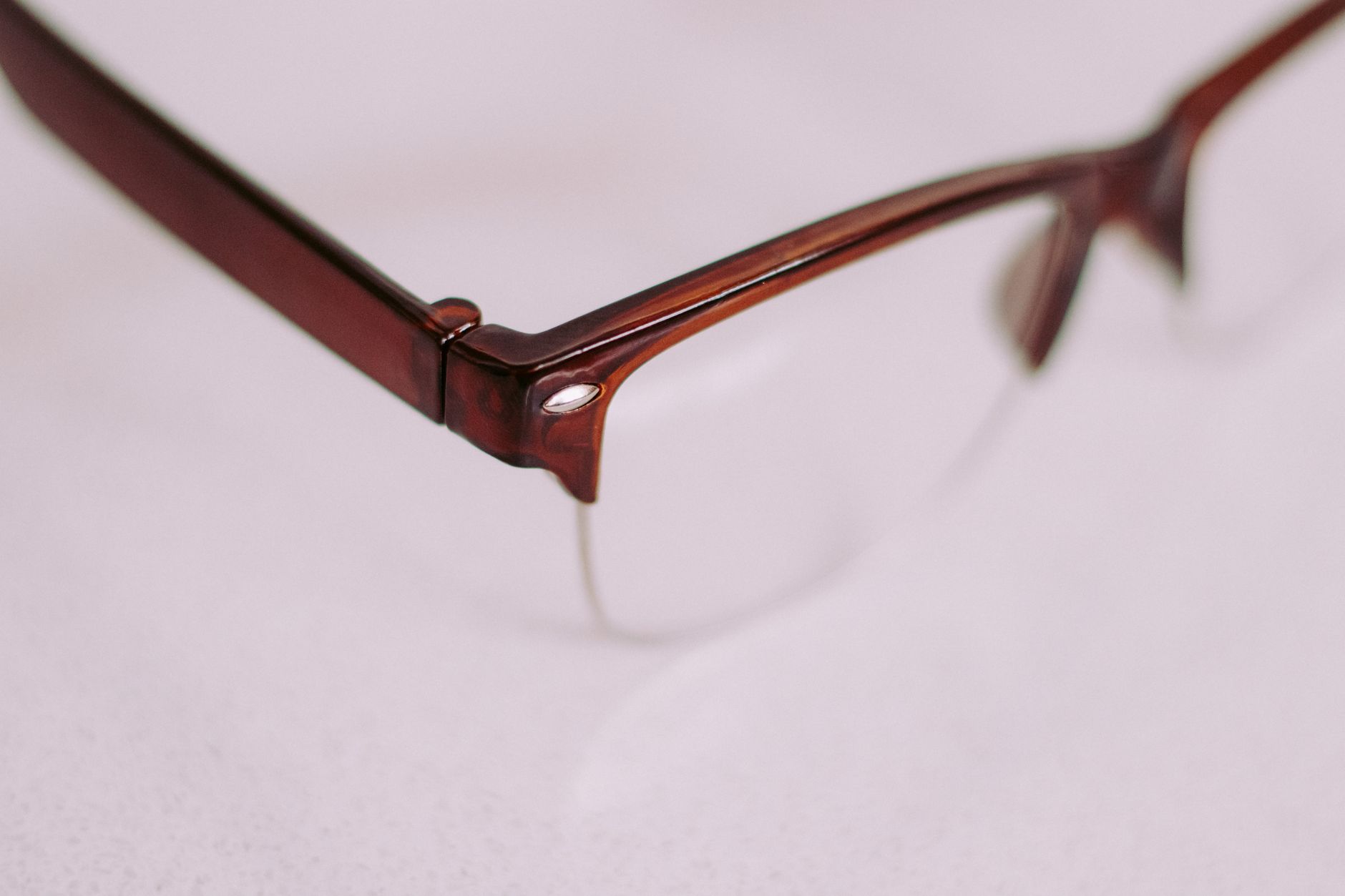
Why do rivet hinges feel different from screwed ones?
A rivet hinge is set permanently at the factory rather than assembled with a removable screw, which tends to produce a very tight, immovable feel from day one — there’s simply nothing to loosen over time in the way a screw can.
The trade-off runs the other way: if a rivet hinge does eventually wear, it usually can’t be tightened at home or by a local optician, because there’s no screw to turn. It’s a deliberate choice some makers still stand by, and what a rivet hinge is and why some makers still use it explains the reasoning behind keeping an old-fashioned joint in a modern frame.
Does the frame material change how the hinge feels?
Yes — the metal or acetate around the hinge barrel affects how much flex the joint can absorb before it transfers strain to the screw or pin. Denser, springier metals tend to protect the hinge better than soft alloys, which is part of why hinge feel and frame material are hard to separate.
Titanium and beta-titanium hold their shape under repeated flexing better than many softer alloys, which is one reason hinges on titanium frames often feel tight for longer — a point worth understanding alongside what titanium actually buys you in a frame. Monel, the nickel alloy used in a huge share of metal eyewear, behaves differently again; what monel is and why it’s so common in glasses covers where it holds up and where it doesn’t. On acetate frames, the hinge is usually set into a metal core embedded in the plastic, so the acetate itself has almost no bearing on hinge feel — it’s the quality of that hidden core that counts. The broader question of frame construction and where corners get cut is covered across materials and craft.
Can a bad-feeling hinge be fixed?
Sometimes. A loose screw hinge can usually be tightened or re-tapped by an optician; a worn spring hinge can sometimes be replaced. What generally can’t be fixed is a hinge barrel that’s worn oval, or a joint that was misaligned from the day the frame was assembled — no amount of adjustment corrects for metal that’s already lost its shape.
It’s worth understanding this distinction before assuming every stiff or loose hinge is a quick in-store fix. What can be adjusted, and what can’t, on a pair of glasses lays out where an optician’s tools genuinely help and where they don’t.
What should you actually check when trying on a pair?
The best test is the simplest one: open and close each temple slowly, several times, and pay attention to consistency rather than a single impression.
- Does the resistance feel the same on the tenth open as it did on the first?
- Does the temple stop cleanly at the fully open position, or does it swing slightly past it?
- Is there any side-to-side wobble in the temple when it’s fully open?
- Do both hinges on the frame feel identical to each other?
A hinge that passes all four is doing its job quietly, which is exactly what it should be doing. It’s also worth remembering that hinge feel is only one part of how a frame wears through a full day — weight distribution, temple length and where the frame rests on the nose all matter just as much, points covered in what makes a frame comfortable over eight hours. A hinge that feels perfect on a frame that’s badly balanced still won’t feel good to wear.
The Designer Glasses publishes general information and style opinion, not professional advice. We are writers and enthusiasts, not opticians, optometrists or dispensing opticians. Nothing here interprets a prescription, recommends a lens power, or tells you whether you need correction — only an eye examination can do that. If your vision changes suddenly, or you have eye pain, flashes, new floaters or halos around lights, treat it as urgent and contact an eye care professional the same day. Sunglasses should carry a stated UV rating: a dark lens without UV filtering is worse than none at all.