What is a spring hinge?
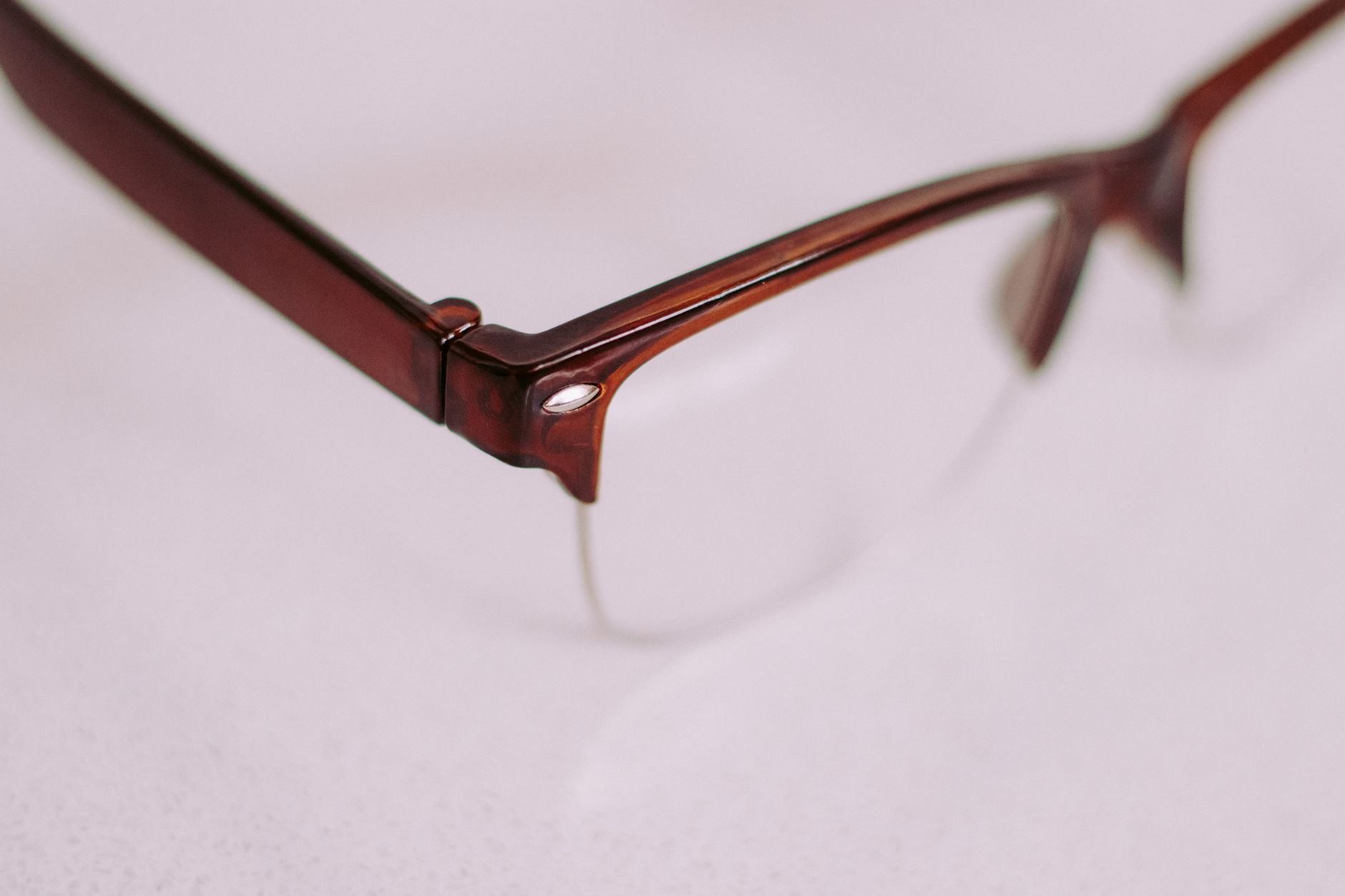
A spring hinge is a small coiled spring built into the hinge barrel of a temple, letting the arm flex outward past its normal open position and then pull itself back. Instead of stopping rigidly at 180 degrees, the temple gives a little under pressure, which is meant to ease strain on the frame front and on the head.
How does a spring hinge actually work?
The mechanism sits inside the barrel where the temple meets the front of the frame, in place of a plain pin hinge. A compressed spring, usually a tiny coiled steel or nickel-alloy spring, allows the temple to swing several degrees beyond fully open before resistance builds. Push a temple wide — reaching over the ear, sliding the frame on and off one-handed, someone grabbing the glasses off your face — and the spring absorbs that motion rather than passing it straight into the screw, the hinge plate, or the acetate around it.
When the pressure releases, the spring pulls the temple back to its resting open angle. It is a small piece of engineering doing a fairly unglamorous job: taking the abuse that would otherwise land on parts that don’t flex at all.
What does a spring hinge feel like compared to a standard hinge?
A standard hinge stops firmly at its set angle and holds it. A spring hinge has a soft, slightly springy give when you open the temples past that point, then snaps back cleanly when released. The difference is obvious the moment you try both side by side.
On the face, that give translates into gentler pressure at the temples, particularly for anyone whose head is wider than the frame was built for, or who takes glasses off and on often through the day. It won’t fix a frame that’s fundamentally the wrong width — that’s a fitting issue, not a hinge one — but it removes some of the sharp, localised pressure that a rigid hinge transmits straight to the skull. For more on why frames pinch in the first place, it’s worth reading about what causes glasses to pinch behind the ears, since hinge type is only one variable among several.
How does a spring hinge fail?
Like any spring, it has a finite life measured in flex cycles, not years. Failure tends to show up in one of a few specific ways.
- The spring loses tension. After enough open-close cycles, the coil stops pulling the temple firmly closed, and the arm starts to sit slightly loose or droop rather than snapping back sharply.
- The barrel wears. Repeated flexing enlarges the pinhole or wears the tiny channel the spring sits in, so the temple develops play side to side even when the spring itself is intact.
- The screw backs out. Spring-hinge barrels carry more internal movement than a rigid hinge, and the screw holding it together is more prone to working loose over time — a small, ongoing maintenance issue rather than a dramatic failure.
- The spring seizes or corrodes. Moisture, salt air, or sunscreen residue can corrode the tiny coil, especially in cheaper alloys, leaving the hinge stiff or stuck rather than springy.
- The housing itself cracks. On acetate frames, the barrel is set into the plastic, and the repeated stress of a spring hinge can eventually hairline-crack the acetate around it — a structural failure rather than a mechanical one.
None of this is unusual or a sign of a bad frame. It’s the ordinary wear pattern of a part designed to move constantly, in a way a fixed hinge simply isn’t asked to.
What are the warning signs a spring hinge is going?
The earliest sign is usually a change in how the temple opens: less resistance, a looser snap-back, or a faint grinding feel rather than a clean click. A temple that starts sitting slightly further out than its pair, or glasses that feel less secure on one side than the other, both point the same way.
Visible play — being able to wiggle the temple side to side at the hinge when the screw is properly tight — usually means barrel wear rather than a screw problem, and is worth having looked at before it worsens.
Can a failing spring hinge be fixed?
Often, yes, up to a point. A loose screw is a straightforward tightening job. A worn barrel or genuinely dead spring is a hinge repair or replacement, which most opticians with an in-house workshop can handle, sometimes by swapping in a new hinge unit rather than replacing the whole temple.
What generally can’t be fixed is a cracked acetate housing around the hinge — at that point the structural integrity of the frame front itself is compromised, not just the mechanism, and a repair is cosmetic at best. The general rule with any hinge issue is the same one that applies to most frame repairs: small mechanical faults are fixable, but damage to the frame material itself usually isn’t, a distinction covered in more detail in what can be adjusted on glasses, and what can’t be fixed.
Does a spring hinge suit every frame material?
Spring hinges appear across acetate, metal, and combination frames, but how well the surrounding material tolerates the repeated flexing varies. Metals with genuine flex memory — titanium and beta-titanium among them — pair naturally with a spring hinge, since the alloy itself is already forgiving under stress, and the hinge barrel is usually machined as part of a metal temple rather than set into it. Frames built in titanium or beta-titanium tend to carry spring hinges well for this reason.
Monel, still one of the most common metals in mid-range frames, holds up fine mechanically but is more prone to the corrosion issue mentioned above if a hinge sees regular contact with sweat or sea air — something covered in the piece on what monel is and why it’s so common in glasses.
Acetate frames need the barrel set into the plastic itself, which is where the hairline-crack failure mode comes from. It doesn’t make acetate a poor match for a spring hinge — most acetate frames with spring hinges last for years — but it’s worth knowing the housing, not just the coil, is doing structural work. Anyone comparing frame materials generally is better served starting with the broader category on materials and craft than judging a spring hinge in isolation.
Is a spring hinge worth choosing over a standard hinge?
For most people who wear glasses daily, yes — the added comfort during on-and-off handling and the gentler pressure at the temple generally outweigh the very small added maintenance risk. It matters less for glasses worn rarely or kept mostly still on the face.
It isn’t the only variable that decides whether a frame feels comfortable across a long day, though. Temple length, the angle of the earpiece, weight distribution, and how the frame sits at the nose all matter more, in practice, than whether the hinge is sprung. Those factors are unpacked in what makes a frame comfortable over eight hours and what temple length actually does. A spring hinge is a genuine quality-of-life feature, not a fix for a frame that’s the wrong fit to begin with — and worth checking alongside proportion and construction on any pair being considered, whether that’s an everyday frame or something browsed in the frames and styles archive.
The Designer Glasses publishes general information and style opinion, not professional advice. We are writers and enthusiasts, not opticians, optometrists or dispensing opticians. Nothing here interprets a prescription, recommends a lens power, or tells you whether you need correction — only an eye examination can do that. If your vision changes suddenly, or you have eye pain, flashes, new floaters or halos around lights, treat it as urgent and contact an eye care professional the same day. Sunglasses should carry a stated UV rating: a dark lens without UV filtering is worse than none at all.