A rivet hinge is the plainest kind of hinge there is: a metal pin pushed through interlocking barrels on the temple and the front, then flattened or peened at both ends so it can never work loose. There’s no spring, no give, no cushioning. Some makers still use it because that rigidity is exactly the point.
What Is a Rivet Hinge, Exactly?
It’s the oldest hinge design in eyewear, and mechanically the simplest. Small metal barrels are set into the temple and the front, aligned, and a pin is driven through all of them at once. The ends of the pin are then flattened — riveted — so the joint is permanently fixed. The temple still swings open and closed on that pin, but there is nothing elastic in the system. Open is open. Closed is closed. There’s no tension holding the temple against the head beyond what the fit itself provides.
This is different from what’s inside most contemporary glasses, where a small spring-loaded barrel hinge lets the temple flex outward a few millimetres past resting position and then pull back. That flex is what makes modern frames forgiving of a slightly wide head or a temple angled a touch too aggressively. A rivet hinge has none of it.
How Is a Rivet Hinge Different From a Spring Hinge?
A spring hinge has a compressible mechanism built into the barrel that lets the temple splay outward under pressure and spring back. A rivet hinge is a fixed pivot with no give — the temple opens to its set angle and stops there.
The practical difference shows up the moment you put the glasses on. With a spring hinge, you can be a little careless — pull the temples on over the ears, let them stretch slightly wide, no harm done. With a rivet hinge, the fit has to be closer to correct from the start, because there’s no mechanism absorbing the extra force. Over-flex a rivet hinge repeatedly and something eventually gives — usually the acetate around the barrel, not the pin itself. For a fuller account of how the spring version behaves and where it tends to fail, see our piece on spring hinges and how they fail.
Why Do Some Makers Still Choose Rivets Over Springs?
Three reasons come up consistently: material compatibility, visual honesty, and repairability on a different timeline than the disposable-frame market runs on.
- Material fit. Thick acetate, laminated acetate, and natural materials like buffalo horn or certain woods don’t always take a spring mechanism gracefully — the barrel housing a spring needs more internal room and a specific tolerance that can compromise a chunky, handmade front. A rivet is smaller, simpler, and sits neatly in dense material without hollowing it out.
- Honesty of construction. A rivet hinge shows what it is. There’s a visible pin, sometimes a slightly domed head, occasionally in a contrasting metal. Some designers like that the mechanism reads as mechanism rather than disappearing into the frame.
- Repair philosophy. A rivet hinge is not something you casually fix at home, but it’s also not a sealed cartridge you replace wholesale. A skilled repairer can drill out a worn rivet and reset a new one. It suits frames intended to be serviced over years rather than replaced.
None of this makes a rivet hinge objectively better than a spring hinge — they’re solving different problems. A rivet suits a frame built for structure and a considered, still fit. A spring suits a frame built for daily give-and-take. Anyone choosing between two similar-looking pairs is really choosing between those two philosophies, whether or not the shop assistant says so.
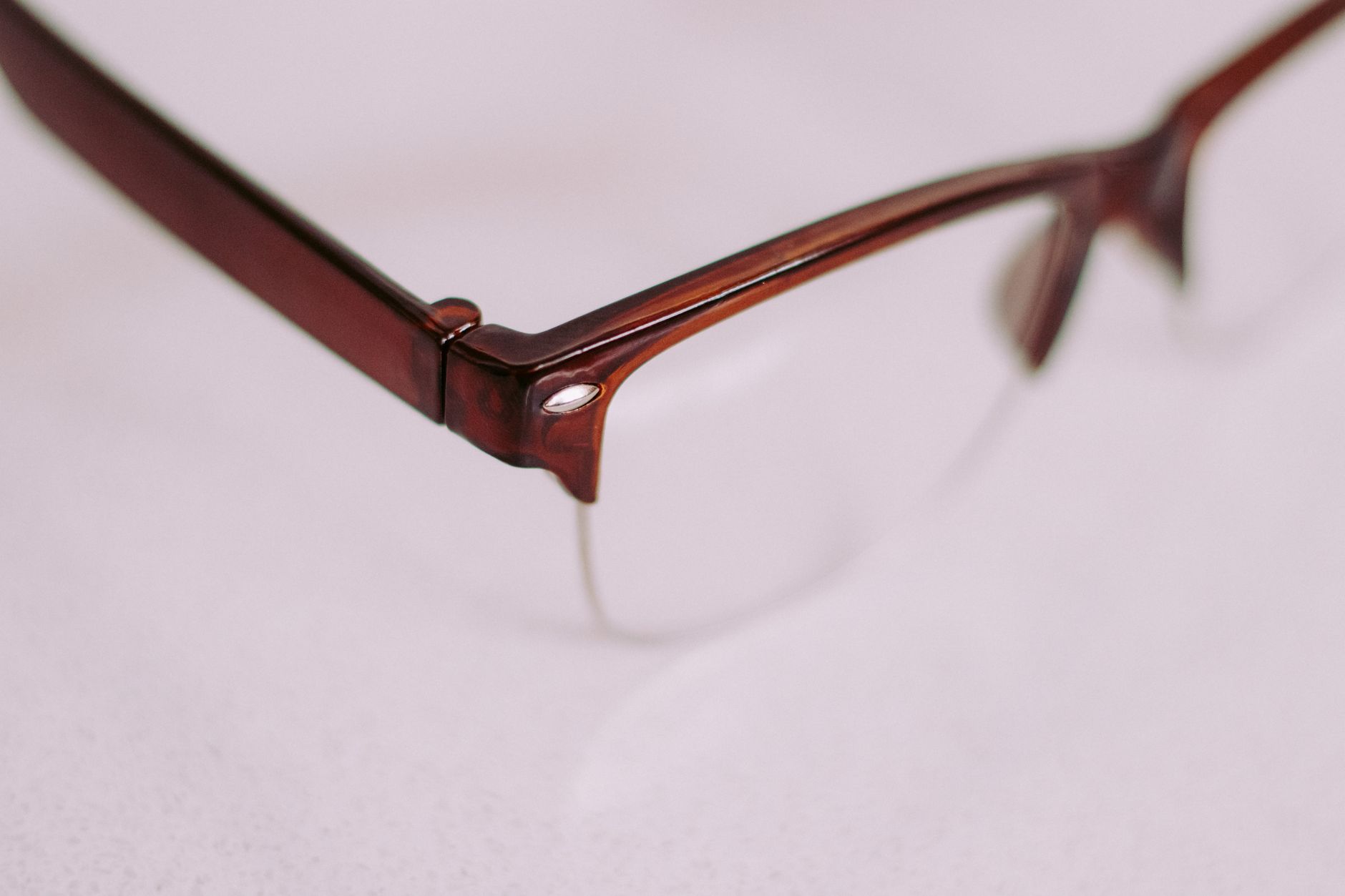
What Does a Rivet Hinge Feel Like to Wear?
Firmer, and less forgiving of a fit that’s slightly off. There’s no spring flex to compensate if the temples sit a touch too tight or too wide, so the base fit has to be right from the outset.
Because a rivet hinge doesn’t flex, the temple angle set at manufacture — or at the last adjustment — is the angle you get. This puts more weight on getting the initial fit correct, and on periodic adjustment rather than relying on the hinge to compensate. It also means a rivet-hinged frame can feel more “solid” on the head: less micro-movement, less of that faint mechanical give some people find fidgety, more of a fixed, worn-in feel once it’s set properly. Whether that reads as reassuring or unyielding is a matter of what someone’s used to. If glasses are pinching behind the ears or leaving marks on the nose, the cause is more often about temple length or pad position than the hinge type — worth ruling out separately, and our guides on why glasses pinch behind the ears and why glasses leave marks on the nose cover that ground.
Can a Rivet Hinge Be Repaired?
Yes, but it’s a job for a bench, not a bathroom-cabinet fix. A worn or loose rivet can be drilled out and re-set with a new pin; a cracked barrel in acetate can sometimes be reinforced or replaced. It’s slower and more specialised work than a spring-hinge swap.
This is one of the trade-offs worth knowing before buying: a rivet-hinged frame, especially in a dense material, is generally something a proper repairer can keep going for a long time, but it’s not a quick over-the-counter fix the way tightening a spring-hinge screw is. For a wider view of what’s fixable on glasses and what genuinely isn’t, see our piece on adjustment versus permanent damage.
Which Frame Materials Use Rivet Hinges?
Rivet hinges turn up most often on frames made from acetate, laminated acetate, wood, and natural horn — materials thick or dense enough to house a simple pin joint cleanly, and where a bulkier spring barrel would sit awkwardly.
They’re less common on metal frames, where a small, precisely machined spring barrel fits neatly into a thin temple without adding visible bulk. If a frame’s construction and material choices interest you generally, our materials and craft archive goes deeper on how different substrates behave, and the specific pieces on why good frames use acetate, horn and buffalo horn frames, and what a wooden frame is like to own all touch on why rivets show up so often in these categories.
Is a Rivet Hinge a Sign of Quality?
Not automatically. It signals a construction choice suited to certain materials and a certain repair philosophy, not a guarantee of better craftsmanship on its own. A poorly set rivet fails just as easily as a poorly made spring.
What actually indicates care is how cleanly the rivet sits, whether the barrels align without a visible gap or wobble, and whether the temple opens to a firm, consistent stop rather than feeling loose from day one. Those are things worth checking in person, on the frame in front of you, rather than assuming from the presence of a rivet alone. The same logic applies across construction generally — what makes a frame comfortable over a full day has as much to do with weight, temple length and where the frame contacts the head as it does with hinge type, and it’s worth reading alongside this if comfort over long wear is the priority. For metal alternatives that solve the same joint problem differently, our piece on titanium covers how that material handles hinges at the other end of the weight and flex spectrum.
The honest answer, in the end, is that a rivet hinge is a deliberate, slightly old-fashioned piece of engineering that some makers keep using because it suits their materials and their idea of how a frame should age — not because it’s inherently superior, and not because it’s obsolete.
The Designer Glasses publishes general information and style opinion, not professional advice. We are writers and enthusiasts, not opticians, optometrists or dispensing opticians. Nothing here interprets a prescription, recommends a lens power, or tells you whether you need correction — only an eye examination can do that. If your vision changes suddenly, or you have eye pain, flashes, new floaters or halos around lights, treat it as urgent and contact an eye care professional the same day. Sunglasses should carry a stated UV rating: a dark lens without UV filtering is worse than none at all.