UV400 means the lens blocks light up to the 400 nanometre wavelength — which covers the entire UVA and UVB spectrum reaching the earth’s surface. It’s a filter rating, not a tint level. A lens can be pale grey and rated UV400, or black as tar and offer none at all. The number tells you about protection, not appearance.
Why isn’t a dark lens the same as sun protection?
Because darkness and UV filtering are two unrelated properties, and confusing them is the single most common mistake people make with sunglasses. A dark lens reduces glare and visible brightness. It does nothing about UV unless the lens has been treated or manufactured to filter it.
Here’s the part that matters: behind a dark lens, your pupil dilates, because the eye is responding to lower light levels. If that darker lens isn’t filtering UV, more ultraviolet radiation reaches a wider-open pupil than would have reached it with no sunglasses at all. A dark lens with no stated rating is worse than bare eyes in the sun, not neutral. This isn’t about price and it isn’t about how premium a pair looks — it’s specifically about whether the lens carries a UV400 label or an equivalent claim of 100% UVA/UVB protection.
What’s the difference between UV400 and “100% UVA/UVB protection”?
In practice, nothing — they describe the same outcome using different conventions. UV400 refers to the wavelength cutoff; “100% UVA/UVB” refers to the two bands of ultraviolet that reach the ground. Either label is doing the same job, and neither is superior marketing dressed up as the other.
What you shouldn’t accept is a lens with no claim at all, or vague language like “UV protective” with no standard named. If a product page or a hangtag doesn’t specify UV400 or 100% UVA/UVB, that’s a gap worth asking about before buying, not a detail to assume in the brand’s favour.
Does UV400 mean the lens also blocks blue light?
No — UV and blue light sit in different parts of the spectrum, and a UV400 rating says nothing about blue-light filtering one way or the other. The two get bundled in marketing copy far more often than the science supports.
Blue-light filtering lenses are usually sold on claims about screen use and eye strain or sleep disruption. The honest position is that the evidence for meaningful benefit from blue-light coatings in everyday screen use is thin, and nowhere near as settled as UV protection, which has decades of research behind it. If a blue-light coating is offered as an add-on, treat it as a personal preference rather than a proven safeguard — and don’t let it substitute for asking about the UV400 rating, which is the part that actually matters outdoors.
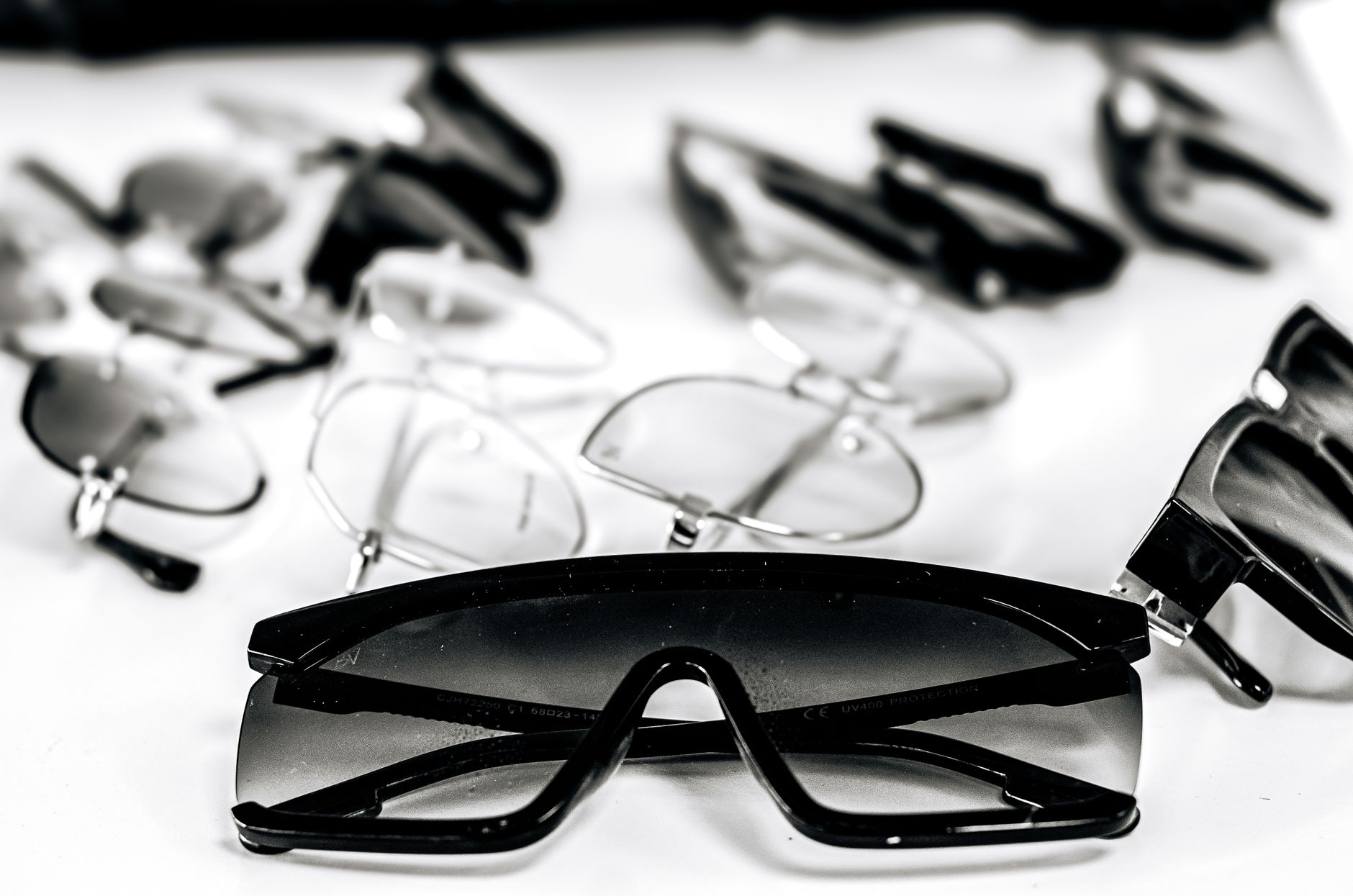
Do clear and prescription lenses need UV400 too?
Yes, in the sense that UV exposure isn’t limited to sunny days or tinted lenses — clear prescription lenses can also be manufactured with a UV filter, and many are as standard. Whether a particular pair needs it, or what combination of coatings makes sense for your prescription, is a conversation for your optician, not something to work out from a product description.
This article can tell you what UV400 means as a term. It can’t tell you what your prescription needs, what index or coating suits your lenses, or whether any change in your vision is something to act on. If you’ve noticed sudden changes in vision, eye pain, new floaters, flashes of light, or halos around lights, that’s a same-day matter for an eye care professional — not something to research further online.
How can you tell if a pair of sunglasses is genuinely UV400?
Check the label, the hangtag, or the product description for the explicit claim — “UV400” or “100% UVA/UVB protection.” Reputable manufacturers state it plainly because it’s a straightforward, verifiable spec, not a subjective one.
- Look for the rating printed on the lens itself, the temple, or an attached tag — not just implied by how dark the lens looks.
- Be cautious with unbranded or very informal sellers where no standard is named at all.
- Remember that lens colour — brown, grey, green — is a matter of contrast and how colours read through the lens, not a UV indicator.
None of this has anything to do with how expensive a frame looks. A frame can read as considered and well-made for reasons entirely separate from its lenses — proportion, hinge quality, material choice — which is a different conversation covered in what actually makes a frame look expensive.
Does frame shape or lens size affect UV protection?
Partly. A UV400 lens filters what passes through the lens itself, but it can’t stop light entering from the sides, above, or below the frame. Larger lenses and closer-fitting frames cover more of the eye area, which is one practical reason oversized shapes have stayed popular beyond the styling argument.
This is where shape and function overlap. An oversized frame changes the proportions of the face and also happens to shield more of the eye. A wraparound-leaning shape or a substantial aviator frame sits closer to the brow and cheekbone than a narrow, flat style. None of this replaces the lens rating — a huge lens with no UV400 filter still isn’t protecting anything — but frame coverage is a legitimate secondary factor once the filter itself is confirmed.
Smaller, more architectural shapes — a fine cat-eye, a neat round frame, or a slim wayfarer — will always let in more peripheral light regardless of what the lens itself is rated. That’s a trade worth knowing about, not a reason to avoid a shape you like.
What should you actually check before buying sunglasses?
Start with the UV rating, stated explicitly, before looking at anything else — tint, brand, or price. Everything past that point is styling and comfort, which is where taste comes in.
- Confirm UV400 or 100% UVA/UVB protection is named somewhere on the product, not just implied by a dark tint.
- Judge fit and coverage the same way you’d judge any frame — proportion against your face, how the bridge sits, how much of the eye area the shape actually covers.
- Treat tint colour and lens shading as a look, not a safety feature.
- Treat any blue-light claim as a bonus, not a reason to choose one pair over another.
Once the lens question is settled, the rest is genuinely a matter of what suits you. The broader frames and styles archive is a reasonable place to work through shape, proportion and material once UV protection is no longer in question — and details like bridge construction or how a frame is rimmed become the more interesting part of the decision.
The Designer Glasses publishes general information and style opinion, not professional advice. We are writers and enthusiasts, not opticians, optometrists or dispensing opticians. Nothing here interprets a prescription, recommends a lens power, or tells you whether you need correction — only an eye examination can do that. If your vision changes suddenly, or you have eye pain, flashes, new floaters or halos around lights, treat it as urgent and contact an eye care professional the same day. Sunglasses should carry a stated UV rating: a dark lens without UV filtering is worse than none at all.