A half-eye frame is a small, half-moon shaped lens that sits low on the nose, covering roughly the bottom half of the eye. It is built this way on purpose. The low position lets the wearer look down through the lens to read, then glance up over the rim to see the room without taking the glasses off.
That sounds simple. It is also the whole reason the shape exists, and the whole reason it only works for certain prescriptions. Before buying a pair, it is worth understanding exactly who the half-eye is built for — and who it quietly fails.
What does a half-eye frame actually look like?
A half-eye has a shallow, crescent-shaped lens, usually under an inch deep, set into a narrow frame that sits halfway down the nose rather than up near the eyebrows. The top of the lens stops well below where a normal frame would sit.
That shallow top edge is the defining feature. On a standard pair of glasses, the frame top sits near the brow line, covering the full eye. On a half-eye, it stops at roughly mid-pupil height or lower. The frame is doing one job: covering the lower field of vision used for close work, and leaving the upper field open.
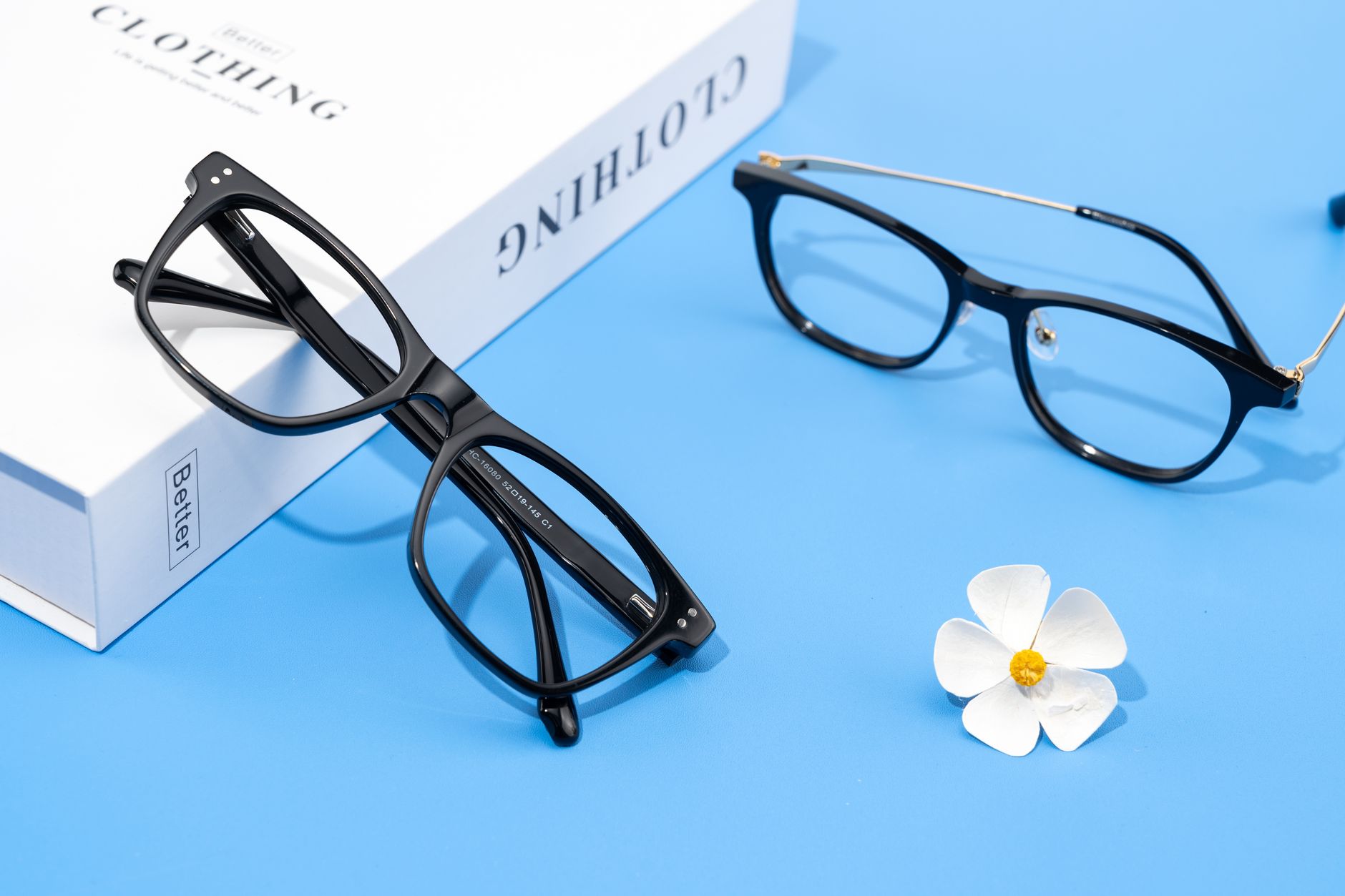
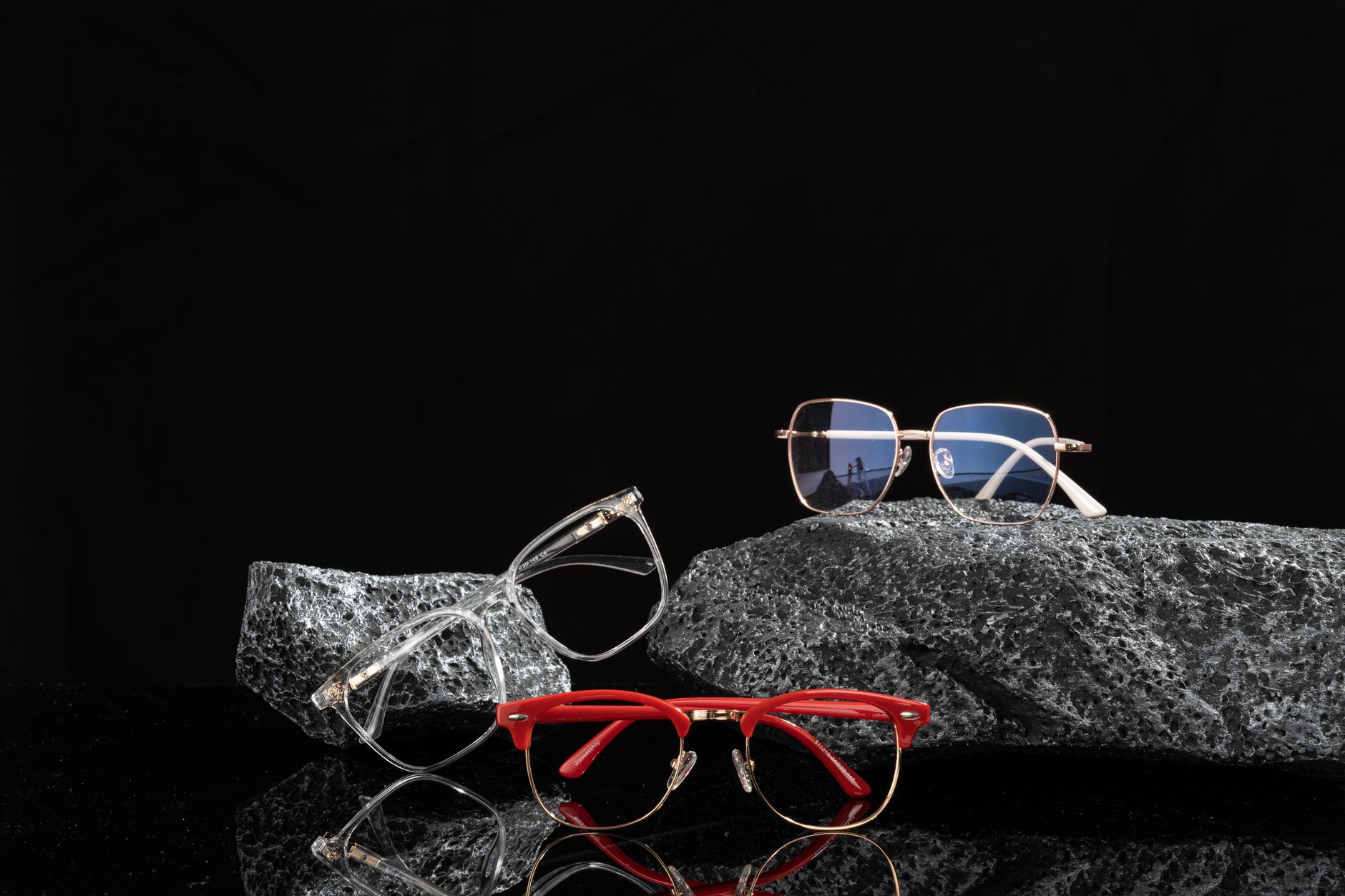
Materials vary. Metal half-eyes, often in thin gold-tone or silver-tone wire, are common and read as understated. Acetate versions exist too, usually in tortoiseshell or black, giving a bolder, more deliberate look. Either way, the shape itself — not the material — is what defines a half-eye.
Why is the half-eye shape used for reading glasses?
The half-eye exists to solve one problem: switching between near and far without swapping glasses. Lowering the frame on the nose means the wearer looks down through the lens for close work, then tilts the chin up and looks over the rim for distance, using unaided vision above the frame.
This only works because of where the lens stops. If the frame covered the full eye, looking “over the top” would mean looking through thin air above the frame edge, not through any lens at all — fine for distance, but the same as not wearing glasses. The half-eye is built so that gap exists at a useful height, right where a natural upward glance lands.
This is also why half-eyes sit low rather than centered. A frame positioned at normal height, just shrunk down, would not line up with the eye’s resting gaze for reading. Sitting low on the nose keeps the lens in the reading zone without extra downward tilt of the head.
Who does a half-eye actually suit — the fitting rule that matters
A half-eye only does its job if the prescription is single-vision for near use, with no distance correction needed at all. That is the entire decision rule, and it is stricter than most marketing for these frames admits.
Here is why. The lens only corrects the field it physically covers — the lower portion. Above the frame top, there is no lens, just open air. If the wearer has no distance prescription, that is perfect: natural, uncorrected distance vision over the top, corrected near vision through the lens. Nothing is missing.
But if any distance correction is needed, the glance over the top gives nothing. The eye is relying on unaided vision in a field that actually needs correction, which means blur, not clarity. The frame has not failed structurally — it has simply met the limit of what a lens with no distance zone can ever do.
The same problem applies to astigmatism that needs correcting in the upper field, and to anyone already wearing bifocals or progressives. Those lenses are built around a specific, engineered transition between near and distance zones, placed precisely relative to the eye. A half-eye frame has no such transition — it is a single prescription, full stop, in a frame shaped to expose an uncorrected zone above it. Wearing bifocals in a half-eye shape defeats the structure bifocals depend on.
A short way to check it:
- Single-vision reading prescription, no distance correction needed — half-eye works as intended.
- Any distance correction required — over-the-top glance will blur; half-eye is the wrong shape.
- Astigmatism correction needed in the upper field — same problem, different cause.
- Already prescribed bifocals or progressives — half-eye format conflicts with the lens design itself.
None of this is a judgment on what prescription is “better.” It is a structural fact about how the shape behaves. A reader unsure which category they fall into should take the question to their optician rather than guess from a frame display.
Where does the Ben Franklin association come from?
The half-eye’s visual signature — small, low, half-moon lenses — is closely tied to portraits of Benjamin Franklin, and the shape is still sometimes called “Franklin glasses” informally. The association has stuck for centuries and still shapes how the frame reads today.
That link matters more for style than for history. It gives the half-eye a built-in air of old-fashioned scholarliness — useful if that is the look someone wants, slightly costume-like if it is not. Worth knowing before buying: the shape carries a strong period association whether intended or not. Readers interested in how frame shapes pick up these kinds of reputations over time may want a look at why round frames read as intellectual, a related case of shape shaping perception.
What does wearing a half-eye actually feel like day to day?
Expect frequent small head tilts rather than full glasses removal. That is the trade the shape makes: less fumbling for a second pair, more chin movement to switch focus.
For someone who reads in short bursts — a menu, a label, a text message — while mostly needing to see clearly across a room, that trade works well. It is a different rhythm from full-frame reading glasses, which usually come off entirely between tasks.
Fit matters more than it looks like it should. Because the frame sits low, nose pad height and bridge width need to be right, or the lens drifts out of the reading zone entirely. A half-eye that constantly slides is not just annoying — it is actively undermining the one thing it is built to do. For background on how nose pads and bridge fit affect low-sitting frames generally, see what nose pads are for and when they’re adjustable.
How does a half-eye compare to full reading glasses?
A full-frame reader covers the entire eye and is designed to be taken off between near tasks. A half-eye stays on and is designed to be looked over. Each shape commits fully to its own logic, which is why mixing their use cases does not work.
| Feature | Half-eye frame | Full reading frame |
|---|---|---|
| Lens coverage | Lower field only | Full eye |
| Distance viewing | Over the rim, unaided | Glasses removed |
| Best suited to | Single-vision near prescription, no distance correction | Any near-only prescription |
| Typical use pattern | Worn continuously, glanced over | Put on and off repeatedly |
Neither format is objectively better. They answer different questions about how someone actually moves through a day — constant low-level reading versus occasional bursts of it.
Does half-eye styling work outside the Franklin look?
Yes, though the association takes some deliberate countering. A thin wire half-eye in a modern metal finish, worn with contemporary clothing, reads differently from a tortoiseshell pair worn with a cardigan. Frame color and material do real work here.
A black acetate half-eye leans toward a graphic, almost architectural look — closer to a design object than a historical reference. A gold-tone wire version leans traditional. Neither is right or wrong; this is a styling opinion, not a rule, and plenty of people wear the traditional version precisely because they like the reference. Readers building a broader sense of how frame shape and material shift a look might find the trends and icons archive useful, alongside the wider frames and styles category.
What should be checked before buying a half-eye pair?
Three things matter more than brand or finish: the prescription type, the nose pad fit, and the frame depth relative to how the reader actually moves their eyes.
- Confirm with an optician that the prescription is single-vision near, with no distance correction needed — this is the rule the whole shape depends on.
- Check nose pad height and bridge width so the lens sits at true reading height, not drifting low or riding high.
- Consider lens depth: a very shallow lens suits quick glances at close range; a slightly deeper half-eye suits longer reading sessions.
Lens coatings are worth a brief mention too. An anti-reflective coating reduces glare from overhead light and screens, which matters for anyone reading for long stretches. For more on what that coating is doing, see this explainer on anti-reflective coatings. For general guidance on comparing frames before buying, the choosing glasses hub and this piece on where budget should go between frame and lens are both useful starting points.
The short version
A half-eye is a low-sitting, half-moon frame built around one trick: a lens for near work, open air above it for distance. It works cleanly for single-vision presbyopia with no distance correction.
It stops working the moment any distance correction, astigmatism in the upper field, or a bifocal design enters the picture. At that point, the glance over the top is not a shortcut — it is a gap in the prescription. Anyone unsure which category applies should raise it directly with their optician before choosing the shape. For a broader sense of how frame shape, fit and lens choice interact more generally, the eyewear guide hub is a reasonable next stop.
Related reading
What Is a Folding Frame, and What Does Folding Cost You?.
The Designer Glasses publishes general information and style opinion, not professional advice. We are writers and enthusiasts, not opticians, optometrists or dispensing opticians. Nothing here interprets a prescription, recommends a lens power, or tells you whether you need correction — only an eye examination can do that. If your vision changes suddenly, or you have eye pain, flashes, new floaters or halos around lights, treat it as urgent and contact an eye care professional the same day. Sunglasses should carry a stated UV rating: a dark lens without UV filtering is worse than none at all.