A P3 frame is a softly rectangular shape — wider than it is tall, with gently tapered upper corners and a fuller, more rounded lower edge. It sits between a true rectangle and an oval, and it’s one of the most common general-purpose shapes in optical history, worn by everyone from opticians to soldiers to office workers.
What does “P3” actually mean?
P3 is a trade term, not a brand or a marketing name. It refers to a lens shape classification once used in British and industrial optical standards, describing a frame with a particular panto (tapered, slightly downward-curving) profile. Over decades it stopped being a technical code that opticians used internally and became shorthand for a look: the classic, faintly retro rounded-rectangle shape people picture when they think of a “sensible” pair of glasses.
It’s worth separating this from the numbers actually stamped inside a frame’s temple arm, which relate to lens width, bridge width and temple length rather than shape. If you’ve ever wondered what those figures mean, our guide to the numbers inside a glasses frame covers it in full.
Where does the P3 shape come from?
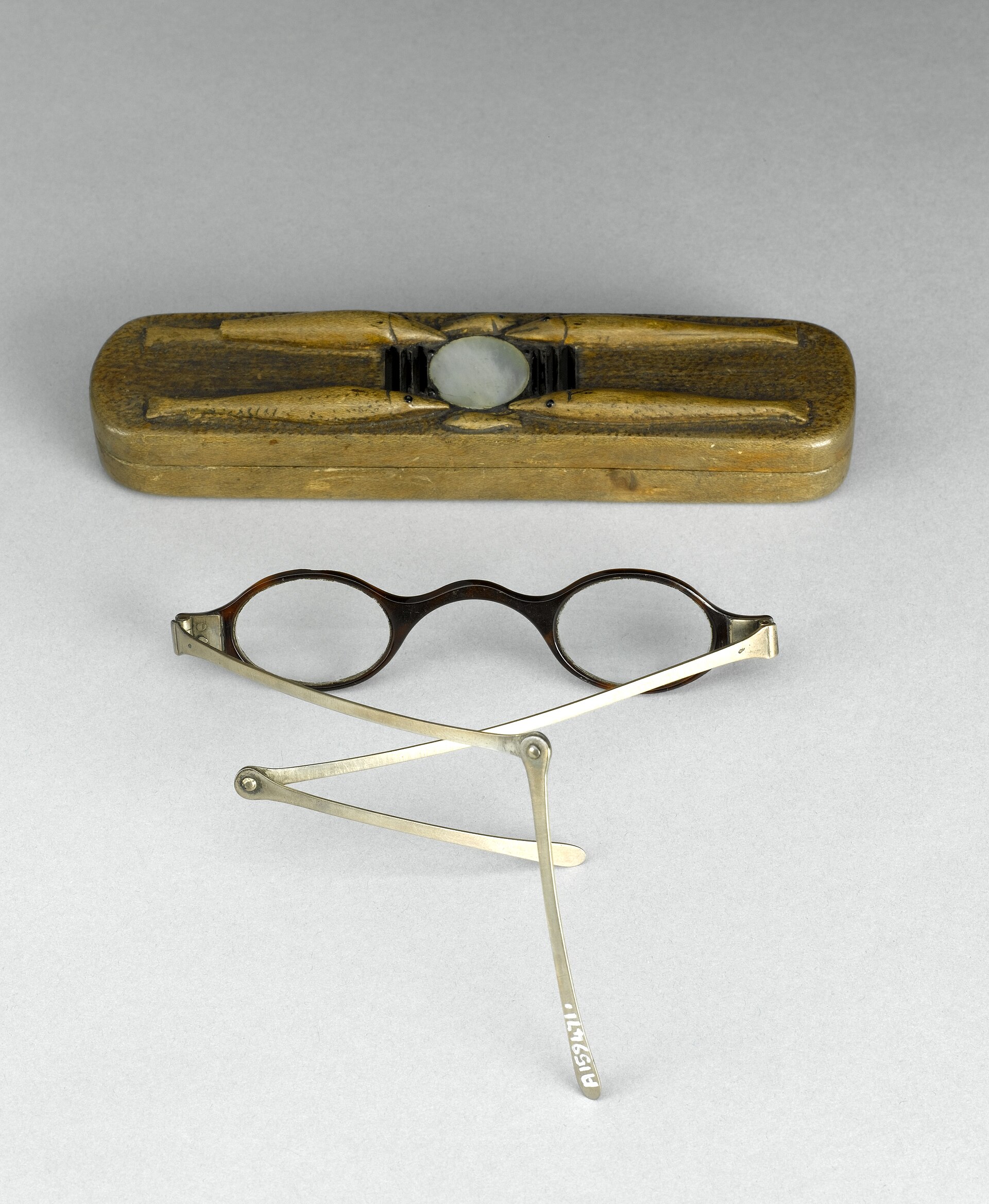
The P3 shape has industrial and military roots. Versions of it were specified for safety spectacles and issue eyewear in the mid-twentieth century, valued because the rounded lower edge and moderate lens size gave decent coverage without excess bulk or weight. In Britain, a close relative of the shape became a familiar sight through publicly issued glasses in the postwar decades, which is part of why the silhouette still reads as slightly utilitarian and unpretentious rather than fashion-forward.
That practical history is exactly what has made it durable. Designers picked it up because it photographs as understated and intelligent rather than trend-driven, and it has cycled in and out of fashion collections ever since without ever fully disappearing.
How do you recognise a P3 frame?
Look for a few consistent features rather than one single detail, since P3 frames vary in width and depth between makers:
- A lens that is noticeably wider than it is tall, closer to a rounded rectangle than a square.
- Upper corners that taper slightly inward, giving a soft, almost triangular hint at the top.
- A rounded, fuller lower curve rather than a hard right angle.
- A moderate overall depth — rarely as tall as an oversized fashion frame, rarely as narrow as a rimless reading style.
- Often, though not always, a keyhole or saddle bridge, a bridge style associated with vintage optical design.
The shape reads as calm and orderly on the face because there are no sharp angles or dramatic flares. It doesn’t shout the way a cat-eye or an oversized square frame does, and that restraint is the whole appeal.

How is a P3 different from other classic shapes?
It helps to place P3 against the other shapes it’s regularly confused with, since several mid-century styles share a family resemblance.
An aviator frame is taller, teardrop-shaped and usually has a double bridge; P3 is more rectangular and typically single-bridged. A browline frame emphasises a heavy top edge with a lighter bottom half, a two-tone construction P3 doesn’t have — P3 is a single, even shape all the way round. A round frame has no straight edges at all, where P3 keeps a rectangular base with the corners softened rather than removed. And where a cat-eye frame flares upward and outward at the corners, P3 tapers inward, giving it a quieter, more contained finish. Even the Wayfarer, itself a variant on the trapezoid, has a bolder, more angular top bar than a true P3.
If you want to compare all of these side by side, the frames and styles hub collects the full run of shape guides in one place.
Who does a P3 frame suit?
This is styling opinion, not science, and face-shape “rules” are conventions worth treating loosely. With that said, the conventional thinking is that P3’s gentle taper and rounded base make it a flattering middle ground for angular faces — the softened corners take the edge off a strong jawline or prominent cheekbones without swinging all the way to a fully round lens, which can look shapeless on some faces.
On rounder faces, the opposite logic is often argued: that the straighter top edge and wider-than-tall proportion introduce a bit of structure that a fully round or oval frame won’t. Neither claim should be treated as fixed. Plenty of people with round faces wear P3 well, and plenty of people with strong jawlines look better in something with more contrast, like a browline or a squared style. The only reliable test is trying a frame on and looking at how it sits relative to your eyebrows, cheekbones and the width of your face at its widest point.
What materials and colours work best in a P3 shape?
Because the shape itself is quiet, material and colour do most of the personality work.
- Acetate in tortoiseshell, amber or deep colours leans the shape toward heritage and warmth — closer to its vintage optical origins.
- Metal, particularly in gold or gunmetal tones, makes the same shape read as more formal and minimal, closer to what a P3 frame looked like in its original industrial or issue-wear form.
- Two-tone or clear acetate versions push the shape toward a more contemporary, slightly retro-fashion feel rather than a strictly functional one.
Rim construction changes the character too. A full rim keeps the classic, slightly formal look. Removing the bottom rim or going rimless lightens the shape considerably and suits a more understated, low-key finish. The differences between these constructions — including how they wear and how they hold a lens — are covered in our guide to full rim, half rim and rimless frames.
What should you check before buying a P3 frame?
Fit matters more than shape name. A P3 frame that’s genuinely well-proportioned for your face will have the lens width sitting close to the width of your eye area, without extending noticeably past the outer edge of your face, and a bridge that rests on your nose without pinching or sliding. These are exactly the measurements printed inside the temple arm, and it’s worth checking them against your current, comfortable pair before assuming a new frame in the same “size” will fit the same way.
If you’re considering a sun version of a P3 shape, treat the tint and the UV protection as two separate questions. A dark lens on its own tells you nothing about UV protection — in fact, a very dark, uncoated lens can be worse than wearing no sunglasses at all, because the tint makes your pupil open wider while doing nothing to block ultraviolet light, letting more of it reach the eye. Look for a stated UV400 rating or a claim of 100% UVA/UVB protection on the product documentation, not for how dark the lens looks or what the frame costs.
For everyday clear lenses, if a P3 frame is being marketed with a blue-light filtering coating for screen use, it’s worth knowing the evidence for any visual or comfort benefit from these coatings is still thin, despite how confidently they’re often sold. That doesn’t make the coating pointless, but it isn’t a settled benefit either, and it shouldn’t be the deciding factor in choosing a frame.
Beyond the lens, any change in how your eyes see through a new pair — persistent blur, discomfort, or anything more serious like sudden vision changes, pain, flashes of light, new floaters or vision loss in one eye — is a matter for an optician the same day, not something to work around with a different frame or lens. A shape guide can tell you what a P3 frame looks like and where it sits historically; it has nothing useful to say about how well you see through one, and that’s exactly the kind of judgement worth leaving to a professional.
The Designer Glasses publishes general information and style opinion, not professional advice. We are writers and enthusiasts, not opticians, optometrists or dispensing opticians. Nothing here interprets a prescription, recommends a lens power, or tells you whether you need correction — only an eye examination can do that. If your vision changes suddenly, or you have eye pain, flashes, new floaters or halos around lights, treat it as urgent and contact an eye care professional the same day. Sunglasses should carry a stated UV rating: a dark lens without UV filtering is worse than none at all.
Featured image: Photo by Unknown, source, CC BY 4.0