Glasses that slide down constantly almost always mean the frame doesn’t fit the specific geometry of your face — the bridge is too wide, the temples have too little grip, or the frame is simply too heavy for its contact points. It is a fit problem, not a flaw in you, and it is usually fixable without buying a new pair.
Why do glasses slide down the nose in the first place?
Every pair of glasses is held up by three contact points: the bridge of the nose, and the two temples where they pass over or behind the ears. Sliding happens when one or more of those points loses its grip, usually because of gravity acting on weight the frame wasn’t built to distribute well.
Skin oil, sweat and heat make this worse. Plastic nose pads and silicone temple tips both lose friction as they warm up against skin, which is why glasses that sit fine in an air-conditioned office start creeping down on a warm walk outside.
Is it the frame’s fit, or the frame’s material?
Both matter, but they matter differently. Fit is about geometry — bridge width, temple length, the angle at which the temples meet the head. Material is about how that geometry behaves once it’s warm, worn and slightly imperfect.
- Acetate frames soften very slightly with body heat, which can help them grip — but a frame that was already too wide won’t fix itself.
- Metal frames rely almost entirely on adjustable nose pads, so a bent or worn pad arm is often the real culprit.
- Rimless and lightweight titanium frames put more pressure on fewer contact points, so a poor fit shows up faster.
The materials and craft of a frame decide how forgiving it is of an imperfect fit — but no material substitutes for the right size in the first place.
Does the bridge shape matter more than people think?
Yes. The bridge is doing most of the work, and different bridge constructions distribute weight very differently across the nose.
A saddle bridge rests flat across the nose with no separate pads, which works well on some nose profiles and slides constantly on others. A double bridge changes how weight is split between two points rather than one. A keyhole bridge is cut specifically to seat lower and grip a particular nose shape. None of these is universally “better” — they’re solving for different noses, and the wrong one on the wrong face will slide no matter how expensive the frame.
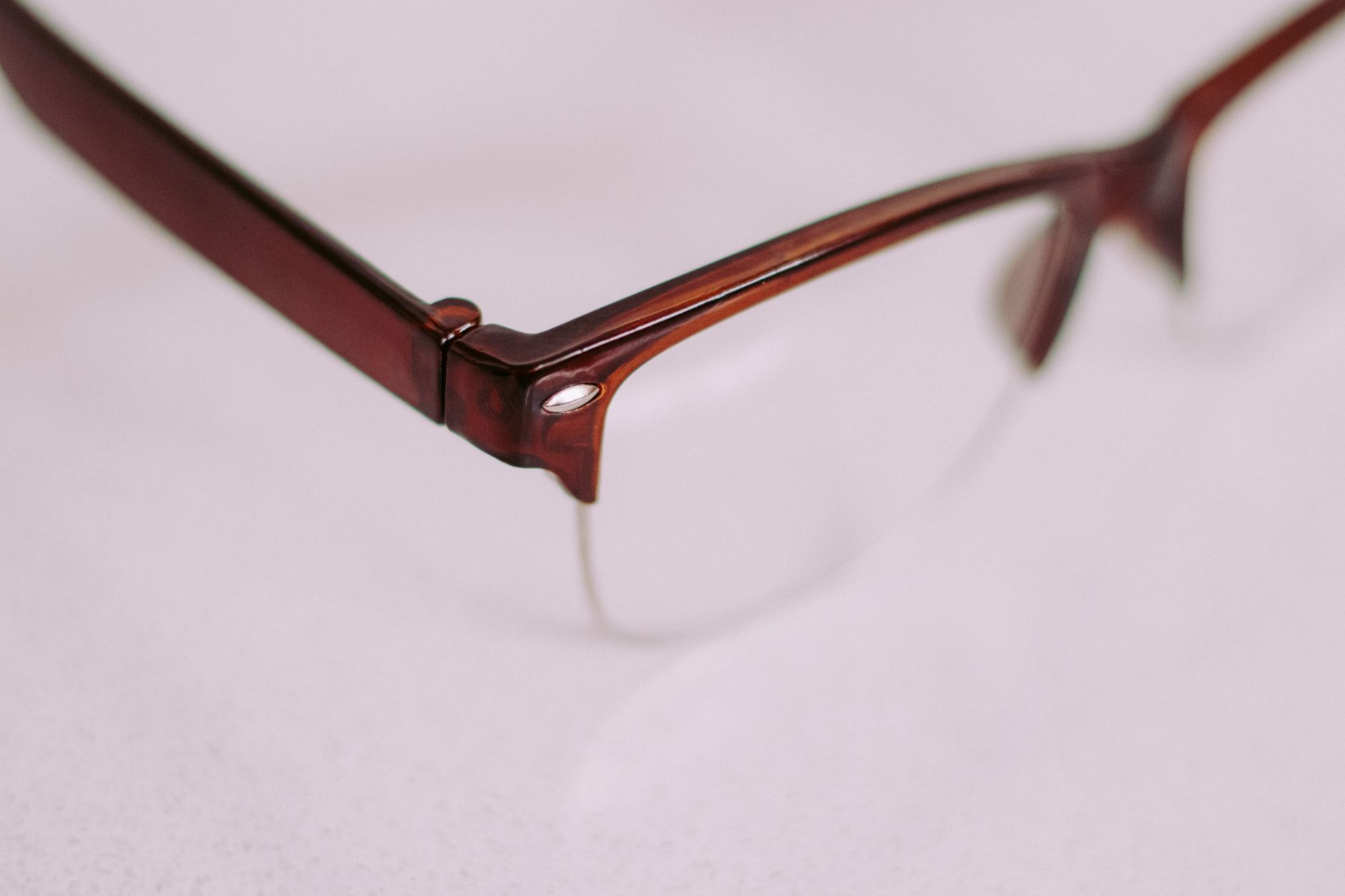
Can frame shape and proportion make sliding more likely?
Sometimes, yes — though this is a styling observation rather than a rule with any scientific backing. Larger, heavier-looking frames such as bold squares or oversized rounds carry more visual weight, and often more physical weight, which puts more strain on the same two nose pads.
Face-shape advice that pairs certain frame shapes with certain faces is a useful starting point, not a law — plenty of people look better ignoring it entirely. But if a frame is sliding constantly and it also happens to be one of the boldest, heaviest options in the shop, proportion is worth questioning alongside fit. Read more on whether face-shape rules for glasses actually hold up, and where a bold frame stops working in practice.
Could the lenses themselves be the problem?
Weight in glasses doesn’t only come from the frame. Higher prescriptions, especially in stronger powers, need more lens material, and that material has to sit somewhere on the face.
A frame that held a thin, light lens perfectly well can start slipping once it’s holding a thicker or higher-index lens instead. This is one reason opticians talk about high-index lenses and their trade-offs — thinner isn’t only about looks, it also changes how the finished pair sits and behaves on the face over a day of wear.
How do you tell if it’s genuinely a size issue?
A frame that’s the wrong size for you will usually show more than one sign at once, not just sliding on its own.
- Red marks or indentations on the sides of the nose at the end of the day
- The frame front sitting noticeably off-centre or tilted when you look in a mirror
- Temples that splay outward rather than following the side of the head
- Needing to push the glasses up more than once or twice an hour
If several of these are happening together, the frame is very likely the wrong width or the wrong temple length for your head, not just in need of a small tweak.
Can nose pads or pad arms actually be adjusted?
On metal and combination frames, yes — nose pad arms can usually be bent slightly closer together to tighten the grip, or angled to sit flatter against the nose. On acetate frames without separate pads, adjustment happens by gently reshaping the bridge itself, which is a job for a professional rather than a DIY project with pliers from a kitchen drawer.
Temple arms can also be adjusted where they bend behind the ear, tightening the whole frame’s hold without changing how it looks on the face. This kind of adjustment is a normal, low-cost service that most opticians and independent frame shops offer, and it’s worth trying before assuming a frame is a lost cause. For the fuller picture of what “correct” actually looks like, see how glasses should sit on the nose and ears.
Does frame size labelling help avoid this next time?
It can, once you know what the numbers mean. Every frame has a set of measurements printed inside the temple — lens width, bridge width and temple length, usually in millimetres — and comparing those across pairs that fit well versus pairs that slide is far more reliable than judging by eye or by how a frame looks on someone else. A rundown of what the numbers inside a glasses frame mean is worth ten minutes before buying a replacement.
Is constant sliding ever a sign of something to see an optician about?
Sliding on its own is a fit issue, not a health one, and there’s no urgency to it. But if pushing heavy or ill-fitting glasses back into place repeatedly is also giving you a headache, that’s a separate and common complaint worth reading about — see why some sunglasses give you a headache, much of which applies to everyday frames too.
Sudden changes to vision, eye pain, flashes, new floaters, halos around lights, or vision loss in one eye are a different matter entirely and should be treated as a same-day concern with an eye care professional — they have nothing to do with how a frame sits on your face, and they shouldn’t be waited out.
What should you actually do about it?
Start with the cheapest fix and work up. Ask a shop to check and adjust the nose pads and temple bend — this takes minutes and solves a genuine share of sliding complaints on the spot. If the frame is still sliding after adjustment, it’s likely the wrong bridge width or temple length for your face, and no amount of bending will make a frame that’s fundamentally too big sit still.
From there, it’s worth browsing with the specific measurements in mind rather than shape alone. The frames and styles archive and the face shape and fit archive both cover how proportion, bridge type and material interact — useful reading before choosing a replacement, so the next pair holds its position without a daily reminder from your fingertip.
The Designer Glasses publishes general information and style opinion, not professional advice. We are writers and enthusiasts, not opticians, optometrists or dispensing opticians. Nothing here interprets a prescription, recommends a lens power, or tells you whether you need correction — only an eye examination can do that. If your vision changes suddenly, or you have eye pain, flashes, new floaters or halos around lights, treat it as urgent and contact an eye care professional the same day. Sunglasses should carry a stated UV rating: a dark lens without UV filtering is worse than none at all.