What Is a High-Index Lens?
A high-index lens is made from a material that bends light more efficiently than standard plastic, which means it can be made thinner and flatter for the same prescription strength. The trade-off is that this material handles colour less faithfully, so light can split slightly at the edges — a subtle effect called chromatic aberration.
What Does “Index” Actually Mean?
The index number refers to how much a lens material refracts, or bends, light. A higher number bends light more per millimetre of material, so less material is needed to achieve the same optical correction. That is the entire appeal: less material means a thinner, flatter, lighter lens. I’ve covered the mechanics of this in more detail in what lens index actually changes as the number goes up, which is worth reading alongside this piece if the index number on a quote is unfamiliar.
Standard plastic lenses sit at the lower end of that scale. High-index materials climb upward from there. The exact number that suits a given prescription is a decision for an optician, who can weigh it against the frame chosen and the shape of the eyes — this article isn’t the place to suggest a figure, because that depends on the prescription itself, not on taste.
Why Would Anyone Need a Thinner Lens?
Thickness in a lens is a direct consequence of prescription strength. Stronger corrections require more curvature, and more curvature means more material sitting at the edge or centre of the lens, depending on whether the correction is for short or long sightedness. Left unchecked, this shows up as a lens that bulges out of the frame, or one with a visible “coke bottle” ring at the rim.
A high-index material doesn’t change the prescription. It changes how much physical lens is required to deliver it. That’s why the conversation about index numbers tends to come up alongside stronger prescriptions and larger or rimless frames, where there’s nowhere for extra thickness to hide.
What Is the Trade-Off, Exactly?
The trade-off is optical, not just physical. Higher-index materials tend to disperse light more, meaning they separate colours slightly rather than focusing them at a single point. In practice this can show up as faint colour fringing around high-contrast edges — text on a white background, a dark window frame against bright sky — particularly toward the outer part of the lens.
This property has a name: Abbe value. It measures how well a material keeps colours focused together rather than smearing them apart. Higher-index materials generally have lower Abbe values, which is the honest cost of the thinness. The relationship between the two is explained properly in what Abbe value is and why it matters for thick prescriptions — it’s a genuinely useful term to understand before agreeing to a particular lens material, because it explains a visual effect that has nothing to do with a bad pair of glasses and everything to do with the physics of the material.
Does a Higher Index Change How Reflections Look?
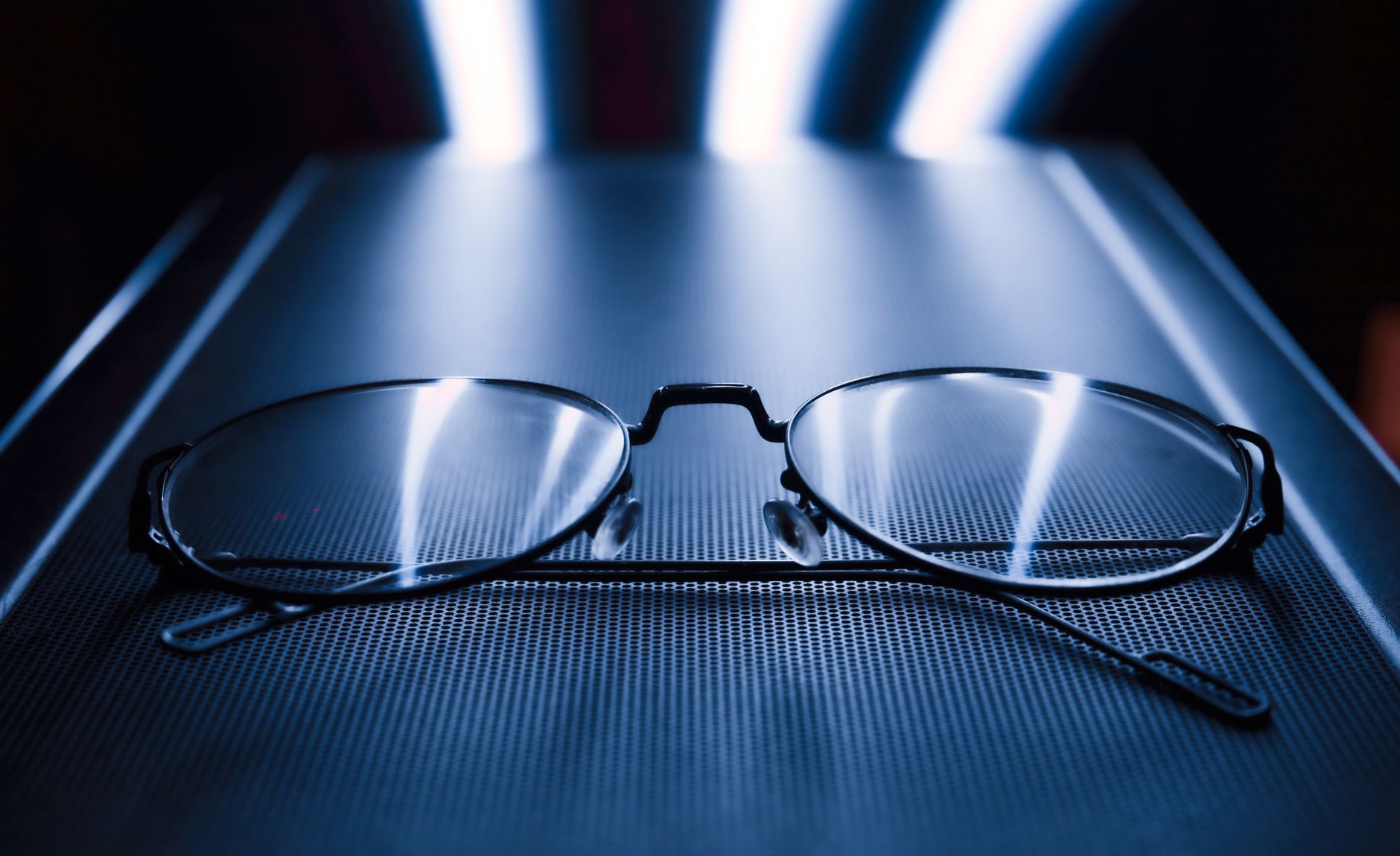
Yes — high-index materials tend to reflect more light off their surface than standard plastic, simply because of how strongly they bend light in the first place. Left uncoated, this can make a lens look glassier and busier, with more visible glare bouncing off the front surface in photographs and under indoor lighting.
This is one reason an anti-reflective coating is discussed so often alongside high-index lenses rather than as an optional extra. The coating doesn’t change the index, but it manages the side effect of it. The mechanics of what that coating is actually doing are laid out in this explanation of anti-reflective coatings, which is worth reading before assuming a coating is purely cosmetic — it isn’t.
Does It Change How the Glasses Look in the Frame?
This is where the appeal becomes visual rather than purely practical. A thinner lens sits flatter against the frame, without the bulge or ring that a thick lens creates at the edge. For a stronger prescription, that difference is often the single biggest factor in whether a pair of glasses looks considered or looks like a compromise.
It matters more in some frame styles than others. A bold, chunky acetate frame can absorb a bit of extra lens edge without drawing the eye to it. A fine metal frame, a rimless design, or anything with an exposed lens edge has nowhere to hide that thickness, which is part of why frame choice and lens index tend to get discussed together. For a broader sense of what actually reads as considered rather than compromised in a finished pair of glasses, this breakdown of what makes a frame look expensive covers the construction details worth comparing.
Is a High-Index Lens Right for Every Prescription?
Not necessarily, and this is squarely a question for an optician rather than a style publication. Weaker prescriptions may see little benefit from a higher index, since there’s not much thickness to remove in the first place, and the trade-off in colour fidelity may not be worth taking on for no visible gain. Stronger prescriptions are where the thinning effect becomes obvious enough to matter.
This is exactly the kind of decision that depends on the specific numbers on a prescription, the frame shape chosen, and how sensitive an individual is to the mild colour-fringing effect described above. None of that can be answered in general terms here — it’s a conversation to have with the person dispensing the lenses.
Does Lens Type Change the Trade-Off?
The material trade-off is broadly the same whether the lens is single-vision or multifocal, but the visual stakes differ. A single-vision lens has one correction across the whole surface, so any colour fringing tends to sit consistently at the periphery. A progressive lens has multiple zones doing different work across the same surface, which is a separate design conversation covered in this explanation of progressive lenses and their adaptation period — worth reading if a multifocal lens is also on the table, since the two decisions (index and lens design) get made together but aren’t the same choice.
What Should Actually Get Compared?
Rather than fixating on the index number itself, it’s more useful to compare a few concrete things when a lens is being made up:
- How much edge thickness the finished lens will have in the specific frame chosen, not in the abstract.
- Whether an anti-reflective coating is included, given that higher-index materials reflect more without one.
- The Abbe value of the material on offer, and how it compares to the alternative being quoted.
- How the frame itself is going to hide or expose the lens edge — a factor covered across the frames and styles archive for anyone weighing shape and proportion at the same time as lens material.
These are the details that actually decide whether a stronger prescription ends up looking heavy and dated, or close to invisible. The lens material and coating conversation sits alongside frame shape rather than behind it — for a wider look at how coatings, tints and lens types interact, the lenses and coatings archive covers the related decisions in more depth.
The Bottom Line
A high-index lens solves a real, visible problem: thickness and weight in a stronger prescription. It does so by trading a small amount of optical purity — slightly more colour fringing at the edges, slightly more surface reflection without a coating — for a flatter, lighter finished lens. Whether that trade is worth making, and at what strength of prescription, is a decision for an optician working from the actual numbers involved. What this article can say with confidence is that the trade-off is real, it has a name, and it’s worth understanding before assuming that a higher number is automatically the better choice.
The Designer Glasses publishes general information and style opinion, not professional advice. We are writers and enthusiasts, not opticians, optometrists or dispensing opticians. Nothing here interprets a prescription, recommends a lens power, or tells you whether you need correction — only an eye examination can do that. If your vision changes suddenly, or you have eye pain, flashes, new floaters or halos around lights, treat it as urgent and contact an eye care professional the same day. Sunglasses should carry a stated UV rating: a dark lens without UV filtering is worse than none at all.