Polycarbonate is a lightweight thermoplastic used for both lenses and frames because it resists shattering far better than glass or standard plastic. It is the right choice whenever impact resistance matters more than absolute optical purity — sport, children’s glasses, safety settings and rimless designs among them.
What actually is polycarbonate?
Polycarbonate is a clear engineering plastic, originally developed for industrial and aerospace uses, later adapted for eyewear because it could be moulded thin and remained genuinely hard to break. It is not glass, and it is not the same as the standard CR-39 plastic used in most everyday lenses.
What sets it apart is a combination of low density and high impact strength. A polycarbonate lens can be made thinner and lighter than a glass lens of the same prescription, and it will absorb a knock — a dropped frame, a stray ball, a fall — without shattering into sharp fragments the way glass can.
Why is polycarbonate used for lenses specifically?
Polycarbonate lenses are used because they combine light weight with strong impact resistance, which matters for comfort and for safety. They also block UV inherently, without a separate coating, which is a genuine practical advantage rather than a marketing claim.
That inherent UV blocking is worth understanding on its own terms. It refers to the lens material itself absorbing UV wavelengths — it is not the same as a stated UV400 rating on sunglasses, and it does not make a clear indoor lens into sun protection. For anything worn outdoors, the rating still needs to be checked and confirmed, not assumed from the material. My colleagues have covered what a UV400 rating actually means in more detail, and it is worth reading alongside any claim about a lens material’s “built-in” protection.
Where polycarbonate lenses give something up is optical clarity at the edges of the lens. The material has a lower Abbe value than many alternatives, which can show up as subtle colour fringing or softness toward the periphery, particularly in stronger prescriptions. This is covered properly in the piece on what Abbe value is and why it matters for thick lenses — the short version is that polycarbonate trades some of this optical refinement for its durability, and for most everyday wear that trade is worth it.
Is polycarbonate the same as a high-index lens?
No. Polycarbonate happens to have a moderately high index, which makes lenses thinner than standard plastic, but “high-index” is a separate category describing lenses made specifically to be as thin as possible for strong prescriptions. Polycarbonate is chosen first for impact resistance, not primarily for thinness.
Anyone comparing lens options because a prescription is strong, rather than because of impact needs, should look at the dedicated explanation of what a high-index lens is and what the trade-off involves, and at what lens index actually changes about a lens. These are decisions best made with an optician who can see the actual prescription, not from a general comparison of materials.
Where is polycarbonate clearly the right choice?
Polycarbonate earns its place in specific situations rather than being a universal default. The clearest cases are the ones where the consequence of breakage is serious, or where the frame is light enough that weight matters more than ultimate clarity.
- Children’s glasses, where impact resistance is not optional and eyewear takes the kind of daily knocks adult glasses rarely see.
- Sports and active eyewear, where a frame may take a direct hit and a lens shattering close to the eye is a real hazard.
- Safety glasses and occupational settings, where a rated impact resistance is a requirement, not a preference.
- Rimless and semi-rimless frames, where the lens itself takes structural stress at drill points and needs to tolerate flex without cracking.
- Wrap-style sunglasses, where a curved lens is under more mechanical stress at the edges than a flat one.
The pieces on what to look for in sunglasses for a child and what sports sunglasses are built differently for both touch on why this material turns up so consistently in those categories — it is the practical answer to a practical problem, not a styling choice.
Where does polycarbonate stop being the obvious choice?
Polycarbonate is not the best option where the priority is the sharpest possible optical clarity across the whole lens, particularly in stronger prescriptions where its lower Abbe value becomes more noticeable at the edges. It also scratches more easily than glass, though a scratch-resistant coating largely addresses this in practice.
For someone with a mild prescription in a conventional frame, standard plastic lenses may deliver better optical quality with no real disadvantage, since the impact risk that polycarbonate solves for simply is not the deciding factor in that situation. This is a case where the “better” material depends entirely on the use, not on which one sounds more advanced.
An optician fitting the actual prescription is the right person to weigh clarity against durability for a specific pair — this article can explain the trade-off, not resolve it for an individual case.
Does polycarbonate work for frames as well as lenses?
Yes — polycarbonate and related nylon-based plastics are common in sports frame construction and in some casual everyday frames, valued for the same flexibility and impact resistance that makes the lens version useful. A polycarbonate frame front can flex slightly under pressure and return to shape rather than snapping.
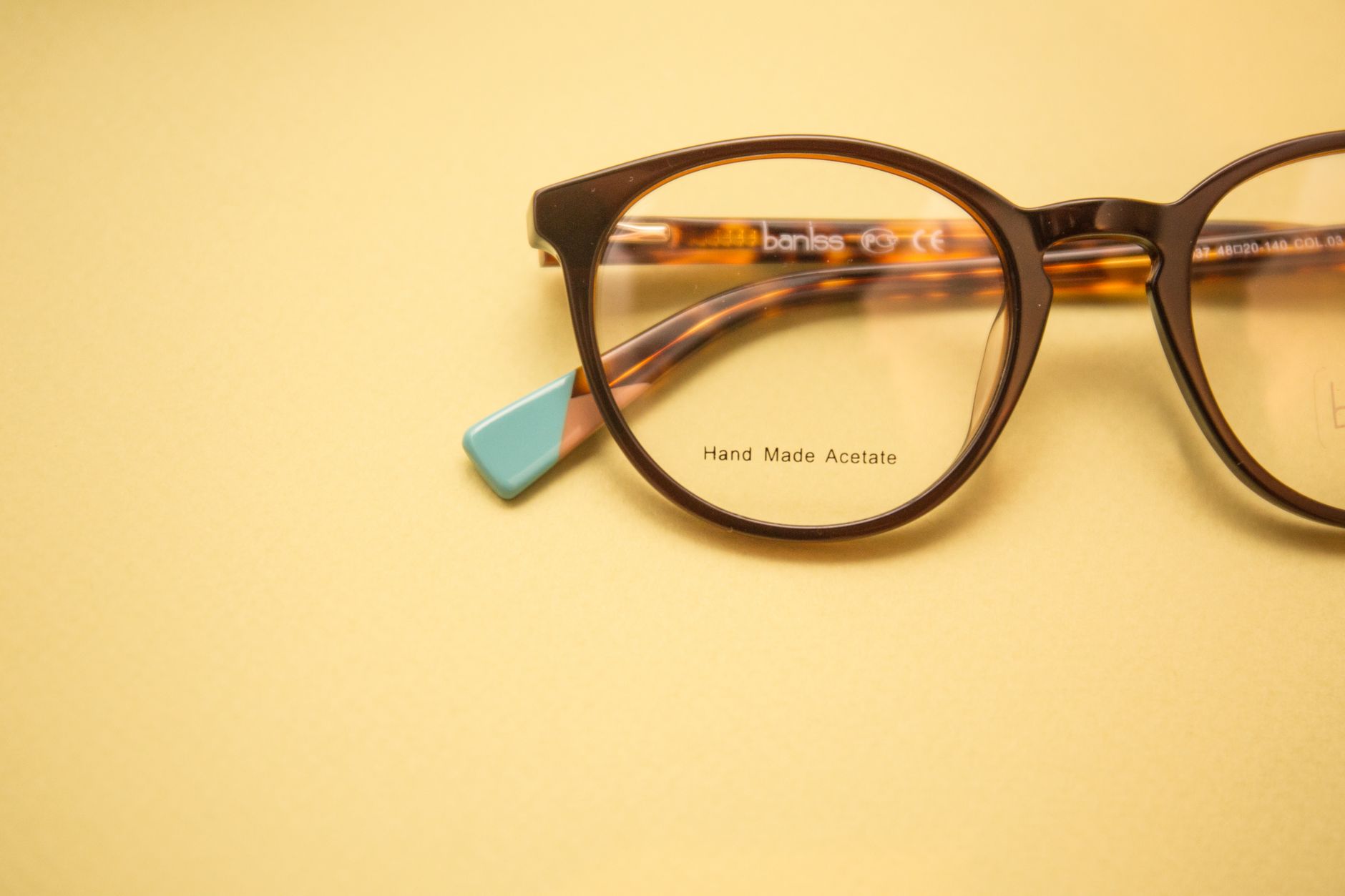
This is different from acetate, the classic layered plastic used in most fashion-forward frames, which is prized for depth of colour and the way it can be cut and polished rather than for flexibility. Anyone comparing frame materials on looks as much as function should treat polycarbonate as the practical, technical option and acetate as the design-led one — neither is “better,” they are built for different jobs. The broader frames and styles archive covers how material choice interacts with shape and proportion in more depth.
Does the coating matter as much as the material?
Often, yes. A polycarbonate lens without a scratch-resistant coating will mark more readily than the same lens properly coated, and an anti-reflective coating changes how clean and neutral the lens looks in photographs and in person, regardless of the base material.
It is worth understanding what an anti-reflective coating is actually doing before assuming the lens material alone determines how a pair of glasses performs day to day. The material sets the baseline; the coatings finish the job.
Does polycarbonate matter for sunglasses specifically?
It can, particularly for wrap frames and anything built for sport or driving, where lens curvature and impact resistance both matter. But the tint and the UV rating are separate questions entirely from the lens material, and neither should be assumed from the other.
A dark lens is not sun protection on its own — a dark tint without a stated UV filter is worse than no sunglasses at all, because the tint causes the pupil to open while unfiltered UV still reaches the eye. This applies to polycarbonate exactly as much as to any other lens material; the way to check is confirmed labelling such as UV400 or 100% UVA/UVB protection, covered properly in how to tell if sunglasses are genuinely UV protective, not the depth of the tint or the price on the tag.
Anyone shopping specifically for sun protection, rather than for prescription lenses that happen to be tinted, should start with the broader sunglasses archive, which covers tint, polarisation and lens category together.
What about blue-light claims on polycarbonate lenses?
Some polycarbonate lenses are marketed with additional blue-light filtering for screen use. The evidence that this meaningfully changes eye comfort or sleep for most people is thin, and considerably behind the marketing built around it.
That does not mean the coating does nothing, only that it should not be the deciding factor in a lens choice, and it is a separate feature from the impact resistance and UV absorption that make polycarbonate genuinely useful. Readers weighing this specifically for desk work may find what an occupational or office lens is actually for more directly useful than a blue-light claim alone.
A reasonable way to decide
Polycarbonate is the sensible default whenever breakage risk, weight or frame construction genuinely calls for it — children, sport, safety, rimless builds, curved wrap sunglasses. For a conventional prescription in a conventional frame with no particular impact risk, it is one reasonable option among several, not the only correct one.
The better question is rarely “is this lens polycarbonate,” and more usefully “what is this pair of glasses actually going to be asked to do.” Answering that honestly points to the right material far more reliably than any material’s reputation on its own.
The Designer Glasses publishes general information and style opinion, not professional advice. We are writers and enthusiasts, not opticians, optometrists or dispensing opticians. Nothing here interprets a prescription, recommends a lens power, or tells you whether you need correction — only an eye examination can do that. If your vision changes suddenly, or you have eye pain, flashes, new floaters or halos around lights, treat it as urgent and contact an eye care professional the same day. Sunglasses should carry a stated UV rating: a dark lens without UV filtering is worse than none at all.