Plating is a thin layer of metal — usually gold, palladium, rhodium or a coloured alloy — deposited electrochemically over a base frame metal to give it colour, shine or corrosion resistance. It wears through because it is genuinely thin, measured in microns, and every point where the frame touches skin, hair or a cleaning cloth slowly abrades it down to the metal underneath.
What actually is plating on a frame?
Most metal glasses are not made from the metal you see. A frame described as “gold” or “silver” in colour is very rarely solid gold or silver underneath. It is a base metal — often a copper alloy, stainless steel, titanium or monel — with a much more expensive or more attractive metal deposited over the top in a bath, using an electric current to bond it at the atomic level. This is electroplating, and it is standard practice across almost the entire eyewear industry, from mass-market frames to the most expensive names in the business.
The plating layer itself is measured in microns — millionths of a metre. Even a “heavy” plating is thin compared with anything you could shape a frame from on its own. Its job is not structural. The base metal does the structural work: holding shape, taking adjustment, flexing at the temple without snapping. The plating sits on top purely to do with what you see and touch — colour, shine, and a first line of defence against tarnish and moisture.
Why do metal frames get plated at all?
Plating exists for three overlapping reasons: cost, colour and corrosion resistance, in roughly that order of how often it drives the decision.
- Cost. Solid gold or solid titanium frames are heavy, expensive to machine, and often impractical to spring-adjust. Plating gets the visual effect of a precious or premium metal without the weight or price of using it throughout.
- Colour. Base metals rarely arrive in an attractive finished colour on their own. Plating in gold, rose gold, gunmetal or a matte grey gives a maker control over the exact tone, in a way raw alloy cannot offer.
- Corrosion resistance. Some base metals — particularly the copper-nickel alloy known as monel — corrode or discolour with contact with skin oils and sweat over time. A plating layer, especially one finished with a clear protective top coat, slows that considerably.
None of this is a shortcut in the pejorative sense. Plating is a deliberate, well-understood manufacturing choice, and it is how the vast majority of metal eyewear — across every price point — actually gets its colour. The distinction that matters is thickness and quality of the plating and top coat, not whether plating is used at all.
What is under the plating?
This depends entirely on the frame, and it is one of the more useful things to ask about before buying, because the base metal determines how the frame will age once the surface layer is gone.
- Monel, a copper-nickel alloy, is common because it is easy to shape and holds colour well under plating, though it can corrode faster if the plating fails. More on what monel is and why it’s so common.
- Stainless steel resists corrosion on its own even without plating, which makes worn patches less alarming in practice. What stainless steel is like as a frame material.
- Titanium and beta-titanium are prized partly because they are naturally corrosion-resistant and hypoallergenic, so plating on titanium is mostly decorative rather than protective. What titanium buys you in a frame and where beta-titanium is used.
None of this is printed on a hangtag, but a frame’s internal markings sometimes hint at it. If you’re curious what the numbers stamped on the inside of a temple actually indicate about material and origin, that’s worth a separate look at another point.
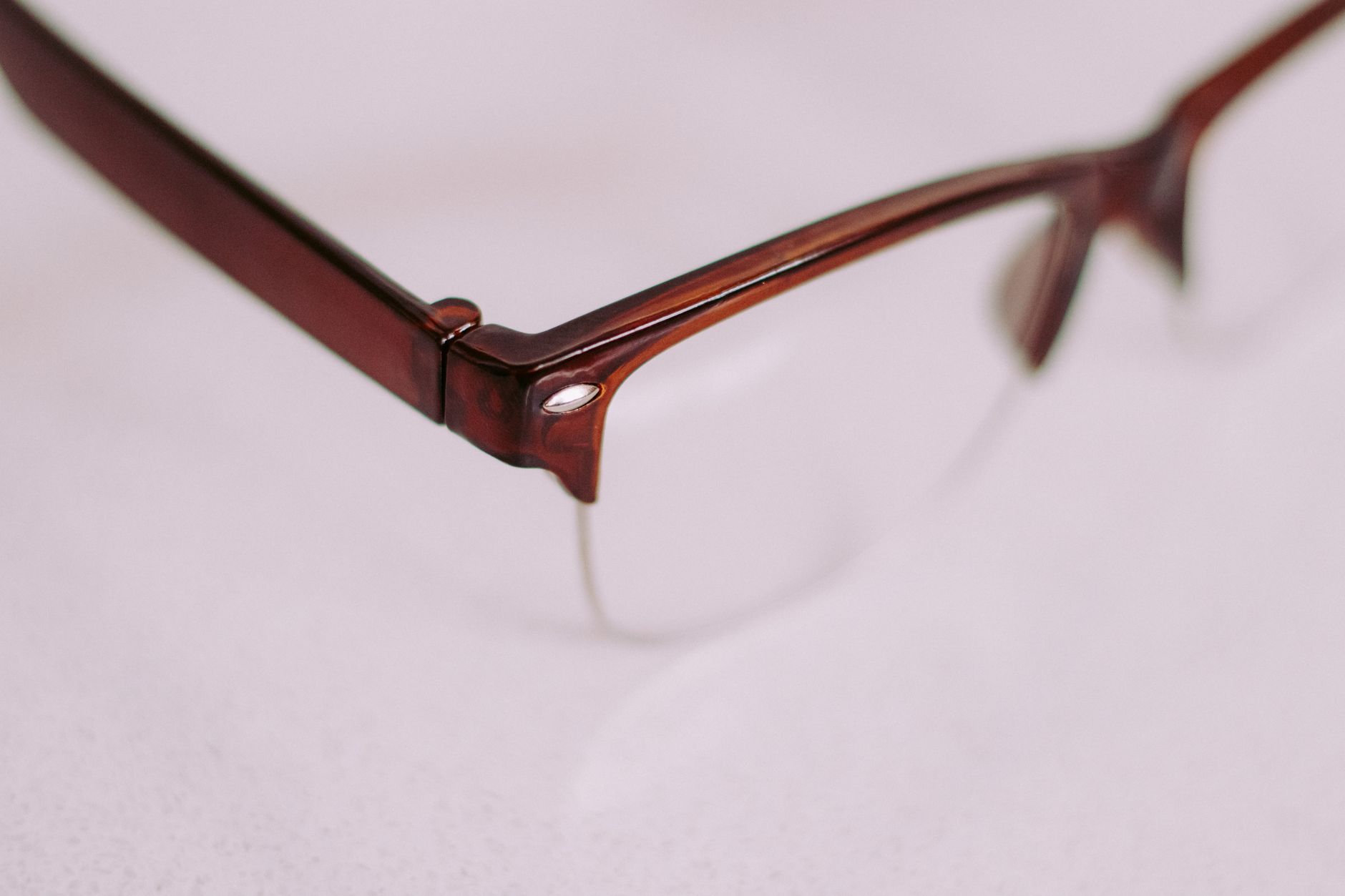
Why does plating wear through in the same places every time?
Plating loses thickness through simple, repeated mechanical contact, and the pattern is almost always the same because the contact points are the same on every pair of glasses.
- The nose pads and bridge, where skin oils, sweat and the constant small movements of a frame settling on the nose create steady abrasion.
- Behind the ears, where the temple tips rub against hair and skin all day.
- The hinge area, which flexes every time the glasses are put on or taken off, and picks up friction from fingers doing the folding.
- Anywhere a cloth or fingernail habitually cleans or adjusts the frame, since even a soft cloth is mildly abrasive when dragged across the same spot thousands of times.
Skin chemistry accelerates this. Sweat is mildly acidic and contains salts; some people’s skin runs more acidic than others, and that alone can make plating on the nose pads or bridge thin noticeably faster on one wearer than another, even on an identical pair of glasses. This is chemistry, not a manufacturing fault, and it is why the same frame can look pristine on one person after two years and show brassing on another after six months.
Does thicker plating mean better quality?
Generally, yes, thicker plating and a well-applied protective top coat resist wear longer, but thickness alone doesn’t tell the whole story — the base metal, the bonding process and how the frame is worn all matter as much as the plating’s raw depth.
A frame with modest plating over a corrosion-resistant base metal like stainless steel can outlast a heavily plated frame over a base metal prone to reacting with skin. The plating is only one variable in how a frame ages, alongside build quality covered in pieces on how a frame is actually made and material choices under the wider Materials & Craft archive. Reputable makers will generally state a plating standard or thickness if asked, though it’s rarely advertised prominently because it sounds more technical than appealing on a product page.
What happens to the base metal once the plating goes?
Once plating thins through to bare metal, the base underneath is exposed to the same skin contact and moisture that wore the plating down, and how it behaves from there depends entirely on what that base metal is.
On stainless steel, a worn patch usually just looks like a change in colour and shine — mildly duller, but stable. On monel or other copper-based alloys, exposed base metal can start to discolour, develop a greenish tinge, or in some cases mildly irritate skin that’s sensitive to nickel. This is separate from the frame yellowing or turning brittle with age, which is a different ageing process affecting plastic and acetate materials rather than plated metal — covered in more detail in a piece on why some frames yellow or go brittle with age.
Worn plating is a cosmetic issue in almost every case. It is not a sign the frame is failing structurally, and it has nothing to do with lens fit or prescription. If anything about a frame feels physically wrong — pinching, slipping, sitting unevenly — that’s a fit question, separate from what’s happening to the surface finish, and worth working through via a piece on what can and can’t be adjusted on a pair of glasses.
Can worn plating be fixed?
In principle, yes: a jeweller or specialist eyewear repair service can strip and re-plate a frame, and some manufacturers offer this as an aftercare service for their own designs. In practice, whether it’s worth doing depends on the frame’s value and how much of the base metal is already showing.
Light brassing at the nose pads is often more of an aesthetic irritation than anything a wearer notices day to day once they stop looking for it. Heavier wear, especially anywhere the exposed metal has started to discolour or flake, is a better candidate for re-plating — or for accepting that the frame has entered a second, more worn-in phase of its life, which some people find gives a frame character rather than detracting from it.
What should you look for when buying a plated frame?
Rather than asking whether a frame is plated — almost all coloured metal frames are, to some degree — it’s more useful to ask what’s underneath and how it’s finished.
- What is the base metal, and is it one known to resist corrosion on its own (stainless steel, titanium) or one that relies more heavily on the plating for protection (monel)?
- Is there a stated plating thickness or standard, even a general one?
- Does the frame have a lacquer or top coat over the plating, which slows wear at contact points?
- How does the finish feel at the hinge and nose pads specifically — these are the first places wear will show, so light scuffing here even on a new pair is worth noticing before buying.
These questions apply across styles and price points, and sit alongside the broader question of proportion and shape that decides whether a frame suits a face in the first place — a subject covered across the Frames & Styles archive.
The Designer Glasses publishes general information and style opinion, not professional advice. We are writers and enthusiasts, not opticians, optometrists or dispensing opticians. Nothing here interprets a prescription, recommends a lens power, or tells you whether you need correction — only an eye examination can do that. If your vision changes suddenly, or you have eye pain, flashes, new floaters or halos around lights, treat it as urgent and contact an eye care professional the same day. Sunglasses should carry a stated UV rating: a dark lens without UV filtering is worse than none at all.