A combination frame is one built from two materials rather than one — almost always metal and acetate, working together instead of competing. The metal usually forms the rim edge, bridge or temple core; the acetate wraps the front or shapes the temple tips. Designers mix them because each material does something the other cannot: acetate gives colour and depth, metal gives a fine line and structural discipline.
What exactly counts as a combination frame?
A combination frame uses at least two distinct materials in a single build, most often a metal element paired with acetate, rather than one material carried through the whole piece. It is different from a plated or coated frame, where a single material is dressed up to look like another.
The term covers a wide range of constructions. Sometimes the metal is barely visible — a thin core wire running through an acetate temple for flex. Sometimes it dominates — an acetate-tipped metal frame where the front is nearly all wire and the acetate only appears at the temple ends and around the hinge. Both are combination frames; they just sit at opposite ends of the same idea.
Why mix metal with acetate instead of using one material?
Metal and acetate are chosen for what they do differently, not because one is superior. Metal can be drawn thin without losing strength, so it suits fine bridges, browlines and rim edges where bulk would look heavy. Acetate can be layered, coloured and polished to a depth no metal achieves, so it suits the front where colour and shape carry the most visual weight.
Put them together and a designer gets both things at once: a saturated, sculpted front and a structurally light temple or bridge that would look clumsy in acetate alone. It is a compromise in the best sense — each material doing the part it is genuinely good at, rather than being asked to do everything.
Where does each material usually sit on the frame?
There is no single formula, but certain combinations recur often enough to be worth knowing when comparing frames in hand.
- Metal rim or browline with an acetate lower half or temple, common on aviator-adjacent and browline shapes.
- Acetate front with metal temples, which lightens the weight carried behind the ears without changing the face of the frame.
- Metal core wire running inside an acetate temple, invisible from the outside but responsible for how the temple flexes and holds its bend.
- Metal hinge plates and rivets set into an acetate front, which is less a stylistic choice than a practical one — acetate alone does not thread or hold screws well over time.
That last point matters more than it looks. A lot of what reads as “combination” design is really engineering: metal placed exactly where a hinge, spring or joint needs it, with acetate left to do the visible, colourful work everywhere else. The way those parts meet is also where a frame’s quality shows — see what makes a hinge feel good for what to feel for at that junction.
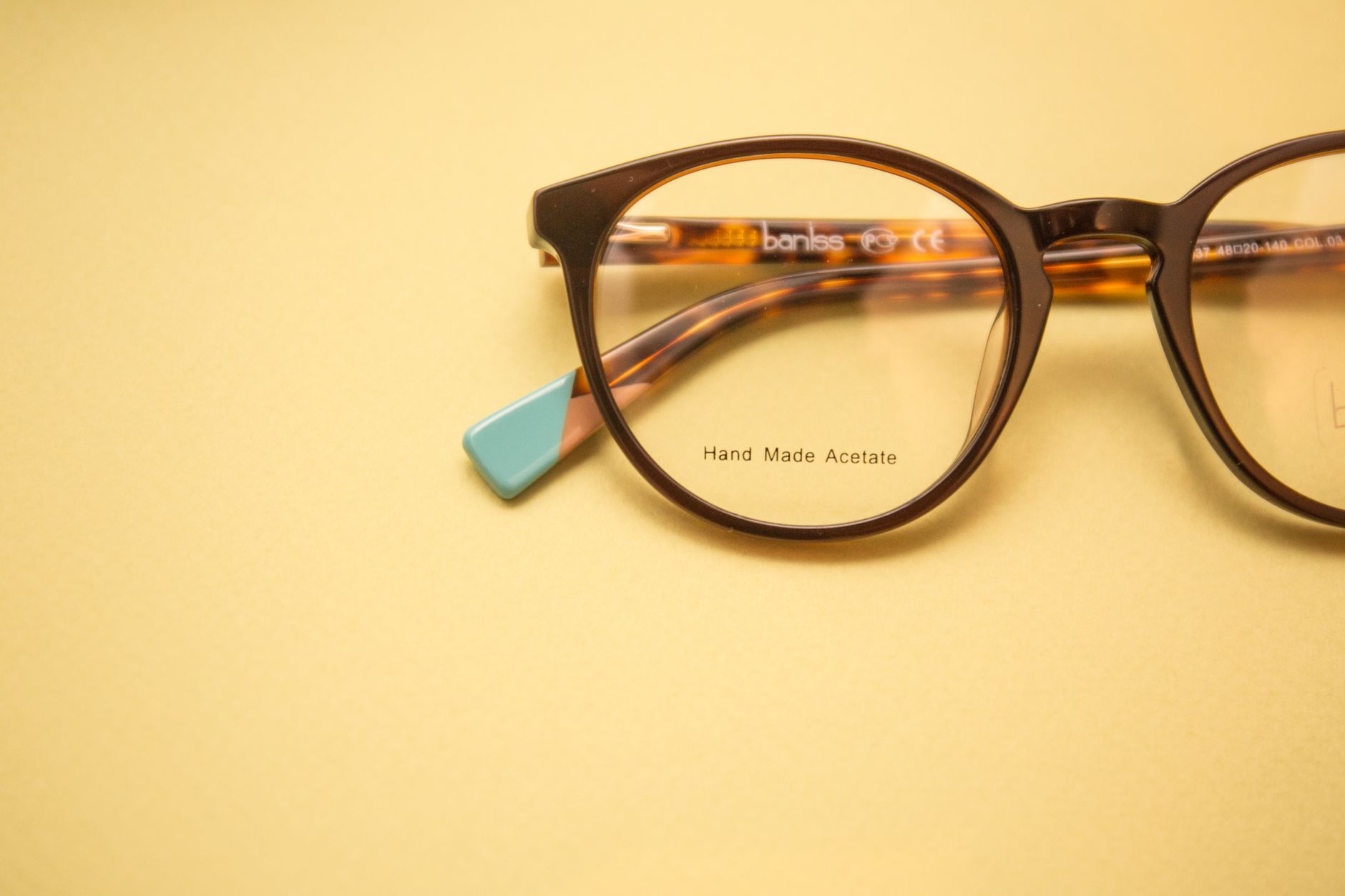
What does a combination frame look like on the face?
A combination frame tends to read as more considered and less blunt than a single-material frame in the same shape, because the eye picks up the change in colour and texture as a deliberate detail rather than a single flat block.
This is a styling observation, not a rule with any science behind it, and it is offered as such. A heavier acetate front can visually anchor a narrow face, while a slim metal top bar on an otherwise acetate frame can make a wide face read as more angular. Plenty of people look better breaking these conventions entirely — a fine metal frame on a strong jaw, or a bold acetate front on delicate features, can work precisely because it isn’t matched to type. Treat any such guidance as a starting point; the face shape and fit archive covers more of these conventions and where they tend to fall apart.
Colour is where combination frames often do their best work. A clear or crystal acetate paired with brushed metal reads differently again — for more on that particular pairing, see what makes a clear or crystal frame appealing. Tortoiseshell acetate against gold-toned metal is one of the oldest combinations in eyewear for a reason, discussed in more depth in the piece on where the tortoiseshell pattern actually comes from.
Are combination frames more fragile than single-material ones?
Not inherently, but they introduce more places where two different materials meet, and those junctions are where problems tend to show up first — a loosening rivet, a plating that starts to wear at the point where metal meets acetate, or a core wire that eventually fatigues inside its acetate sleeve.
None of this makes a combination frame a bad choice. It means the join quality matters as much as the materials themselves. Metal parts on a combination frame are usually plated rather than solid precious metal, and plating wears at different rates depending on thickness and how the frame is handled — worth understanding before buying, and covered in what plating on glasses actually is and why it wears through. Acetate itself also ages in its own way over years of wear, independent of the metal it’s paired with, which is worth knowing before assuming a frame has failed rather than simply settled.
Do combination frames cost more than single-material frames?
Not necessarily, and price is not a reliable signal of how well a combination frame is built. What actually adds cost is the extra manufacturing step of joining two materials cleanly — setting metal into acetate, or running a core wire through a temple — rather than the materials themselves.
A frame that hides its joins well, with no visible gaps, uneven plating or rough seams where metal meets acetate, has usually had more attention paid to that step, regardless of what it’s priced at. That’s a better indicator to look for in person than the materials list alone. For a wider look at where cost genuinely comes from in a frame, see what actually drives the price of a pair of glasses.
How should a combination frame be judged before buying?
The materials list on a spec sheet says little on its own. What matters is how the two materials are joined, how much weight each contributes, and whether the balance between them suits how the frame will actually be worn.
- Check where the metal sits — rim, bridge, temple core, or hinge only — and whether that placement adds visible detail or just adds weight.
- Look closely at the join itself for gaps, visible glue lines or uneven plating; a clean seam is a good sign of care elsewhere in the build.
- Weigh the frame in the hand. Metal in the wrong place can make a frame feel front-heavy even when it looks light.
- Consider whether the combination is doing something the shape needs — lightening a large acetate front, or adding structure to a fine metal one — rather than existing purely as decoration.
These are the same questions worth asking of any frame, combination or otherwise, and the guide to choosing glasses and sunglasses covers the fuller set of comparisons worth making before a purchase, alongside the wider materials and craft archive for how individual materials behave on their own.
Does the same logic apply to combination sunglasses?
Yes, and one more thing matters there that doesn’t apply to clear lenses: a dark lens is not sun protection on its own. Protection comes from a stated UV filter — look for UV400 or 100% UVA/UVB marked on the lens or paperwork — not from how dark the tint looks or what the frame is made from. A very dark lens with no UV filter can actually let more light-related UV reach the eye than no sunglasses at all, because the eye’s pupil opens wider behind the darker tint. The frame’s material mix has no bearing on that at all; it’s worth checking separately, as covered in how to tell if sunglasses are genuinely UV protective — sorry, that page isn’t linked here, so see the sunglasses archive for more on lens protection generally.
Beyond that, the same style logic holds: metal accents on a sunglasses frame tend to catch light and draw the eye to the temple or bridge, while the acetate front carries the shape and colour that make the pair recognisable at a glance. It’s the same trade worn differently — structure from one material, character from the other.
The Designer Glasses publishes general information and style opinion, not professional advice. We are writers and enthusiasts, not opticians, optometrists or dispensing opticians. Nothing here interprets a prescription, recommends a lens power, or tells you whether you need correction — only an eye examination can do that. If your vision changes suddenly, or you have eye pain, flashes, new floaters or halos around lights, treat it as urgent and contact an eye care professional the same day. Sunglasses should carry a stated UV rating: a dark lens without UV filtering is worse than none at all.