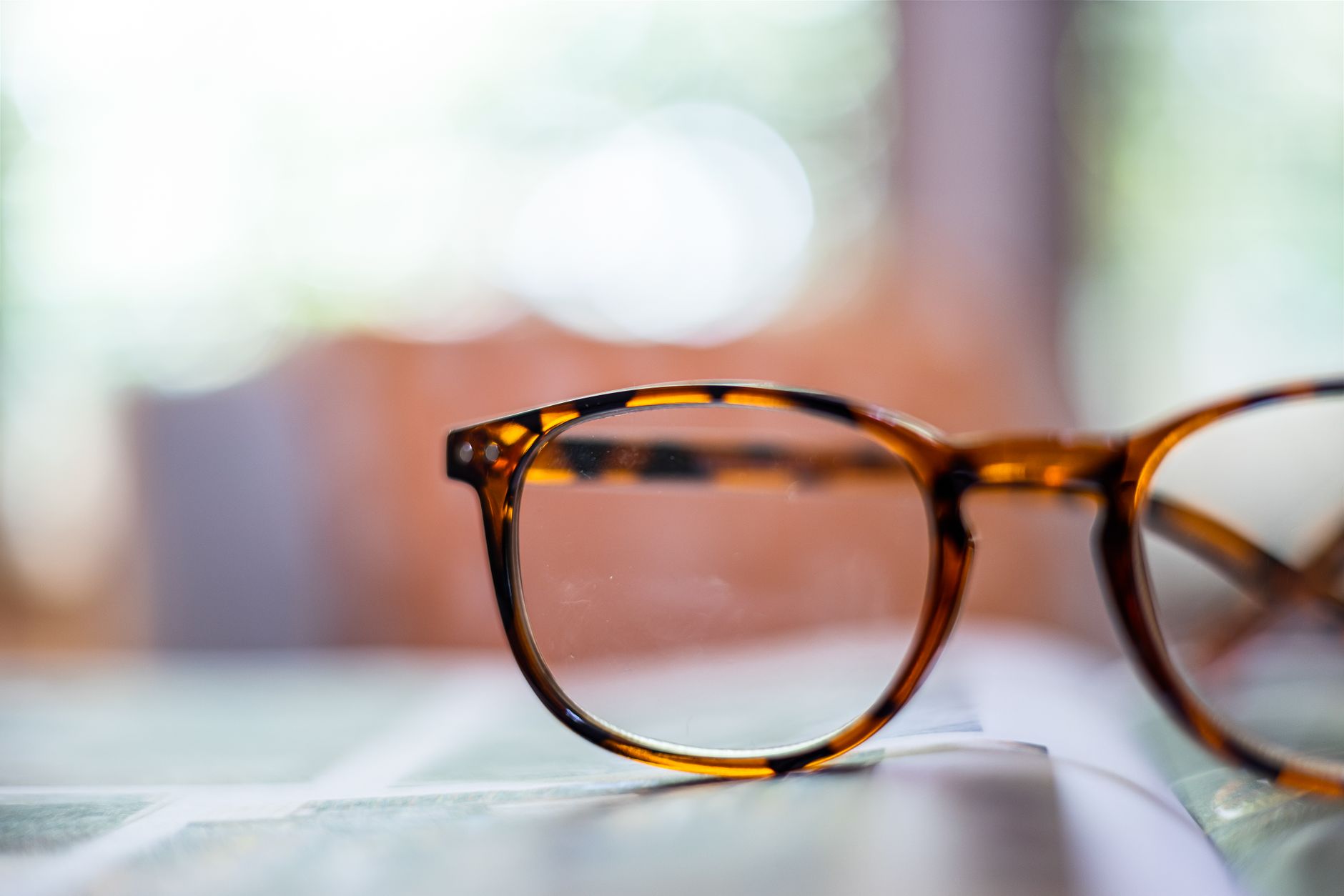
The tortoiseshell pattern on glasses comes from an actual material: the mottled brown-and-amber shell of the hawksbill sea turtle, prized for centuries in combs, buttons and eyewear before international trade bans made it illegal. What survives today is acetate designed to mimic that same marbled effect, without the turtle.
Was tortoiseshell really made from a turtle?
Yes. For most of its history, “tortoiseshell” was not a pattern name — it was a literal material, cut from the carapace of the hawksbill turtle. The shell was prized because it was hard enough to hold a shape, warm enough to feel pleasant against skin, and marked with an irregular mottling of amber, brown and near-black that no dye could quite fake.
Artisans had worked hawksbill shell since antiquity, in combs, fans and small boxes, long before eyewear existed as a consumer object. When spectacles moved from a rare necessity to something people actually wanted to look good wearing, tortoiseshell was already established as a luxury material with centuries of prestige behind it.
Why did tortoiseshell become an eyewear staple?
Real shell suited frame-making in a way few natural materials did. It could be heated and pressed into shape, it took a high polish, and its pattern was genuinely one-of-a-kind on every pair — no two turtles produced identical shell, so no two frames were quite identical either.
That individuality mattered. A tortoiseshell frame signalled that the wearer had chosen something specific and slightly rare, in an era when most eyewear was functional rather than fashionable. The material sits in the same lineage as other natural substances eyewear makers once relied on before synthetics took over — worth comparing against the story of horn and buffalo horn frames, which followed a similar arc from raw animal material to romanticised pattern.
When did acetate replace real turtle shell?
Cellulose acetate began replacing real tortoiseshell in eyewear from the early-to-mid twentieth century, well before conservation law forced the issue. Acetate was cheaper, more consistent, and easier to mass-produce, and it could already be manufactured with a marbled, tortoiseshell-style pattern baked into the sheet.
The final push away from real shell was legal rather than aesthetic. The hawksbill turtle is now protected under the Convention on International Trade in Endangered Species (CITES), and international trade in its shell has been prohibited since the 1970s across most major markets. By the time the ban was widely enforced, the eyewear industry had already largely moved on — acetate had proven it could deliver the look without the material.
How does acetate get the tortoiseshell effect?
Acetate is built up in layers before a frame is ever cut, and colour is introduced into those layers rather than painted on afterward. To read as tortoiseshell, a sheet needs irregular colour distribution — patches of amber, umber and near-black that don’t repeat in a visible loop — plus enough depth that the pattern seems to sit inside the material rather than on its surface.
That depth is the giveaway when comparing frames. Cheap tortoiseshell-effect plastic tends to look flat and printed, because the pattern lives on one plane. Well-made acetate tortoiseshell has a layered, almost translucent quality, closer to looking into resin than looking at a surface. The material’s general behaviour — how it takes colour, how it ages, why some brands still invest in it — is covered in more depth in what acetate is and why good frames use it, and the difference between that and cheaper alternatives is explained in acetate versus injection-moulded plastic.
Is any tortoiseshell frame today made from a real turtle?
No legitimate manufacturer uses real hawksbill shell now — it’s illegal to trade under CITES, and has been for decades. Every “tortoiseshell” frame on the market, from the least expensive to the most expensive, is acetate or another synthetic patterned to resemble it.
The exception worth knowing about sits in the vintage market rather than the current one. Frames genuinely made before the ban do occasionally surface secondhand, and telling real shell from early acetate takes more than a glance — real shell has a different weight, warmth and grain under close inspection. Anyone shopping older frames should read what to check before buying vintage frames before assuming a listing’s description is accurate, since the material claim on a secondhand tortoiseshell frame is not something to take at face value.
Why does the pattern still look the way it does?
Because the whole appeal of tortoiseshell was always irregularity, not precision. A pattern that repeats exactly, or that reads as symmetrical, breaks the illusion — it stops looking like something that came from an organic source and starts looking like printed plastic.
Makers who work with better acetate sheet lean into that unevenness rather than smoothing it out. Some frames are cut so the pattern runs differently across the two temples on purpose, which is closer to how real shell would have varied piece to piece. It’s a small detail, but it’s the difference between a frame that looks like it’s wearing a print and one that looks like the material itself is simply that colour. A closer look at how a frame reaches that finish, including the hand-finishing stage many acetate frames still go through, is in what hand-polishing is doing to an acetate frame.
Has tortoiseshell ever gone out of fashion?
It has dipped, but never disappeared. Tortoiseshell was a fixture of mid-century eyewear, faded somewhat during the plainer decades that followed, and returned repeatedly whenever eyewear cycled back toward warmth and pattern over minimalism. That cyclical pull is not unique to tortoiseshell — it’s part of a broader pattern covered in why 1950s frame shapes keep coming back, where certain silhouettes and finishes resurface roughly every generation because the eyewear industry, like fashion generally, treats its own archive as a resource rather than a closed chapter.
What’s changed is the range. Tortoiseshell used to mean one fairly narrow band of brown-and-amber. Acetate manufacturing now produces versions in cooler greys, deep reds, near-black variants with only a hint of the original mottling, and pale honey tones that barely resemble the traditional palette at all while keeping the irregular structure that makes it read as “tortoiseshell” in the first place.
Does tortoiseshell suit every face?
As a styling convention rather than a rule, tortoiseshell tends to sit well on warmer skin tones and complements hazel, brown and green eyes particularly easily, because the pattern echoes rather than competes with those colours. That’s an opinion worth treating loosely, not a law — plenty of people wear tortoiseshell against cooler colouring and it works precisely because the frame reads as a deliberate contrast rather than a match.
The more useful question is usually proportion rather than colour. A busy pattern on a very large frame can dominate a narrow face, while the same pattern on a smaller, cleaner shape often reads as considered rather than loud. Face-shape advice generally deserves the same scepticism — see whether face-shape rules for glasses actually hold up — but pattern-to-frame-size balance is one area where the convention holds up better than most.
What should you actually compare when choosing a tortoiseshell frame?
Once colour is set aside, tortoiseshell frames should be judged the same way any acetate frame is judged: on how the sheet behaves rather than on how the pattern photographs.
- Depth and irregularity of the pattern, rather than a flat, evenly repeating print
- How the acetate feels at the temple — layered sheet has more weight and warmth than thin injection-moulded plastic
- Whether the pattern is consistent in tone across both temples, or looks mismatched from batch to batch
- Hinge quality and overall construction, which matter more to how the frame lasts than the pattern ever will
These are the same fundamentals worth checking on any frame before buying, tortoiseshell or otherwise, and the wider checklist is laid out in how to choose frames and sunglasses. For a broader sense of how materials, construction and finish separate a well-made frame from an ordinary one, the materials and craft archive is the better starting point than any single pattern.
The Designer Glasses publishes general information and style opinion, not professional advice. We are writers and enthusiasts, not opticians, optometrists or dispensing opticians. Nothing here interprets a prescription, recommends a lens power, or tells you whether you need correction — only an eye examination can do that. If your vision changes suddenly, or you have eye pain, flashes, new floaters or halos around lights, treat it as urgent and contact an eye care professional the same day. Sunglasses should carry a stated UV rating: a dark lens without UV filtering is worse than none at all.