The price of a pair of glasses is driven mostly by three things: the material and how much work it takes to shape, the construction of the hinges and fittings, and what the lenses cost to make and finish. Brand name adds a layer on top of that, but it doesn’t explain the underlying object in front of you.
None of this is about which pair is “worth it.” It’s about being able to look at any pair on a counter or a screen and understand roughly why it costs what it does — so a premium feels earned or doesn’t, on its own terms.
Is the frame material the biggest factor?
Material matters, but it’s the cost of working the material that usually matters more. A sheet of acetate and a billet of titanium both have a raw cost, but the real expense is in the cutting, polishing and fitting that turns either one into a comfortable, symmetrical frame.
Injection-moulded plastic is cheap to produce at scale because a mould does most of the shaping work. Acetate cut from sheet is slower and wastes more material, which is part of why the two aren’t interchangeable in price even when they look similar from across a room. The difference between acetate and injection-moulded plastic shows up in hand, not just on a spec sheet.
Metals follow the same logic. Titanium costs more to machine than stainless steel or monel because it’s harder and less forgiving, not because the metal itself is exotic. A frame’s material is worth reading about before assuming darker, glossier or heavier automatically means better — it usually just means different trade-offs. The materials and craft side of eyewear is where most of the honest price differences actually live.
Does hand-finishing actually change the price?
Yes, and it’s one of the more legitimate reasons a frame costs more. Hand-polishing an acetate frame, for instance, is slower than machine buffing and produces a rounder edge and deeper shine, but it adds labour hours a machine finish skips.
This is genuinely visible up close: a hand-finished bevel catches light differently than a moulded one straight out of the press. What hand-polishing actually does to acetate is worth understanding if you’re trying to judge whether a higher price reflects real finishing work or just packaging.
The same applies to how a frame is built from raw sheet in the first place. Seeing how a frame goes from sheet to finished pair makes it obvious why some production runs cost more per unit — more steps, more scrap, more manual judgement at each stage.
How much of the cost is in the hinge and hardware?
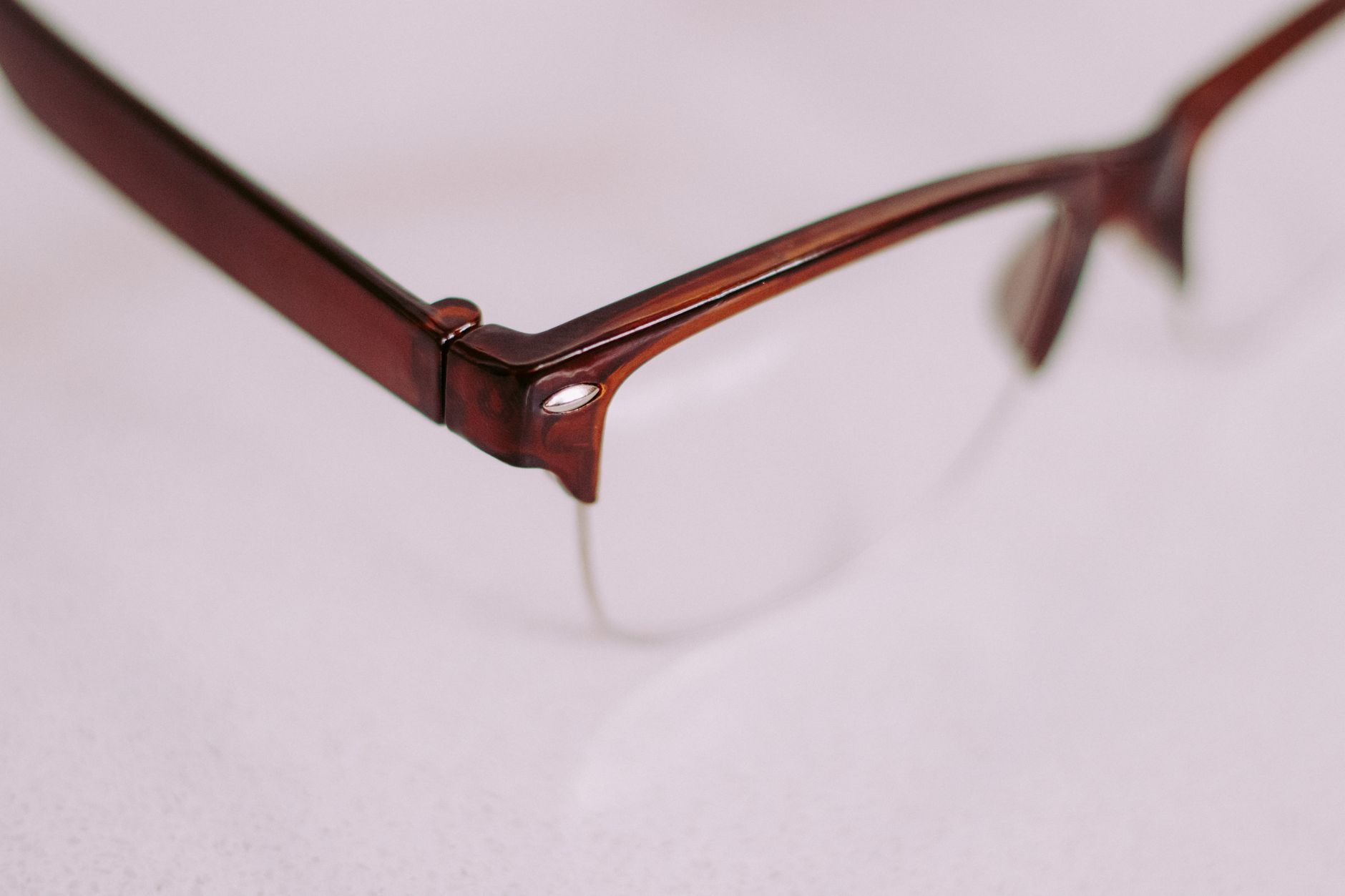
Hinges are a small part of a frame by weight but a large part of what separates a good pair from a mediocre one, and they’re not cheap to get right. A hinge that opens smoothly, holds tension over years, and doesn’t rattle is the product of tighter tolerances and better metal than one that feels loose out of the box.
- Spring hinges add flex and forgiveness but introduce a mechanism that can eventually wear.
- Screwless and rivet hinges are simpler mechanically but demand more precision to fit well.
- Plated hardware looks identical to solid metal until the plating wears through, which is a cost corner worth knowing about before paying for it.
Understanding what actually makes a hinge feel good is a genuinely useful thing to check with your fingers, not just your eyes, before deciding a price is justified.
What does the lens itself add to the price?
The lens is often a bigger cost driver than the frame, and it’s the part buyers tend to underweight because it’s less visually obvious. Material, index, coatings and how precisely the lens is ground and fitted to the frame all add cost independently of each other.
Coatings in particular are where price and value can diverge. An anti-reflective coating genuinely reduces glare and improves how clear lenses look in photographs and video calls, but it also requires proper care — the wrong cloth or cleaner can craze it prematurely, which is a real cost if it happens early. Lens material, coatings and index are covered in more depth in lenses and coatings, and that’s the section worth reading before assuming a thinner or lighter lens is automatically the better spend.
Is blue-light filtering worth paying extra for?
Be cautious here. Blue-light filtering coatings are marketed heavily for screen use, but the evidence that they reduce eye strain or improve sleep is thin and inconsistent. It isn’t a scam exactly — it’s a real coating that does filter some light — but the marketing claims run well ahead of what’s actually been demonstrated. If a lens option is being sold specifically on that promise, it’s worth treating as a nice-to-have rather than a solution to a screen-related problem, and raising anything more concerning, like genuine eye strain or headaches, with an optician rather than a coating.
Do expensive sunglasses protect your eyes better than cheap ones?
Not automatically, and this is worth being blunt about. Protection comes from a stated UV filter — look for UV400 or 100% UVA/UVB on the lens or documentation — not from how dark the lens looks and not from the price on the tag. A very dark lens with no UV rating is worse than wearing no sunglasses at all, because the tint makes the pupil open wider and lets more unfiltered UV reach the eye.
What a higher price on sunglasses more often buys is polarisation, better lens optics at the edges, sturdier hinges, and frame materials suited to sun and heat — not superior UV protection, which is a baseline that a properly made lens should meet regardless of cost. The sunglasses section covers polarisation, lens categories and fit in more detail if a pair is being chosen for driving, sport or everyday wear.
Does a brand name change the price without changing the object?
Often, yes — and that’s fine to acknowledge without being cynical about it. Brand adds design, distribution, marketing and sometimes genuine in-house tooling, but it doesn’t always track one-to-one with the material and construction underneath. Two frames using comparable acetate, similar hinge quality and the same lens options can carry very different prices once branding is factored in.
This isn’t a reason to distrust every recognisable name. It’s a reason to separate the two questions when evaluating a price: what is this frame physically made of and how well is it built, and separately, what am I paying for the name on the temple. Both can be legitimate reasons to buy something — they’re just different reasons, and worth knowing which one is doing the work.
So what should actually be compared before paying?
A useful habit is to run through the same short list regardless of price point, because it applies equally to a modest frame and an expensive one.
- What is the frame actually made from, and does that match how it’s being marketed?
- Does the hinge feel tight and smooth, with no play or grinding?
- Is there a UV400 or equivalent rating stated for any tinted lens, independent of how dark it looks?
- What lens coatings are included, and are any of them solving a problem that exists, or one that’s been invented for the sale?
- How does the frame actually sit and feel on the face, since comfort over a full day and weight distribution matter more than most people expect until they’ve worn something heavy by mid-afternoon.
None of this replaces an optician for anything to do with the prescription itself — lens power, index recommendations and anything applying to individual vision belong with a qualified optician, not a style guide. But the physical object — material, construction, hardware, lens finish — is something any careful buyer can learn to read, and that reading is what actually explains the price on the tag.
The Designer Glasses publishes general information and style opinion, not professional advice. We are writers and enthusiasts, not opticians, optometrists or dispensing opticians. Nothing here interprets a prescription, recommends a lens power, or tells you whether you need correction — only an eye examination can do that. If your vision changes suddenly, or you have eye pain, flashes, new floaters or halos around lights, treat it as urgent and contact an eye care professional the same day. Sunglasses should carry a stated UV rating: a dark lens without UV filtering is worse than none at all.