No. A £15 pair with a stated UV400 rating blocks the same UV light as a £400 pair with the same rating. Price buys frame materials, lens clarity, hinge engineering and finish — not the ultraviolet filter itself. That filter is either present and certified, or it isn’t, regardless of what the pair costs.
What Actually Protects Your Eyes From the Sun?
Protection comes from a UV filter built into or applied to the lens, not from how dark the lens looks. A lens can be near-black and let UV through, or pale and block it completely. The only reliable indicator is a stated rating on the lens or packaging — UV400, or a claim of 100% UVA/UVB protection. If a pair doesn’t say this anywhere, treat it as unprotected.
My guide to what a UV400 rating actually means goes into the standard itself, but the short version is that it refers to the wavelength cut-off, not to price, brand, or tint.
Is a Darker Lens Automatically Safer?
No — a dark lens without a stated UV rating is worse than wearing no sunglasses at all. Darkness makes the pupil open wider, since less visible light is getting through, and a wider pupil lets in more of whatever UV is present. Without a filter, that’s more ultraviolet reaching the eye than if you’d worn nothing.
This is one of the few genuinely important facts in eyewear, and it has nothing to do with what something costs. A market-stall pair with UV400 printed on the lens is doing its job. A striking, heavily tinted pair from a boutique with no rating stated anywhere is not. The full mechanics of this are covered in why dark lenses without UV protection are worse than none, which is worth reading before assuming darker means better.
So Why Do Some Sunglasses Cost So Much More Than Others?
Price in sunglasses mostly reflects things other than the UV filter: frame material, lens optical quality, coatings, hinge construction, and brand positioning. All of these are legitimate reasons a pair might cost more — they just aren’t reasons it protects better.
- Frame material — acetate that’s been cut and polished by hand reads differently to injection-moulded plastic, and it ages differently too.
- Lens optical quality — cheaper lenses can introduce mild distortion at the edges, which matters for comfort over a full day, not for UV filtering.
- Coatings — anti-reflective or hydrophobic coatings on the lens surface affect glare and smudging, not ultraviolet transmission.
- Hinges and construction — sprung hinges and metal cores add durability and cost, with zero bearing on sun protection.
- Brand and design — a name, a heritage shape, or a limited run adds cost through positioning, not physics.
For a proper breakdown of where the money actually goes on a well-made pair, see what makes a frame look expensive — it separates the visual and material cues from anything to do with lens performance.
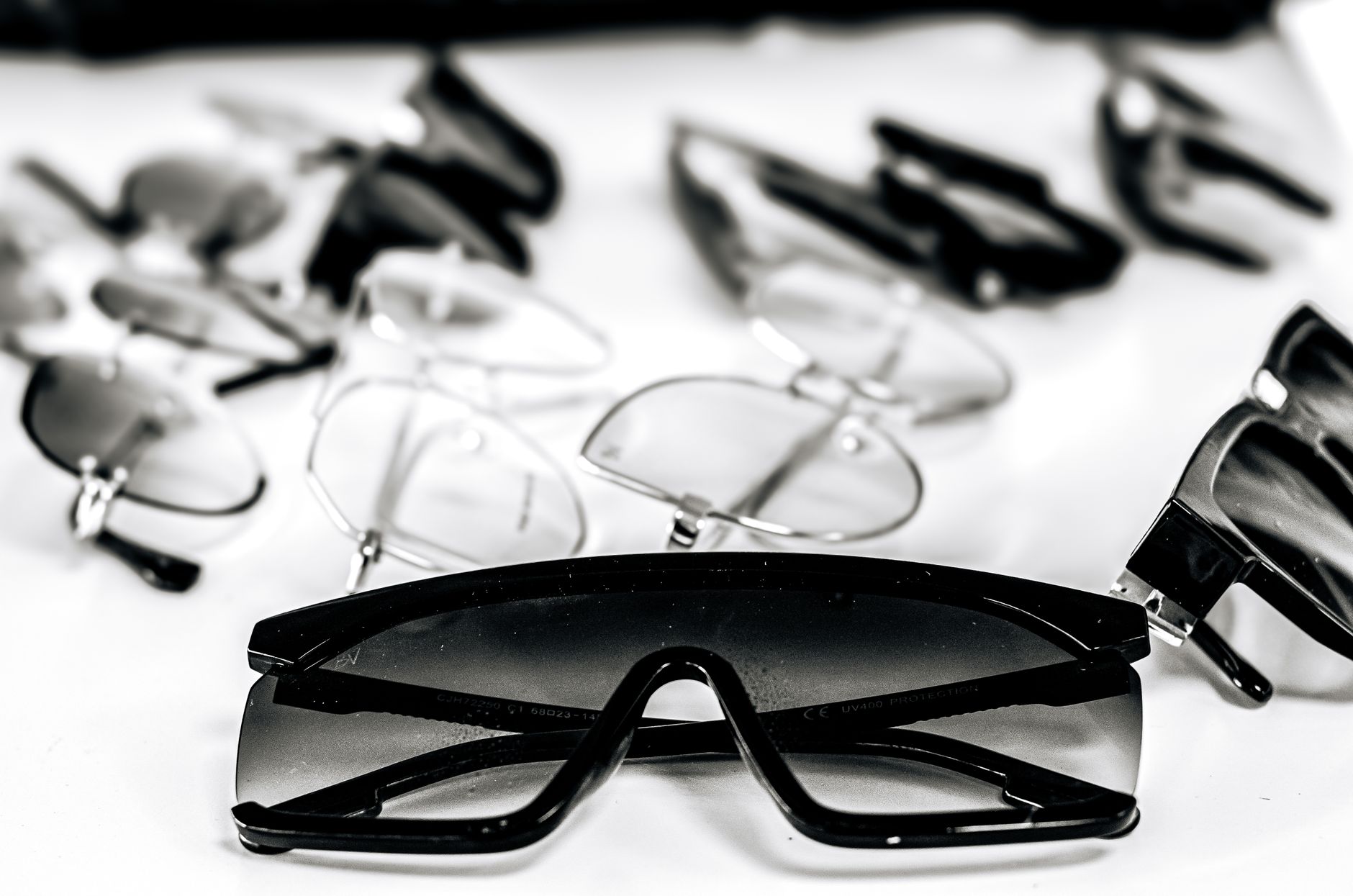
Does a Polarised Lens Mean Better UV Protection?
No — polarisation and UV protection are two separate features, and a lens can have either, both, or neither. Polarising film cuts reflected glare off flat surfaces like water, wet roads and bonnets. It does nothing on its own to filter ultraviolet light.
Polarised lenses are often priced higher, and it’s easy to assume the premium buys extra eye safety. It doesn’t. It buys a specific, useful effect on glare and visual comfort, particularly for driving or being on water. The difference between the two properties is explained fully in UV protection vs polarisation: what’s the real difference, and what polarised lenses do and don’t do is covered in what do polarised lenses actually do. It’s also worth knowing there are situations — certain screens, certain skiing conditions — where polarisation is a poor fit, which is laid out in when are polarised lenses a bad idea.
What About Lens Tint Category — Does a Higher Number Mean More Protection?
Lens category numbers, from 0 to 4, describe how much visible light the lens lets through — essentially how dark it is — not how much UV it blocks. A category 4 lens is very dark and unsuitable for driving; a category 0 lens is barely tinted. Neither number tells you anything about the UV filter, which is a separate spec entirely.
This distinction trips people up constantly when shopping, because a heavily tinted, high-category lens looks more “serious” and often costs more. Sunglass lens category numbers 0 to 4 explained covers what the scale actually measures, which is worth knowing before assuming a darker, pricier lens is doing more work.
Does Blue-Light Filtering on Sunglasses Justify the Extra Cost?
Not on current evidence. Blue-light filtering is marketed heavily on both sunglasses and everyday lenses, but the research linking screen-emitted blue light to eye damage is thin, and the marketing has run well ahead of it. If a pair costs more specifically because of a blue-light claim, that premium isn’t buying a proven protective benefit.
This doesn’t mean the coating does nothing — it may have a mild effect on visual comfort for some people during long screen sessions — but it shouldn’t be confused with UV protection, which is a genuinely established, measurable filter. The two get marketed side by side, but they aren’t equivalent claims.
Does Lens Colour Change How Much Protection You Get?
No — lens colour changes contrast, mood and how colours appear to you, not the UV filter underneath. A grey lens, a brown lens and a green lens can all carry identical UV400 ratings while looking and behaving completely differently in bright light.
Tint colour is a genuine styling and comfort decision, just not a safety one. Does lens colour change what you see, or how it looks goes into this properly, and it’s a more useful question to ask when choosing a tint than “which colour protects more.”
How Do You Actually Check a Pair Before Buying It?
Look for a stated UV400 or 100% UVA/UVB claim on the lens, sticker, or packaging before anything else — this applies whether the pair costs very little or a great deal. Only once that’s confirmed does it make sense to compare price against build quality, fit and finish.
- Confirm the UV rating is printed or documented somewhere, not implied by tint darkness.
- Check the frame material and hinge action in hand — does it feel like it will survive being sat on in a bag.
- Look at lens edges and surface for any waviness or distortion when you move your head.
- Decide whether polarisation matters for how you’ll actually use the pair — driving and water, yes; general daily wear, optional.
- Only then weigh the price against design, materials and brand — not against safety, which should already be settled.
Frame shape and proportion are worth spending time on too, since that’s where personal taste genuinely lives — the frames & styles archive and sunglasses archive both cover this in more depth, from classic shapes to how a frame should sit against your face.
When Does This Stop Being a Shopping Question?
If sunlight is causing new or worsening symptoms — sudden light sensitivity that wasn’t there before, halos around lights, or any change in vision — that’s a same-day matter for an optometrist or ophthalmologist, not something to solve with a different pair of sunglasses. Discomfort in bright conditions is common and usually just needs the basics covered properly; a genuine change in how you see is a different category of problem entirely, and no lens, expensive or otherwise, is the answer to it.
For anything mechanical or comfort-related — a frame that’s never sat right, or a lens tint that leaves everything looking oddly flat — that’s a styling and fit conversation, and the lenses & coatings archive is a reasonable place to start working through the options.
Beyond that, the honest answer to the original question stands: price buys design, materials and finish. UV protection is a fixed filter you either have or don’t, and it costs the same to include whether the frame is plain or extraordinary.
The Designer Glasses publishes general information and style opinion, not professional advice. We are writers and enthusiasts, not opticians, optometrists or dispensing opticians. Nothing here interprets a prescription, recommends a lens power, or tells you whether you need correction — only an eye examination can do that. If your vision changes suddenly, or you have eye pain, flashes, new floaters or halos around lights, treat it as urgent and contact an eye care professional the same day. Sunglasses should carry a stated UV rating: a dark lens without UV filtering is worse than none at all.
Any prices mentioned are indicative only. Tool prices move constantly and vary by market, by retailer, and by whether a kit includes batteries or a charger — check the current price yourself before deciding.