If one has to give, it should be the frame. Lenses do the actual work — correcting vision, filtering UV, resisting glare and scratches — while a frame’s job is largely proportion, material and how it sits on a face. Spend where the performance lives, and treat the frame as a design decision made within that budget.
Why does this question even come up?
Because most people are handed a single total price and never see it split. A pair of glasses is really two purchases bundled into one transaction: a frame, which is a piece of applied design, and a set of lenses, which is a piece of optical engineering. They age differently, they fail differently, and they matter for different reasons — which is exactly why it’s worth pulling them apart before deciding where the money should go.
What does spending more on the frame actually buy?
Mostly material and construction quality — things that affect how a frame looks after two years, not how it looks on day one. A cheap frame and an expensive one can look nearly identical in a photograph. The difference shows up in how the hinge feels after six months, whether the acetate keeps its colour, and whether the fit stays true.
Concretely, that money tends to go toward:
- Better hinge construction — a barrel hinge with more leaves, a screwless mechanism, or a proper spring hinge rather than a stiff pin
- Solid acetate or well-finished metal rather than a coated base material that reveals itself the moment plating wears through
- More careful finishing — edges that are properly polished rather than merely smoothed, temples that sit flush against the head
- Better proportion and detailing that a mass-produced mould can’t replicate as precisely
None of that changes what a person sees. It changes how the frame ages, how it feels by hour eight, and whether it’s still worth repairing in three years rather than replacing. For a longer look at what that money is actually paying for, it’s worth reading what you’re really paying for in a designer frame and comparing that against what actually drives the price of a pair of glasses more broadly.
What does spending more on the lenses actually buy?
This is where function actually lives. Lens spending buys material performance — impact resistance, thinness relative to a prescription, how well a coating resists smudging and glare — and, in sunglasses, the UV filter that protects the eye. It is not something a photograph can show, which is precisely why it’s easy to underspend on.
A coating in particular does more day-to-day work than most people credit it for. Anti-reflective coating cuts the glare that shows up in photos and under office lighting; a scratch-resistant layer determines how a lens looks after a year of pocket-and-cloth handling; an oleophobic layer decides how often a lens needs cleaning in the first place. None of this is visible when a frame is sitting on a display shelf, which is exactly why it gets skipped when a buyer is comparing on looks alone. The lenses and coatings archive goes through each of these individually, but the short version is: this is the part of the purchase that actually changes daily experience.
Does the coating matter more than the lens material itself?
They matter for different reasons and neither substitutes for the other. Lens material affects thickness, weight and impact resistance for a given prescription. Coatings affect glare, smudging and scratch resistance regardless of what the lens is made from. A good material with no coating still glares; a well-coated lens in the wrong material can end up thicker or heavier than it needs to be.
What a coating is actually resisting — and what it can’t protect against — is worth understanding properly rather than taking on faith, and it’s covered directly in what an anti-reflective coating is actually doing. Anything about prescription lens thickness, index or how a specific correction should be built is a conversation for an optician, not a style article — that decision depends on an individual prescription in a way nobody outside a dispensing practice should weigh in on.
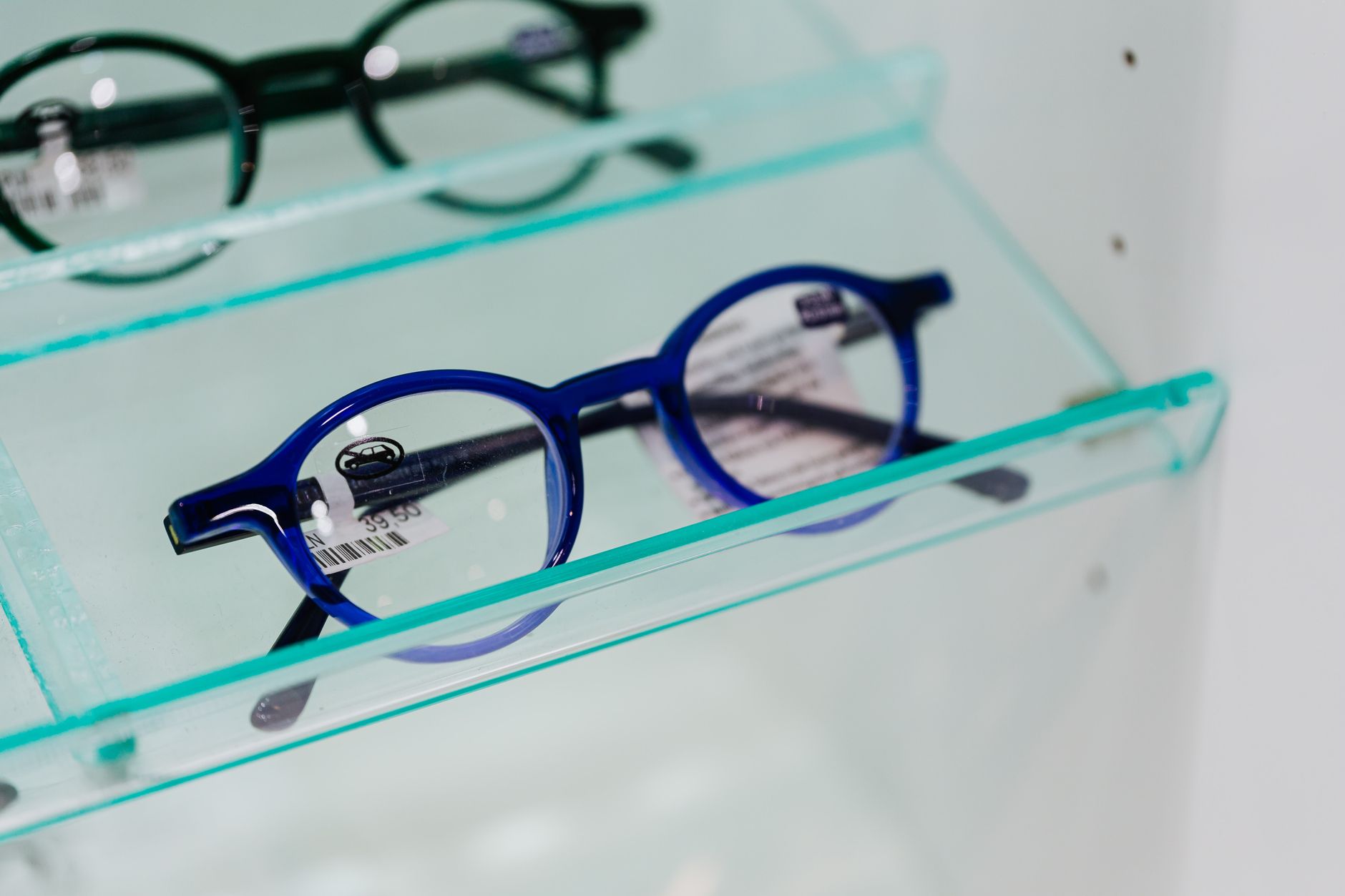
What about sunglasses — does the same logic apply?
Even more so, because the stakes are higher. On a clear pair of glasses, an underpowered coating means more smudging and glare. On sunglasses, an underspecified lens can genuinely be worse than wearing nothing at all. A dark tint makes the pupil open wider, and if there’s no proper UV filter behind that darkness, more ultraviolet light reaches the eye than would have without sunglasses on at all.
The tint’s colour and depth are a style choice — grey, brown, green, gradient, mirrored, whatever suits the face and the frame. Protection comes entirely from a stated UV rating: look for UV400 or a claim of 100% UVA/UVB protection, printed on the lens or its documentation. Darkness is not a proxy for protection, and price isn’t either. Why a dark lens without UV protection is worse than no sunglasses at all makes this case in more detail, and it’s the one point in this entire subject worth treating as non-negotiable rather than a matter of taste.
Beyond the UV filter, sunglasses spending can reasonably go toward polarisation for glare off water, snow or a windscreen, or toward a lens category suited to actual conditions rather than aesthetics alone. The sunglasses archive covers polarisation, lens categories and gradient versus mirrored options for anyone deciding where that spend should land.
Is blue-light filtering worth paying extra for?
Honestly, the evidence for it doing much for screen-related eye strain is thin. The marketing around blue-light lenses has moved well ahead of what’s actually been demonstrated, and framing it as a health necessity for anyone who uses a computer isn’t something this publication is willing to do. It may be worth it for personal comfort or preference, but it shouldn’t be treated as protective in the way UV filtering genuinely is. Anyone curious about where the evidence actually stands should read what the evidence says about blue-light filtering before paying a premium for it.
So where should the money actually go?
As a rough allocation: let the frame budget be set by material and construction quality that will still be there in three years, and let the lens budget be set by function — the coatings and material suited to actual daily use, plus, for sunglasses, a confirmed UV rating. If a choice has to be made between a slightly better frame and a slightly better lens package, function usually wins, because a scratched, glaring, unprotected lens is a daily annoyance in a way that a slightly plainer hinge never is.
This is also where comparing two options at a similar total price becomes genuinely useful — one might be putting more of that price into the frame’s material, the other into the lens package, and neither is automatically the better buy. What to compare between two frames at the same price walks through exactly that kind of comparison, line by line, rather than by brand name or sticker price.
What should never be skimped on, regardless of budget?
- A confirmed UV rating on any sunglasses lens — this is the one item on this list that is genuinely protective, not aesthetic
- Lens material and coatings suited to how the glasses are actually used day to day, not how they photograph
- Frame material that won’t degrade against sweat, sunscreen or regular handling — worth checking against the materials and craft archive before assuming any acetate or metal behaves the same as any other
Everything else — hinge style, bridge shape, colour, whether the frame is bold or quiet — is a matter of taste, proportion and how it sits on a particular face, and no amount of extra spending makes one answer more correct than another. That part of the decision belongs entirely to the person wearing it.
And any of it — a change in vision, new floaters, flashes of light, halos, pain, or vision loss in one eye — is a same-day matter for an eye care professional, not something to reason through by way of lens choice or frame quality. No article about design substitutes for that.
The Designer Glasses publishes general information and style opinion, not professional advice. We are writers and enthusiasts, not opticians, optometrists or dispensing opticians. Nothing here interprets a prescription, recommends a lens power, or tells you whether you need correction — only an eye examination can do that. If your vision changes suddenly, or you have eye pain, flashes, new floaters or halos around lights, treat it as urgent and contact an eye care professional the same day. Sunglasses should carry a stated UV rating: a dark lens without UV filtering is worse than none at all.