The frame+The lens
Every pair of glasses is two purchases pretending to be one.
The frame is taste — shape, material, fit, and whose name is on the temple. The lens is physics — index, tint, UV, coatings. They are chosen together, priced together and sold together, and almost nothing you need to know about one applies to the other.
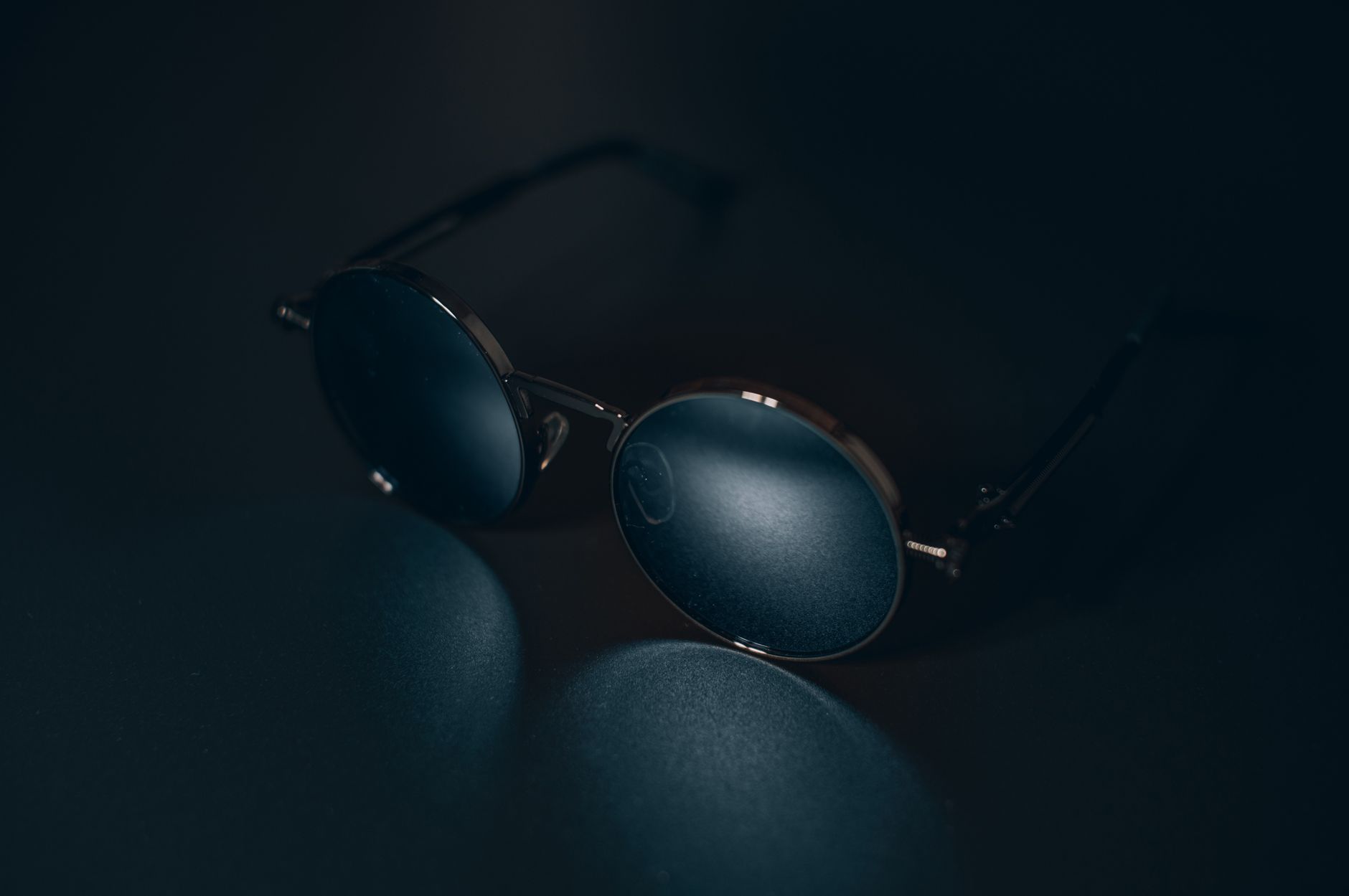
Hero photograph via Pexels.
The whole site, in one diagram
Two halves. Two entirely different questions.
Everything we publish sits on one side of this line or the other. Brass is always the frame; steel is always the lens. Once you can see which half a claim belongs to, most eyewear marketing stops working on you.
The frame
The part everyone else sees. Almost every decision here is aesthetic, reversible, and genuinely yours to make on taste alone.
The lens
The part you look through, and the part nobody photographs. Every decision here is a measurable trade, and none of it is a matter of taste.
- IndexHow thin the lens gets, and what you trade for it.
- Tint & UVDarkness is comfort. UV400 is protection. They are separate purchases.
- CoatingsAnti-reflective, oleophobic, scratch. Which survive, and which do not.
- DesignSingle vision, progressive, occupational — and the adaptation nobody warns you about.
The seam is where the money hides
You are quoted one price, and the split inside it is almost never shown to you. A licensed designer frame carries a royalty on the half that is pure taste; the lens behind it — the half that actually determines what you see — is where index, coatings and Abbe value silently add or subtract far more. This is the single most useful thing to hold in your head at the counter, and it is the reason we separate the two everywhere on this site.
The steel side, decoded
What each lens claim tells you — and what it does not
Every one of these appears on a lens packet, and every one of them is true. The second half of each card is the part that never gets printed.
Two things we repeat
The parts we will not soften
A dark lens with no stated UV rating is worse than no sunglasses at all.
A tinted lens opens your pupil. If the tint is not paired with UV400, it lets more ultraviolet into a wider pupil than bare eyes would. Darkness is comfort; the UV rating is protection, and they are not the same claim.
Face-shape rules are styling conventions, not science.
“Round faces need angular frames” is a useful starting point and nothing more. No study underwrites it. What actually decides whether a frame works is where it sits, how wide it is relative to your face, and whether you like looking at it.
Recently
Newest writing
- What Is a “Forever” Frame, and Does It Exist?Frames & Styles
- Why Do Some Frame Shapes Date Faster Than Others?Frames & Styles
- What Is Quiet Luxury in Eyewear? A Style ExplainerTrends & Icons
- How Did Glasses Go From Medical Device to Accessory?Trends & Icons
- What Does a Coloured Lens Signal? A Style ExplainerLenses & Coatings
- Why Do Round Frames Read as Intellectual? A Style GuideFrames & Styles
- What Is the Story Behind the Wayfarer Frame?Frames & Styles
- What Is the Story Behind the Aviator Sunglasses Shape?Trends & Icons
Everything, by subject
Where things live
Where this site stops
We explain what eyewear is, how it is made and what the specifications mean. We do not examine eyes, and an article cannot see yours.
- We never read a prescriptionNo lens power, index, prism or axis, and never a view on whether you need correction. That is an eye examination, and it is not something a website can do.
- We never explain away a symptomSudden changes in vision, eye pain, flashes, floaters or haloes around lights are an appointment, not an article. We will not offer a reassuring explanation for any of them.
- No ranked picks, nothing we have “tested”No best-of lists and no model named as a recommendation. We have not worn these frames, and a list that pretends otherwise is an advertisement.
- No pricesThe same frame costs different money in different markets, and the lens behind it can cost more than the frame or a fraction of it. Any figure we printed would be wrong somewhere.