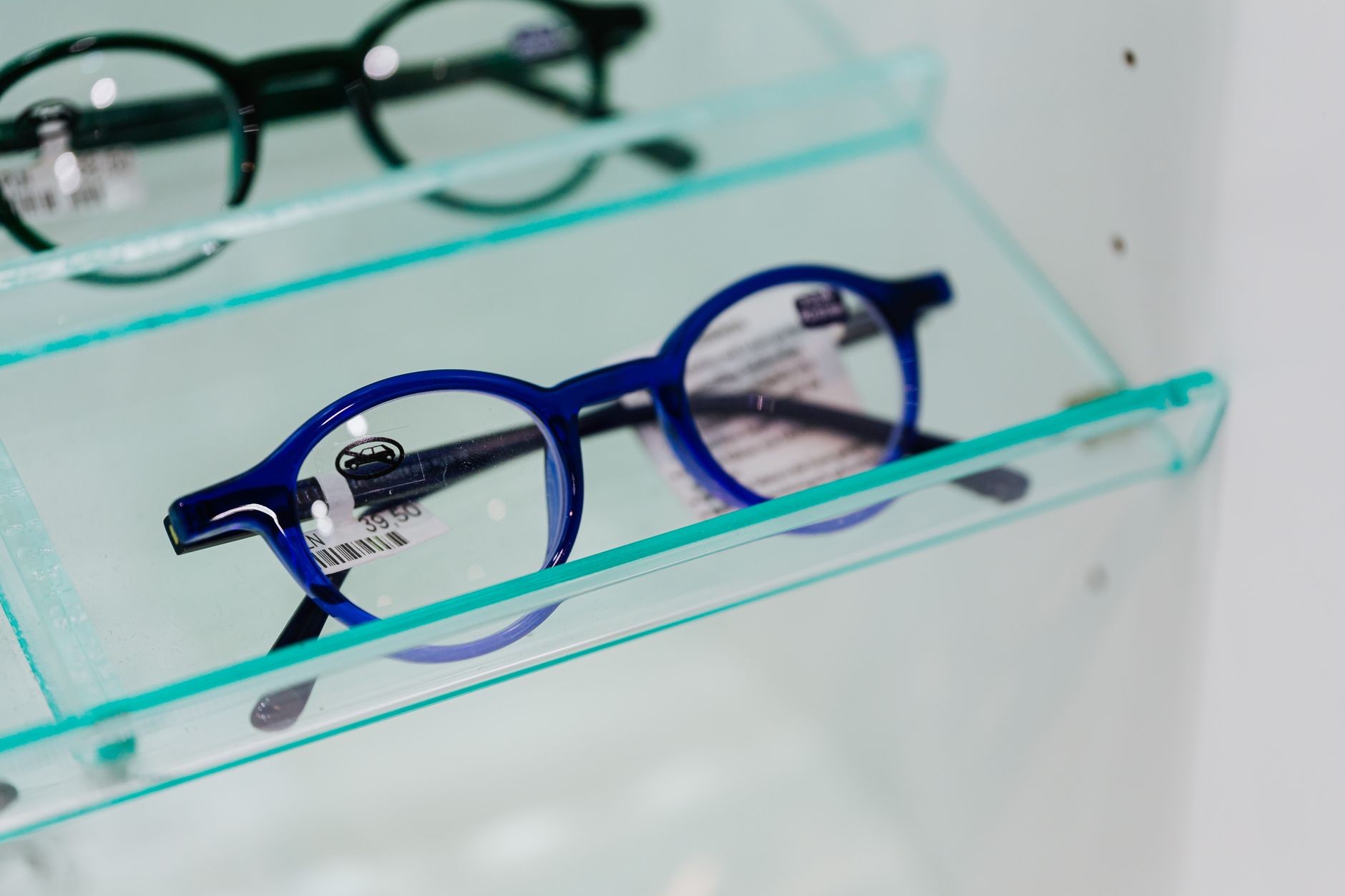
Round frames read as intellectual because a perfect circle removes the sharp, angular cues associated with authority and instead recalls scholarly, bookish archetypes — professors, poets, John Lennon in his Cambridge phase. The shape softens the face and draws attention toward the eyes rather than the jawline, which reads as thoughtful rather than commanding.
Where does the “intellectual” association actually come from?
It comes from a long chain of borrowed faces rather than any inherent property of the circle itself. Round wire frames were standard, unglamorous eyewear well into the twentieth century — cheap, functional, the shape any optician could bend from a length of wire. Then a specific set of wearers took that plain, institutional object and made it theirs: Le Corbusier, Gandhi, various Bloomsbury poets, and later Lennon, whose round National Health-style frames became inseparable from a particular idea of the thinking non-conformist.
What those figures had in common was not fashion sense in the conventional way — it was that they were seen as minds first and faces second. The frame followed. A shape that started as the default became, once enough serious-looking people wore it on purpose, shorthand for seriousness itself.
Why does a circle read differently to an oval or a square?
A circle has no corners to suggest force, and that absence is doing most of the work. Square and rectangular frames borrow visual weight from architecture and machinery — think of a window frame, a briefcase corner, a jawline drawn with a ruler. Those associations code as assertive, sometimes corporate.
A circle has no such reference point in built structure. It appears more often in nature and in handwriting than in construction, and it sits closer to the shape of the eye itself rather than framing it with a hard edge. The effect is a face that looks observed rather than defended — which is exactly the quality people mean when they call something intellectual rather than powerful.
Oval frames get some of the same softness but keep a slightly stretched, more conventional outline; round frames commit to the geometry fully, which is what makes them feel considered rather than accidental. For a wider look at how frame outlines carry these kinds of associations, the Frames & Styles archive covers shape history beyond round specifically.
Does the material change the effect?
Yes, and quite dramatically. A round frame in fine gold-tone metal reads as antique and academic — closer to a pince-nez or a Bauhaus drafting tool. The same circle in thick tortoiseshell acetate reads as heavier, more collegiate, closer to the 1960s campus look that Lennon and his contemporaries popularised.
Tortoiseshell in particular carries its own weight of association, separate from the round shape itself — worth understanding on its own terms via where the tortoiseshell pattern on glasses actually came from. Clear acetate strips away some of the scholarly heaviness and leans the frame toward something more contemporary and architectural; the appeal of that look is covered separately in what makes a clear or crystal frame appealing in the first place.
Fine wire, by contrast, is the closest a round frame gets to disappearing — it keeps the intellectual reference without adding visual bulk, which is why it tends to suit smaller or more delicate features better than a thick acetate circle does. Material choice generally deserves more attention than most buyers give it; the Materials & Craft archive breaks down what different frame materials actually do to weight, durability and finish.
Do round frames actually suit every face?
Not universally, and the styling convention here is worth stating plainly as opinion rather than fact. The common rule is that round frames balance angular faces — square jaws, strong cheekbones — by introducing a contrasting curve, while on an already round or soft face they can emphasise fullness rather than counter it.
That rule is a reasonable starting point and nothing more. Plenty of people with rounder faces wear round frames well, particularly at a larger scale where the frame reads as a deliberate statement rather than an echo of face shape. Frame size, bridge width and how high the circle sits relative to the eyebrows all change the effect far more than the simple question of face outline.
Face-shape rules exist mainly to give a starting point to someone standing in front of a mirror with no other frame of reference, not to rule anything out. Whether these conventions genuinely hold up is examined in more depth in do face-shape rules for glasses actually hold up, and the broader question of fit sits within the Face Shape & Fit archive.
Is the intellectual reading just fashion, or does it change how a round frame should fit?
It is mostly a fashion association, but it does have a practical fit consequence worth knowing before buying. Because a circle has no straight edges to anchor against brow or cheek, a round frame that is even slightly too large tends to look costume-like rather than considered — the effect people are usually going for tips over into pastiche.
Getting the proportion right matters more with round frames than with almost any other shape. The circle should sit close to the natural width of the face rather than spilling well beyond it, and the top of the frame should sit at or just below the eyebrow rather than well above it. Too small and the frame looks like a prop from a period drama; too large and the “thoughtful” reading collapses into something closer to novelty.
This is a case where trying a pair on properly, rather than judging from a photograph, makes a real difference — a point covered more generally in what a virtual try-on actually shows you versus what it can’t.
What should be compared when buying round frames?
Beyond the shape itself, a few concrete details separate a round frame that looks deliberate from one that looks like an afterthought:
- Rim thickness — a thin rim keeps the intellectual reference light and modern; a thick rim pushes it toward heritage and heavier collegiate styling.
- Bridge width and nose fit — round frames without adjustable pads rely entirely on bridge shape for stability, so a poor bridge match tends to show immediately as slipping.
- Lens size relative to eye spacing — a circle that is noticeably larger than the distance between the eyes tends to look borrowed rather than fitted.
- Hinge and temple construction — a frame that will be worn daily for its look needs the same attention to hinge quality as any other shape.
None of this is about brand or price tier — it’s about what to actually look at on any given pair. The general framework for comparing frames before buying is laid out in the choosing glasses hub, and for shoppers weighing two options at a similar price point, what to compare between two frames at the same price covers the same ground in more detail.
Does the round frame’s reputation ever work against it?
Occasionally, yes — the same softness that reads as thoughtful can, on the wrong scale or in the wrong material, read as costume rather than character. A round frame that leans too heavily into vintage cues — very thick tortoiseshell, exaggerated size — risks looking like a deliberate reference to a decade rather than a considered choice for the face wearing it.
The frames that avoid that trap tend to keep the circle relatively clean: moderate rim thickness, a material that doesn’t shout, proportions matched to the actual face rather than to a photograph of someone else’s. The eyewear guide hub is a reasonable place to start for anyone building a wider understanding of how shape, material and fit interact before settling on any one frame — round or otherwise.
The Designer Glasses publishes general information and style opinion, not professional advice. We are writers and enthusiasts, not opticians, optometrists or dispensing opticians. Nothing here interprets a prescription, recommends a lens power, or tells you whether you need correction — only an eye examination can do that. If your vision changes suddenly, or you have eye pain, flashes, new floaters or halos around lights, treat it as urgent and contact an eye care professional the same day. Sunglasses should carry a stated UV rating: a dark lens without UV filtering is worse than none at all.