Glasses went from medical device to accessory once frame design stopped following the eye chart and started following fashion. Cinema gave certain shapes glamour, plastics let colour and silhouette become the point, and by the mid-twentieth century brands realised a frame could sell on how it looked, not just what it corrected. The lens is still clinical. The frame around it isn’t.
When did eyewear first become something people wanted to be seen in?
For most of their history, glasses were tolerated rather than chosen. Early spectacles were heavy, utilitarian, and mostly worn by people who had no alternative — scholars, clerks, the elderly. Nobody was buying a second pair for the way it looked.
That began to shift in the early twentieth century, when metal and horn frames became finer and lighter, and a handful of shapes started to carry meaning beyond correction. Round wire frames picked up an intellectual, bookish association that has never really left them — a reputation explored in more depth in this look at why round frames read as intellectual. Once a shape could signal something about the wearer, the frame had stopped being purely a tool.
What role did Hollywood and celebrity play?
Cinema is the single biggest reason glasses became desirable rather than just tolerated. A famous face wearing a distinctive shape did more for eyewear’s reputation than any clinical improvement could.
The aviator is the clearest case: developed for pilots contending with high-altitude glare, it became a civilian style object once actors and public figures adopted it off duty. The full arc from flight deck to fashion rack is covered in the story behind the aviator shape. The Wayfarer followed a similar path in the 1950s and 60s, turning a fairly ordinary plastic frame into a piece of American iconography — a shift documented in the story behind the Wayfarer frame. In both cases, the optics didn’t change. The audience did.
How did lens and frame technology let fashion take the lead?
Glasses couldn’t become a style object until they stopped being uncomfortable and fragile. Lightweight metals, spring hinges and, above all, cellulose acetate changed what a frame could be.
Acetate mattered enormously here. Unlike early plastics, it could be layered, dyed and polished, which meant colour and pattern became design tools rather than accidents of raw material. Tortoiseshell is the obvious example — a pattern that started as an imitation of an actual material and ended up as one of the most recognisable motifs in eyewear, a story told in where the tortoiseshell pattern on glasses came from. Once a frame could be made in dozens of colourways from the same mould, glasses joined the same design conversation as clothing and jewellery.
This is also roughly where blue-light filtering claims enter modern eyewear marketing, and it’s worth being honest about them here: the evidence that filtering blue light from screens meaningfully changes eye comfort or sleep is thin, well behind how confidently it’s sold. Anyone curious about the actual research should read what the evidence on blue-light filtering actually says before treating it as a reason to buy.
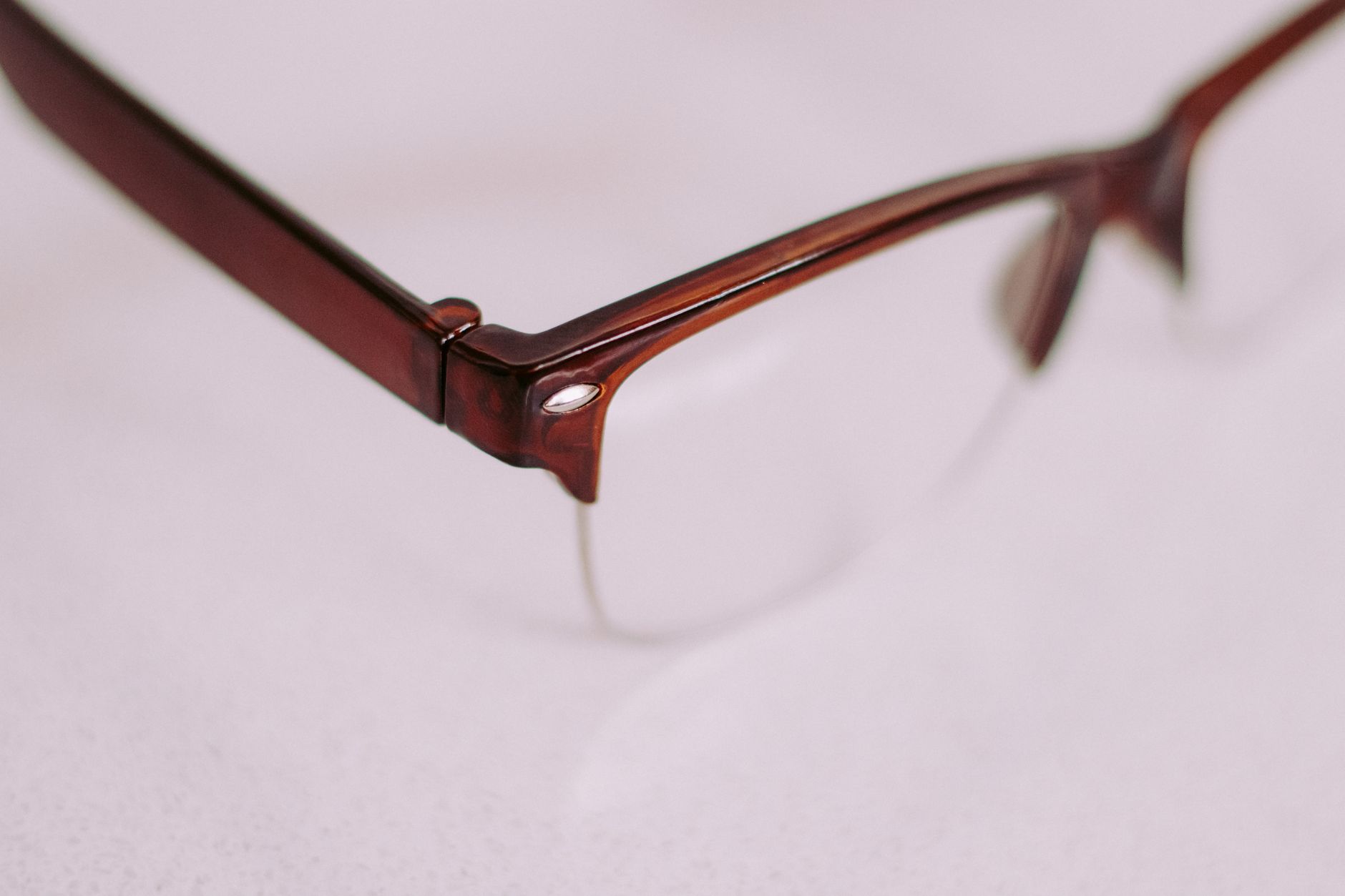
Why did frame material change the whole story?
Materials didn’t just make frames more comfortable — they expanded what a frame could express. Metal read as formal and understated; acetate could be bold, textured, translucent or matte. Wood and horn brought grain and imperfection into a product that had previously been mass-produced and uniform, which is part of why they still carry a craft cachet today, covered in the site’s materials and craft coverage.
By the time acrylic and injection-moulded plastics arrived, a frame’s material was doing as much talking as its shape. The oversized frames of the 1970s needed acetate’s scale and colour range to work at all — a design story explored in what made the 1970s oversized frame so distinctive — and the sharp geometric plastics of the following decade leaned on the same flexibility, discussed in what defined 1980s eyewear design. None of that would have been possible in the rigid horn and wire frames of a century earlier.
What changed when fashion houses started licensing eyewear?
The final push from medical necessity to accessory came from the business side, not the design side. From the late twentieth century onward, fashion and luxury houses began licensing their names to specialist eyewear manufacturers, who did the actual engineering, sourcing and production.
This is why two frames can carry very different names and still come off similar tooling, and why understanding licensing matters more than most buyers realise — covered in what a licensed eyewear brand actually is, and who makes the frames. It also explains a lot about pricing that has nothing to do with lens quality or material cost, a subject worth reading before assuming a higher price always means better construction: what actually drives the price of a pair of glasses.
Independent eyewear makers exist partly as a reaction to this system — smaller runs, closer control over materials and construction, less reliance on a logo doing the selling. The differences are laid out in what makes independent eyewear different from mainstream brands.
Are glasses still a medical device underneath the styling?
Yes, and that hasn’t changed at all. A prescription lens is still a precisely ground optical instrument, fitted to an individual’s eyes and measurements. Nothing about eyewear’s fashion history alters what a lens is doing or how it should be assessed.
This matters especially with sunglasses, where the style conversation can crowd out the medical one. A dark tint is not sun protection on its own — darkness without a stated UV rating is actually worse than wearing no sunglasses at all, because the tint causes the pupil to open wider and let in more UV, while offering no filter to stop it. Protection comes from a UV400 or 100% UVA/UVB rating, not from how dark or expensive a lens looks. The sunglasses archive covers this in more detail, including how to actually check a pair before buying.
It’s also worth being direct about symptoms: a sudden change in vision, eye pain, flashes of light, new floaters, halos around lights, or vision loss in one eye are same-day matters for an eye care professional, not something to work around with a frame choice. None of that falls within what a stylistic decision can address.
How should this history change the way you actually shop?
Once glasses are treated as accessories, the sensible response isn’t to ignore the medical side — it’s to separate the two decisions cleanly. The lens is a clinical matter for an optician. The frame is a design decision you’re entitled to have opinions about.
Face-shape guidance is a useful example of where the two get blurred. Rules like “round faces suit angular frames” are styling conventions, not science, and plenty of people look better breaking them entirely — a point worth sitting with before treating any chart as gospel, covered in the face shape and fit archive. What’s more useful in practice is comparing proportion, bridge fit, hinge quality and material against your own face and habits, which is exactly the territory covered in the guide to choosing frames and sunglasses and the broader eyewear guide.
- Compare frame proportion and material honestly, not just the name on the temple.
- Treat lens choice — coatings, tint, UV rating — as a separate, clinical conversation with an optician.
- Use style history and face-shape rules as starting points, not instructions.
Glasses carry both histories at once now: the clinical one that hasn’t gone anywhere, and the aesthetic one that gave them a reason to be chosen rather than just prescribed. Buying well means keeping both in view, and not letting either one quietly stand in for the other.
The Designer Glasses publishes general information and style opinion, not professional advice. We are writers and enthusiasts, not opticians, optometrists or dispensing opticians. Nothing here interprets a prescription, recommends a lens power, or tells you whether you need correction — only an eye examination can do that. If your vision changes suddenly, or you have eye pain, flashes, new floaters or halos around lights, treat it as urgent and contact an eye care professional the same day. Sunglasses should carry a stated UV rating: a dark lens without UV filtering is worse than none at all.