Acetate is a plant-derived plastic — made mainly from cotton or wood pulp — that’s cut, shaped and polished from solid blocks or sheets rather than moulded in one shot. Good frames use it because it can hold colour and depth no injected plastic can match, and because it can be adjusted with heat, which matters for fit.
What exactly is acetate made from?
Cellulose acetate starts life as cotton linters or wood pulp, treated with acetic acid to form a cellulose compound, then blended with plasticisers and dyes and pressed into large sheets or blocks. Those sheets are the raw material — the same way a tailor starts with a bolt of cloth rather than a finished shirt.
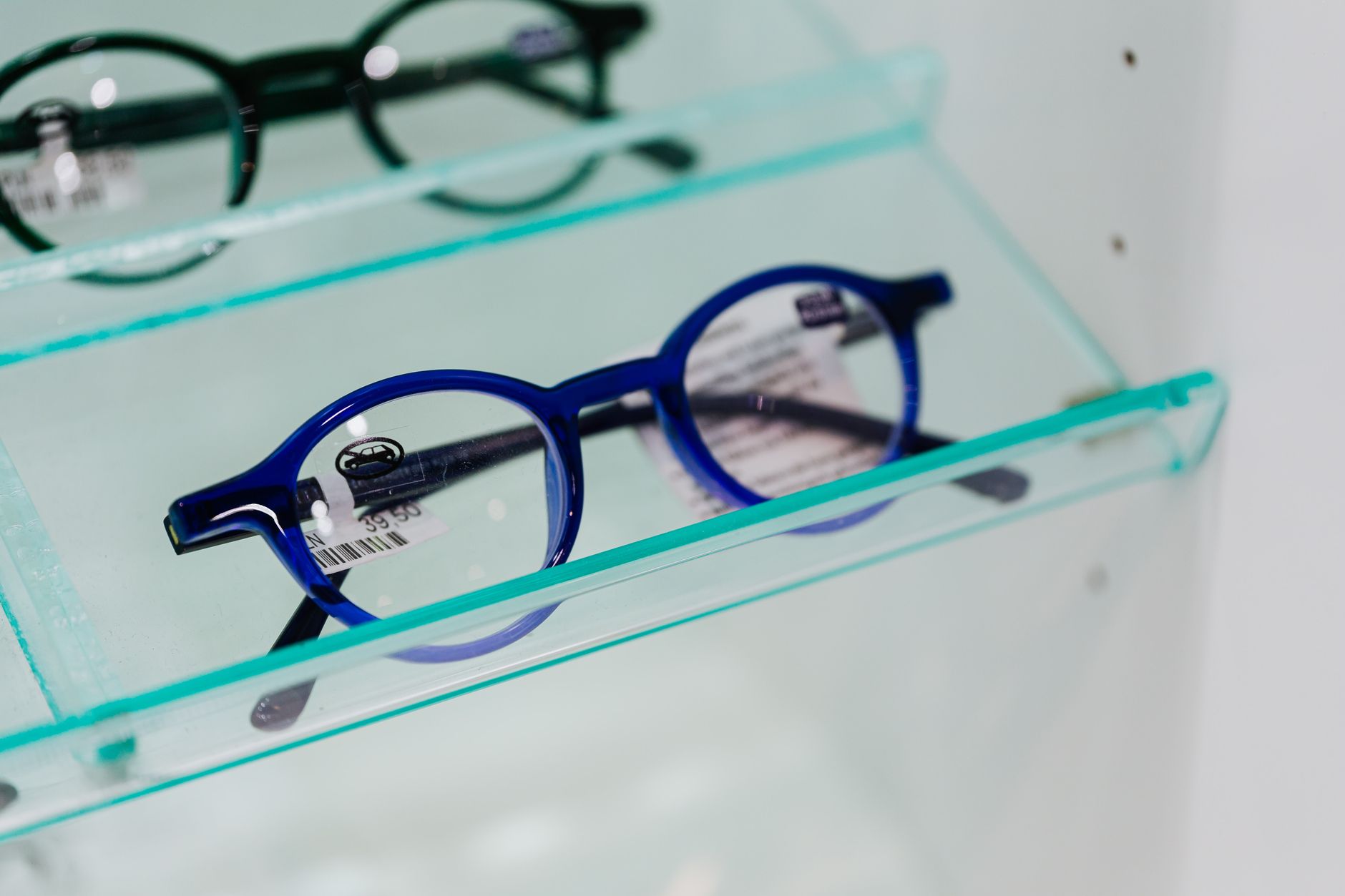
Because the colour and pattern are built into the sheet itself, a frame cut from it can carry genuine depth: layered tortoiseshell, translucent horn effects, a fade from one shade into another. That depth is a property of the material, not a surface print, which is part of why it doesn’t look flat under different light.
How is acetate different from injected plastic?
Injection-moulded plastic frames — often nylon-based or a generic thermoplastic — are formed by pouring molten material into a mould, so colour tends to be uniform and the finish comes out of the mould already “done.” Acetate frames are cut from solid sheet and then shaped, filed and polished by hand or machine afterward, closer to how a piece of furniture is worked from timber.
This changes what’s possible. A moulded frame can be very cheap to produce at scale and is often lighter, which matters for the reasons covered in why heavy frames feel worse by the end of the day. An acetate frame costs more in labour because more of the shaping happens after the raw material exists, not before it.
Why does acetate feel and look different on the face?
Acetate has a slightly warmer, more tactile surface than moulded plastic, and it takes a high-gloss polish that catches light differently across a curve. Colour can be layered inside the material rather than sitting on top of it, which is why two “tortoiseshell” frames can look completely different in hand.
This is also a big part of why clear and translucent frames read differently on everyone — the way light passes through layered acetate depends on skin tone, hair colour and even the room you’re standing in, in a way a flat moulded colour doesn’t.
Thickness reads differently too. A chunky acetate front can look considered and substantial rather than bulky, because the material has enough presence to justify the proportion — one reason acetate turns up so often on frames discussed in what makes a frame look expensive.
What are the trade-offs of acetate?
Acetate is heavier than most injected plastics and considerably heavier than titanium, which matters more the longer a frame sits on the face — a point covered in detail in what makes a frame comfortable over eight hours. It’s also less flexible than nylon-based sports frames, so it isn’t the first choice for anything built to flex under impact.
- Heavier than injected plastic or titanium, noticeable on larger frames
- Rigid rather than flexible, so poor for high-impact or sport use
- Can be adjusted with gentle heat, but repeated over-bending stresses the material
- More labour-intensive to produce, which shows in the finish rather than the price alone
None of that makes acetate the “correct” choice over other materials — it’s a trade, the same way any material decision is. The materials and craft archive covers how other options like titanium and TR90 compare on weight and flex.
Does acetate affect how a frame fits?
Acetate’s main practical advantage is that it responds to controlled heat — a fitter can warm the temples or bridge area and reshape them slightly, something not possible with most moulded plastics without cracking them. That’s relevant if a frame is being adjusted, and it’s worth knowing what can and can’t be fixed before assuming any frame can simply be bent to suit.
Fit still comes down to the same fundamentals regardless of material — how the frame sits on the nose and ears, and whether the width suits the face. Acetate doesn’t change what good sit on the nose and ears looks like, and it won’t fix a frame that’s fundamentally too wide or too narrow, a question covered in how wide a frame should be relative to face width.
Where acetate does help is at the nose. Many acetate frames are moulded with an integrated bridge rather than adjustable pads, so if a frame consistently slides or pinches, it’s worth reading what causes glasses to pinch behind the ears before assuming the material itself is the problem.
How can you tell if a frame is genuinely acetate?
There’s no single trick that works every time, but a few signs are useful together. Genuine acetate tends to feel slightly warmer to the touch than moulded plastic, has visible depth or grain when held up to light, and shows a seam where the temple hinge is set into solid material rather than moulded as one continuous piece.
Weight is a rough clue too — an acetate frame of a given size will usually feel heavier in the hand than an equivalent moulded plastic one, though this isn’t proof on its own. None of this is a substitute for checking construction directly: looking at how cleanly the edges are polished, whether the colour is consistent through the thickness of the material, and how the hinge is set.
Does acetate matter for sunglasses too?
Yes, and often more visibly, because sunglasses are worn at a distance where colour and shine read clearly. A lot of the tortoiseshell, crystal and two-tone effects associated with classic sunglass shapes — wayfarer included — rely on acetate’s layered colour to look right rather than printed-on.
What acetate does not do is anything for UV protection. That comes entirely from the lens, and a dark acetate frame paired with an unrated lens is no safer than a light one — a darker lens without a stated UV filter is worse than no sunglasses at all, because the tint opens the pupil while doing nothing to block UV. Look for UV400 or 100% UVA/UVB marked on the lens, covered fully in what a UV400 rating actually means, and how to check it in how to tell if sunglasses are genuinely UV protective. The sunglasses archive covers lens categories and tint separately from frame material.
So is acetate always the better choice?
Not always. It’s the right material when the goal is colour, depth, a substantial-feeling front, or a shape that benefits from being cut rather than moulded — many of the frame shapes discussed in the frames and styles archive exist in their classic form because acetate allows that cutting.
It’s the wrong material when the priority is minimal weight for all-day wear, flex for sport, or a barely-there rimless build. In those cases, titanium, TR90 or a rimless construction — covered in the difference between full-rim, half-rim and rimless frames — will usually serve better than acetate ever will.
The honest way to judge any frame in front of you isn’t by the label on the material but by handling it: weight, polish, how the colour behaves in light, how the hinge is set, and how it actually sits once worn. Acetate earns its reputation when all of that holds up — not simply because the word appears on a spec sheet.
The Designer Glasses publishes general information and style opinion, not professional advice. We are writers and enthusiasts, not opticians, optometrists or dispensing opticians. Nothing here interprets a prescription, recommends a lens power, or tells you whether you need correction — only an eye examination can do that. If your vision changes suddenly, or you have eye pain, flashes, new floaters or halos around lights, treat it as urgent and contact an eye care professional the same day. Sunglasses should carry a stated UV rating: a dark lens without UV filtering is worse than none at all.